
spokane living ·
Cleaning Historic Homes in Spokane: A Gentle Guide
Cleaning historic homes in Spokane, from Browne's Addition to the South Hill, takes a gentle touch. How to care for plaster, fir floors, and period tile.
By Frontline Housekeeping Plus

Cleaning historic homes in Spokane is a different job than cleaning a house built last decade, and the homes themselves tell you why. The plaster is real, troweled on by hand. The floors are old-growth fir that was milled when the trees were already a century old. The tile in the bathroom was set one hex at a time, and the windows still hold their original leaded glass. These materials have lasted a hundred years or more, but they last because someone cared for them gently. The wrong product or the wrong amount of water can undo in an afternoon what generations protected.
After more than two decades cleaning homes across Spokane, we have spent a lot of time in the old houses of Browne’s Addition, the South Hill, and the streetcar suburbs that grew up around them. What we have learned is simple to say and harder to practice: an old house rewards patience and punishes force. Here is how we approach it, and how you can too.
Why Spokane’s historic homes need a different approach
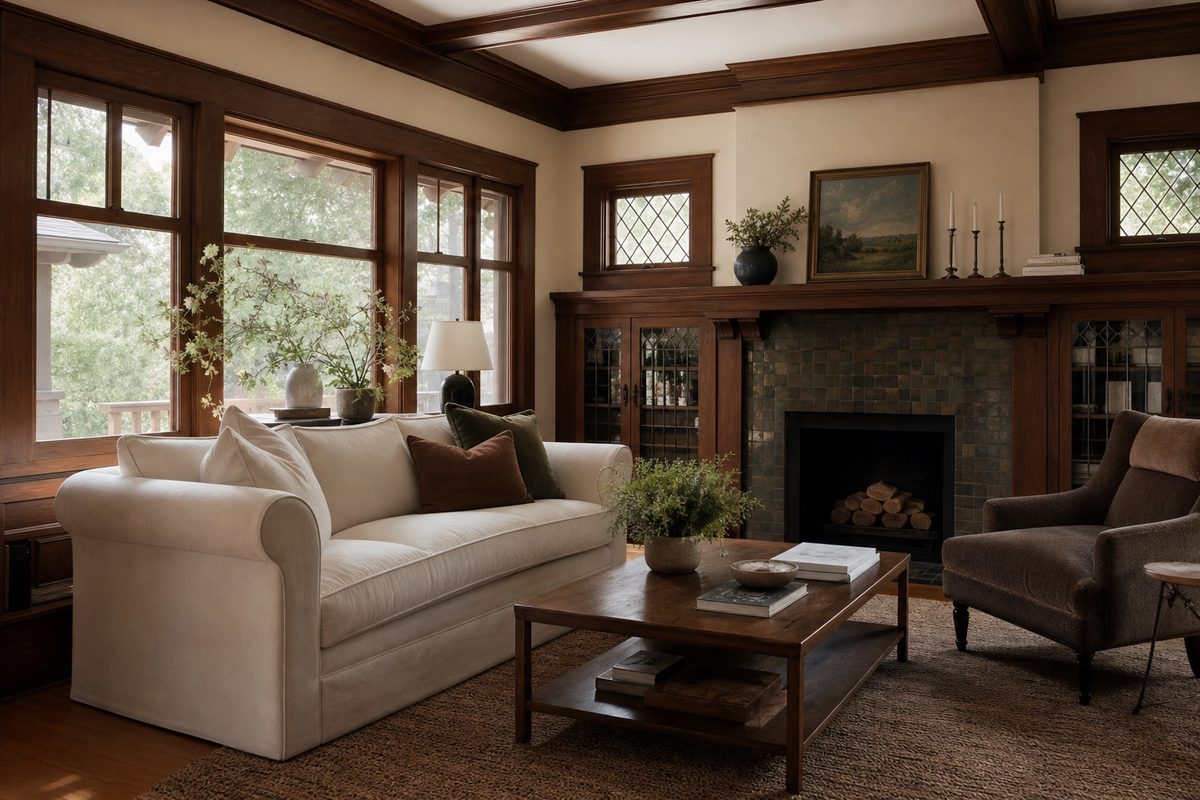
A house from 1908 was not built like a house from 2008, and that changes everything about how it should be cleaned. The walls are lime or gypsum plaster over wood lath, not painted drywall. The floors are solid wood with finishes that may be original shellac, old wax, or nothing at all. The fixtures, the glass, and the hardware are often the same ones the first family used. None of it was made to be wiped down with whatever spray is under the sink.
Spokane adds its own pressures. Our hard water leaves mineral scale on old porcelain and tile that tempts people toward acidic cleaners that can etch a vintage glaze. Our four distinct seasons swing these houses through dry winters and humid summers, and old plaster and wood move with that moisture. Wildfire smoke settles a fine film over everything some summers, and the instinct to scrub it off can do more harm than the soot. An old house is a system that has reached a long, slow truce with its environment, and good cleaning works with that truce rather than against it.
The one rule that guides every old-house clean: gentlest means possible
If you remember one thing, remember this. The National Park Service, which sets the national standard for caring for historic buildings, frames its entire approach around a single idea: clean with the gentlest means possible. Start with the mildest method you think might work, the dry dust or the plain damp cloth, and only step up if it genuinely is not enough. Most of the time, the gentle method is enough, and you never need to escalate.
That principle, drawn from the Secretary of the Interior’s Standards for historic properties, sounds obvious until you are standing in front of a stained surface with a stiff brush in your hand. The temptation is always to reach for the strongest thing first. With an old house, do the opposite. Test in a hidden spot, wait, and watch. Aggressive cleaning is not reversible, and original material is not replaceable.
Plaster walls: dust often, scrub rarely
Period plaster walls are one of the great pleasures of an old Spokane home and one of the easiest things to ruin. Plaster is porous and, depending on its finish, can drink up water and stains. The first rule with old plaster is that dust is your main job and scrubbing is a last resort.
For routine care, dust the walls. A soft, dry microfiber cloth or a clean wall brush lifts the surface dust without abrading the finish. Work top to bottom so what you loosen falls onto surfaces you have not cleaned yet. Done every so often, this alone keeps period plaster looking right and keeps grime from building into something that needs real removal.
When a mark does need more than dusting, go light:
- Reach for a barely damp cloth, not a wet one. Wring it until it feels almost dry, wipe the spot, and stop. Water is plaster’s enemy in quantity, and a soaked wall can blister, soften, or stain.
- Use a pH-neutral cleaner, never an abrasive one. A drop of mild dish soap in water is enough for most marks. Skip the scouring powders, the magic erasers, and anything gritty, all of which sand the finish as they clean.
- Dab and lift rather than rub hard. Pressure burnishes and thins old plaster finishes. Patient, light passes beat one hard scrub every time.
- Never soak a stain you cannot identify. Some old stains are bleeding through from behind the plaster, and adding water makes them worse. Those are a job for a conservator, not a cloth.
What you avoid matters as much as what you do. No bleach, no ammonia, no steam, and no power tools on old plaster. If a wall is failing, flaking, or stained past gentle cleaning, that is a repair question, and the National Park Service has detailed guidance on flat plaster repair for owners who want to understand the options before calling a tradesperson.
Original old-growth fir floors: less water, with the grain
Spokane’s older homes are full of old-growth fir floors, tight-grained, honey-colored, and tougher than almost anything milled today. They are also finished in ways that vary wildly house to house. Some still wear their original shellac. Some were waxed for decades. Some, especially in homes past a certain age, have almost no finish left at all. Because you often cannot tell at a glance, the safe approach treats every old wood floor as if it could be water-sensitive.
The method is the opposite of how most people mop. Less water, lighter touch, and motion that follows the grain.
- Vacuum or dust-mop first, every time. Grit is sandpaper underfoot. On original fir, the dirt you grind in does more damage than any cleaner, so lifting it before you touch the floor with anything wet is the most important step.
- Use a barely damp microfiber mop, not a sopping one. Standing water seeps into seams and around old boards, swelling the wood and lifting finish. The mop should feel just past dry. If you can see a wet sheen trailing behind you, there is too much water on the floor.
- Choose a pH-neutral wood floor cleaner. It is tempting to reach for a vinegar-and-water mix, and you will see it recommended everywhere, but acidic cleaners can slowly dull or etch shellac, old wax, and many wood finishes. A cleaner made for wood and balanced to neutral is the safer long-term choice on an irreplaceable floor.
- Move with the grain, not across it. Following the grain hides fine marks and works cleaner into the wood’s surface rather than fighting it. Finish by buffing dry with a soft cloth so no moisture lingers.
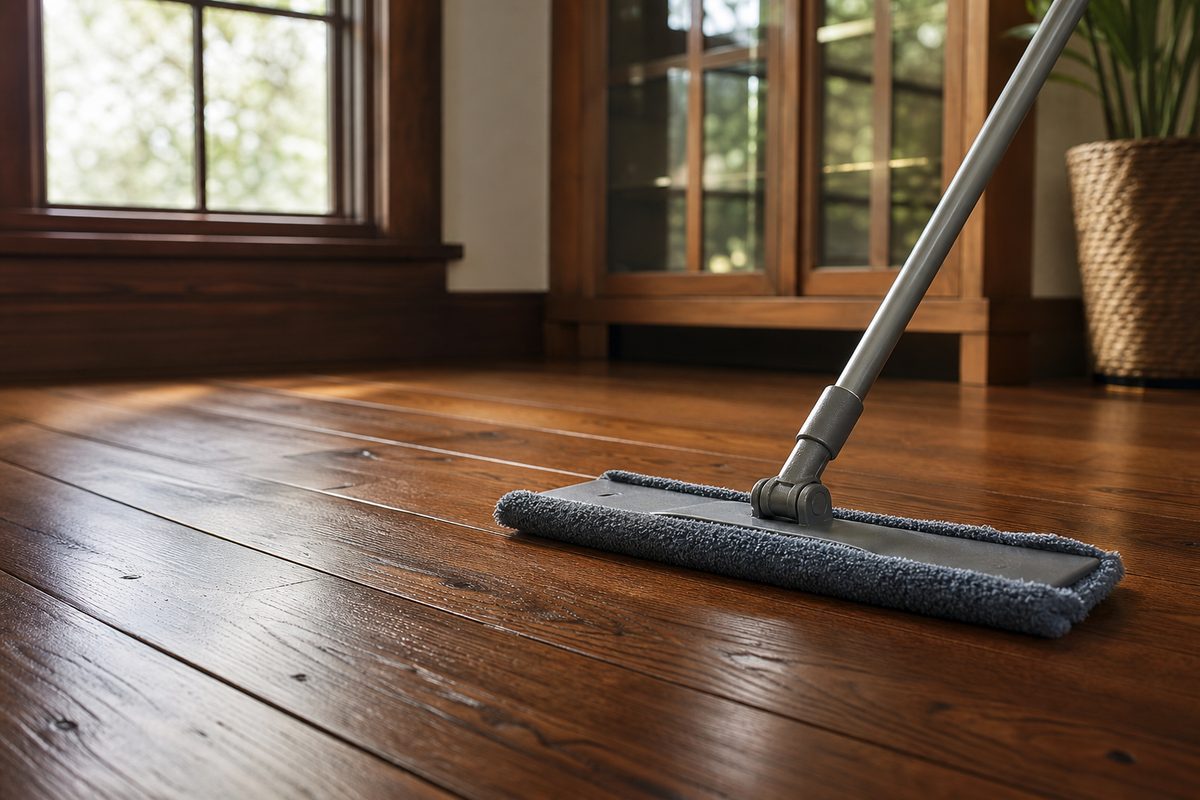
If your old floors look dull or gray, resist the urge to fix it with more product or more water. Often the gray is built-up grime and old cleaner residue, and a gentle, properly damp clean brings the warmth back without anything aggressive. When floors genuinely need restoring rather than cleaning, that is a refinisher’s call, not a mopping problem.
Period tile, leaded glass, and radiators
The smaller original features of an old Spokane home each have their own gentle method, and the same restraint applies across all of them.
Hex and subway tile. Vintage bathroom and kitchen tile is usually durable, but the glaze and the old grout are not. Wash with warm water and a pH-neutral cleaner and a soft cloth or soft brush. Spokane’s hard water tempts people to fight mineral scale with acidic descalers, but strong acids can etch an old glaze and eat away soft historic grout. Go gentle and repeat rather than going strong once.
Leaded glass windows. Leaded and stained glass is held together by soft lead came and old putty, both fragile. Dust gently with a soft, dry brush or barely damp cloth, support the panel with your free hand, and never press. Skip ammonia glass sprays, which can damage the lead and any painted detail, and never use a squeegee or hard scraping on these windows.
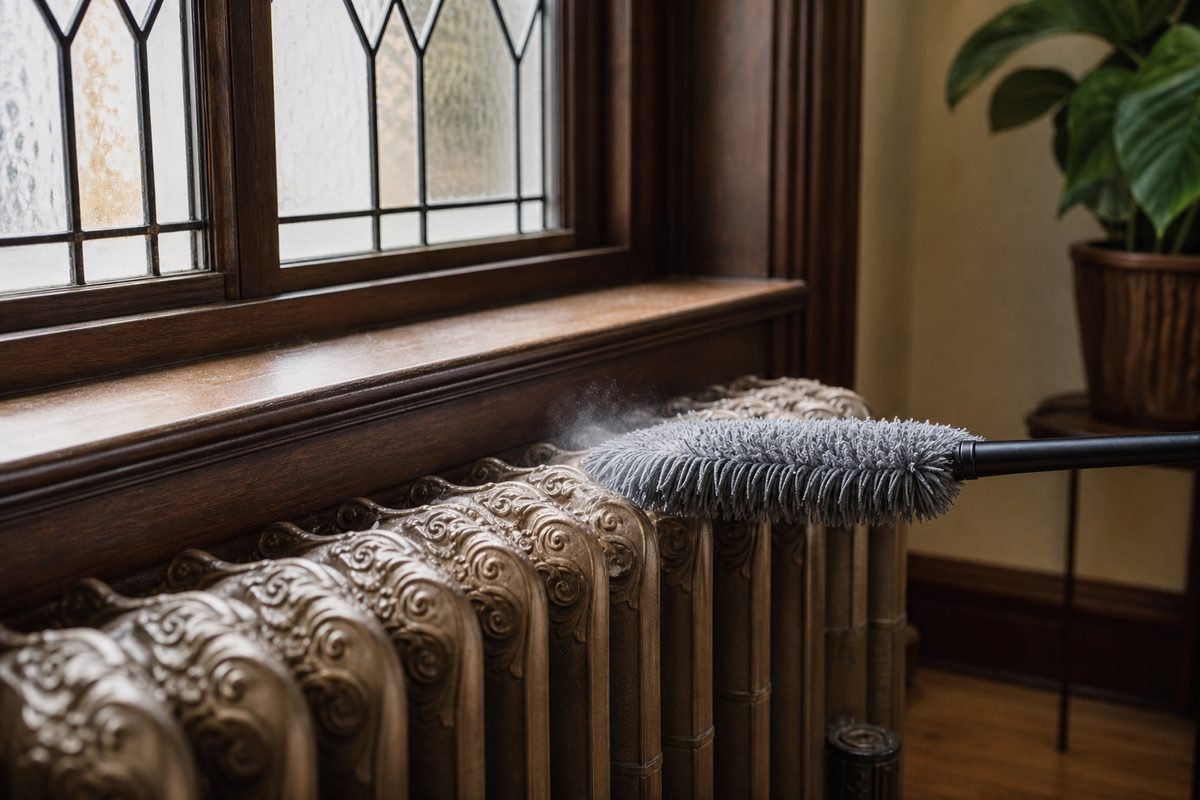
Cast-iron radiators. Old radiators collect dust deep in their fins, and that dust both looks bad and cuts their heat output. The fix is patient dusting, not scrubbing. A long microfiber wand or a soft brush reaches between the fins, and a vacuum with a crevice tool pulls out what you loosen. A barely damp cloth handles the outer surfaces. Do this while the radiator is cold, and avoid soaking any painted or decorative finish.
What to avoid on original surfaces
A short list of things to keep away from any original surface saves more old homes than any technique. Across plaster, wood, tile, glass, and metal, the same culprits do the damage.
- Steam cleaners and pressure washers. Both force water and heat into materials that cannot take it. Steam can lift old finishes and loosen plaster; pressure washing has no business on original wood, glass, or soft historic masonry. When people ask whether they can steam or pressure wash an older home, the honest answer for original surfaces is no.
- Harsh chemicals. Bleach, ammonia, strong acids, and abrasive powders all attack old finishes, glazes, lead, and grout. A pH-neutral cleaner does almost everything an old house needs.
- Abrasive tools. Scouring pads, stiff wire brushes, magic erasers, and scrapers sand and burnish historic surfaces. Soft cloths and soft brushes are the right tools.
- Too much water. This is the quiet one. Even plain water, in quantity, swells wood, stains plaster, and seeps where it should not. Damp beats wet on every original surface in the house.
- Skipping the test patch. Trying anything new on a visible original surface, without testing first, is the most common avoidable mistake we see.
Browne’s Addition and the South Hill: what we see in older homes here
Spokane’s historic housing is concentrated in a handful of neighborhoods, and we know them well. Browne’s Addition, one of the city’s oldest neighborhoods and a designated local historic district, is dense with grand old homes that still hold original plaster, fir, tile, and glass. The South Hill, including the Cannon area and its early streetcar suburbs, carries a deep stock of period houses too. For owners who want to understand a property’s status or the rules that come with a designation, the Spokane Historic Preservation Office is the local authority on the Spokane Register of Historic Places and the city’s historic districts.
What we see most often in these homes is honest grime that gentle cleaning solves, not damage. Decades of dust in radiator fins, hard-water scale on original porcelain, a gray haze on fir floors from years of the wrong cleaner, and plaster that just needs regular dusting. The homes are rarely as fragile as their owners fear, but they are exactly as unforgiving of force as their owners hope they are not. Caring for these surfaces is part of keeping a home clean through the four seasons in our climate, where moisture and smoke both leave their marks.
This is also why we treat older homes differently as a crew. In older Spokane neighborhoods like Browne’s Addition and the South Hill, we slow down, dust before we clean, keep water to a minimum, and reach for the gentlest method first on every surface.
When an older home is ready for a deep reset
Routine, gentle cleaning is what keeps an old house healthy week to week, and a steady rhythm of regular house cleaning that keeps an older home maintained prevents most problems from ever building up. But every so often an older home needs more than maintenance: when you have just bought it, when grime has accumulated in the places routine cleaning skips, or when a smoke season or a long-deferred season has left a heavier film over everything.
That is when a careful, methodical reset earns its keep. A careful deep cleaning that respects original surfaces reaches the radiator fins, the tops of tall trim, the window tracks, and the corners that a normal clean does not, all with the same gentle methods rather than the aggressive ones a deep clean might tempt you toward. The goal in an old house is never to scour it back to new. It is to lift away what has settled and let the original materials show through, intact.
Frequently asked questions about cleaning historic homes in Spokane
How do you clean a historic home without damaging it?
Follow one principle: use the gentlest method that works, then stop. Start with dry dusting and a barely damp, pH-neutral clean, and only step up if that genuinely is not enough. Test anything new on a hidden patch first, keep water to a minimum, and avoid bleach, ammonia, abrasives, steam, and pressure washing on original surfaces. This is the same gentlest-means-possible approach the National Park Service uses for historic buildings.
What should you avoid when cleaning old plaster walls?
Avoid water in any quantity, abrasive scrubbers and scouring powders, and harsh chemicals like bleach and ammonia. Period plaster is porous and the finish is easily thinned or stained. Dust regularly with a soft dry cloth, and when a mark needs more, use a barely damp cloth with a drop of mild soap and dab rather than scrub. Never soak a stain you cannot identify, since some bleed through from behind the plaster.
How do you clean original hardwood floors in an old house?
Dust or vacuum first to lift grit, then clean with a barely damp microfiber mop and a pH-neutral wood floor cleaner, moving with the grain and buffing dry afterward. The key is minimal water, since standing moisture swells old boards and lifts finish. Treat every old wood floor as water-sensitive, because you often cannot tell whether it has shellac, old wax, or no finish at all.
Is vinegar safe to clean vintage tile and old surfaces?
We generally steer away from it on original surfaces. Vinegar is acidic, and on a vintage glaze, soft historic grout, old shellac, or wax it can slowly dull or etch the finish. It is widely recommended online, but on irreplaceable materials a pH-neutral cleaner is the safer long-term choice. Spokane’s hard water tempts people toward acidic descalers, and that is exactly where gentle and repeated beats strong and once.
How do you clean and dust old radiators?
Work when the radiator is cold. Use a long microfiber wand or soft brush to reach the dust packed between the fins, then a vacuum with a crevice tool to pull it out, and a barely damp cloth on the outer surfaces. This is patient dusting, not scrubbing, and it both looks better and helps the radiator put out more heat. Avoid soaking any painted or decorative finish.
Can you steam clean or pressure wash an older home?
Not on original surfaces. Steam forces heat and moisture into plaster and old wood finishes that cannot take it, and pressure washing has no place on original wood, glass, or soft historic masonry. Both can cause damage that is expensive or impossible to reverse. Gentle dusting and barely damp, pH-neutral cleaning do the real work without the risk.
Caring for your historic Spokane home
An old house in Spokane is worth the gentler approach. The plaster, the fir, the tile, and the glass have lasted this long because people before you treated them with care, and the cleaning routine you choose either continues that or quietly undoes it. Keep it simple: dust often, clean lightly, keep water and chemicals to a minimum, and reach for the gentlest method first, every time.
If you own a historic home in Spokane and want it cared for by a crew that knows the difference between cleaning an old house and cleaning a new one, tell us about your historic home and we will send a written estimate within a business day, with a free in-home consultation if you would like one.