
hiring a cleaner ·
Move-in cleaning for a new home: a Spokane guide
Move in cleaning for a new home, Spokane style: what to clean before the boxes arrive, the order that saves a day of work, and the spots new owners miss.
By Frontline Housekeeping Plus

There is a short window between closing on a house and filling it with your life, and move in cleaning for a new home is the one job that gets dramatically harder the moment you miss it. An empty house has no couch to move, no dresser blocking the baseboards, no shampoo bottles crowding a tub surround. Every surface is reachable at once, which will not be true again until the next time you move. We have cleaned Spokane homes since 2002, and the households that use that window well tend to settle in faster and stay ahead of the house for years afterward.
The other reason it matters is simpler: a home that looks clean at a walkthrough has usually been tidied, not cleaned. Sellers stage. Property managers touch up. Neither one is scrubbing the inside of a silverware drawer or the underside of a range hood filter. What follows is how we approach a new-home clean here, in the order that actually saves time, with the Spokane-specific parts flagged along the way.
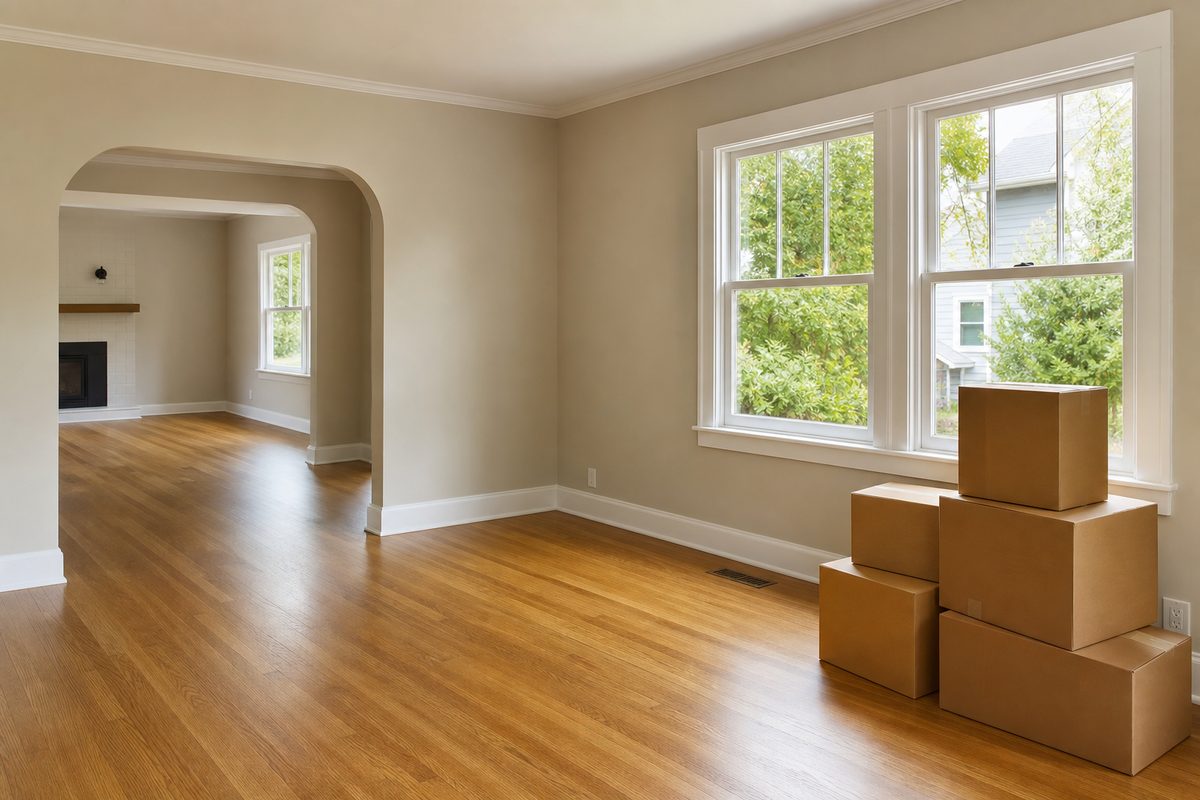
Walk the house before you clean it
Before a single cloth comes out, do one slow lap with the lights on and a notes app open. You are not cleaning yet. You are looking for the things that are cheaper to catch on day one than on day ninety.
- Moisture and staining. Look under every sink, behind the toilets, at the base of exterior walls, and along basement perimeters. A soft spot, a ring, or a musty smell in a Spokane basement is worth documenting before you clean it away.
- Pests. Droppings in the back of a low cabinet, wasp activity at a soffit, or spider concentration in a garage corner all tell you what the house has been dealing with.
- Damage the walkthrough missed. Scratched floors, a cracked outlet cover, a burner that does not light. Photograph them now, while the rooms are empty and the timeline is fresh.
- What the previous household left. Filters, paint cans, a stray key, the manual drawer. Some of it is useful. Most of it goes.
Then change the locks and the HVAC filter. Neither is cleaning, and both belong on the same day.
The order that saves you a full day
The sequence matters more than the products. Almost every wasted hour in a move-in clean comes from doing rooms in the wrong order and re-cleaning what you already finished.
Top to bottom, always. Ceiling fans, light fixtures, the tops of cabinets, closet shelves, door frames, then mid-level surfaces, then floors last. Dust falls. If you mop first, you mop twice.
Back of the house to the front. Start in the farthest bedroom and work toward the door you will carry boxes through. You want your finished rooms behind you, not underfoot.
Insides before outsides. Empty cabinets, drawers, closets, the pantry, the medicine cabinet, the linen closet. This is the part that only happens now. Once your dishes are in that cabinet, nobody is taking them out to wipe the shelf liner.
Wet, not dry. A dry duster in an empty house just launches everything into the air to land again an hour later. Damp microfiber picks it up and carries it out. The CDC also makes a useful distinction here worth borrowing: cleaning comes first, and disinfecting second, because dirt on a surface keeps a disinfectant from reaching the germs underneath it. On a move-in day, that means wash the high-touch items, then disinfect the short list that deserves it: doorknobs, light switches, handles, faucets, toilet handles.
The kitchen decides how the house feels
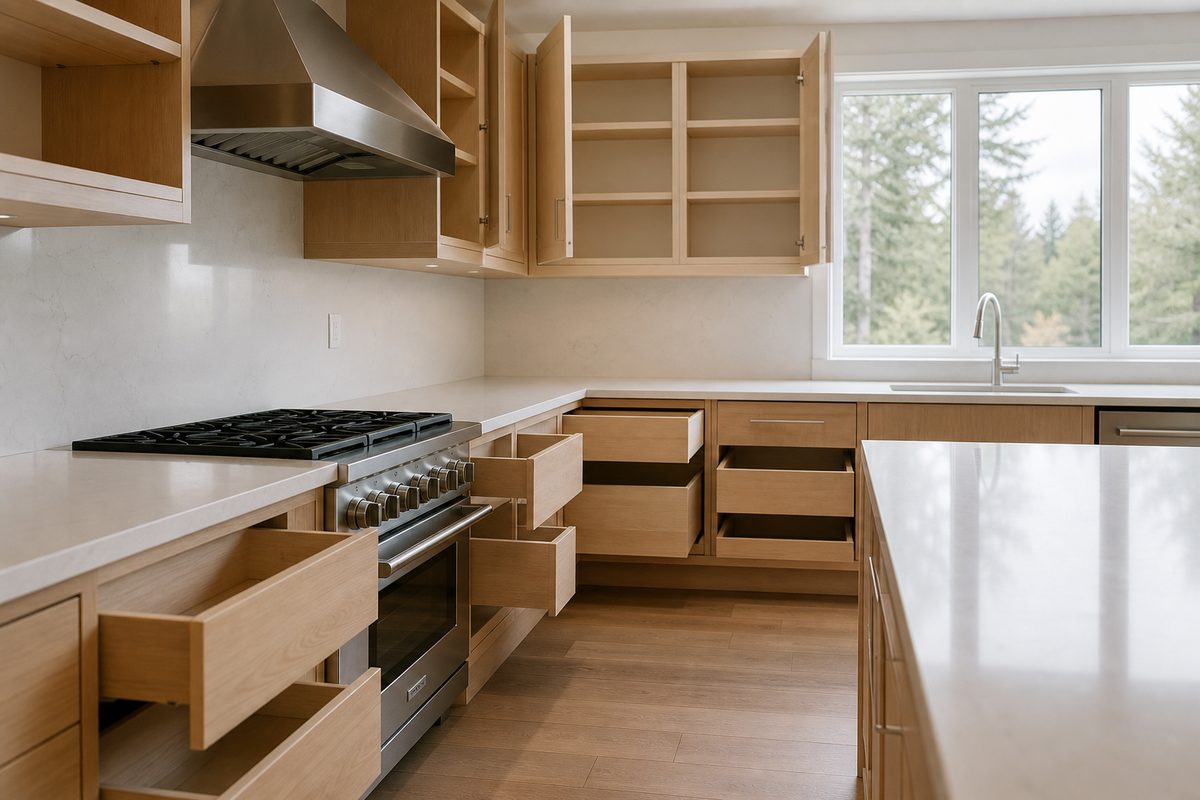
If you only get one room fully done before the truck arrives, make it the kitchen. It is the room where other people’s residue bothers you most, and the one where staging hides the most.
- Cabinets and drawers, inside and out. Vacuum the crumbs out first, then wipe with a damp cloth, then let them dry fully before anything goes in. Pull old shelf liner. It is almost always hiding something.
- The oven and the range hood. The hood filter is the single most overlooked greasy object in a house. Most lift out and go in a hot degreasing soak in the sink.
- The refrigerator, including behind and beneath it. Shelves and bins come out and get washed. The gasket holds a surprising amount. The coils and the floor underneath are a once-a-decade opportunity while it can still be rolled out easily.
- The dishwasher. Wipe the door gasket, pull and rinse the filter basket at the bottom, and run an empty hot cycle before the first real load.
- Under and beside the range. Slide it out. Whatever fell down the side over the last decade is down there.
Bathrooms: seals, grout, and hard water
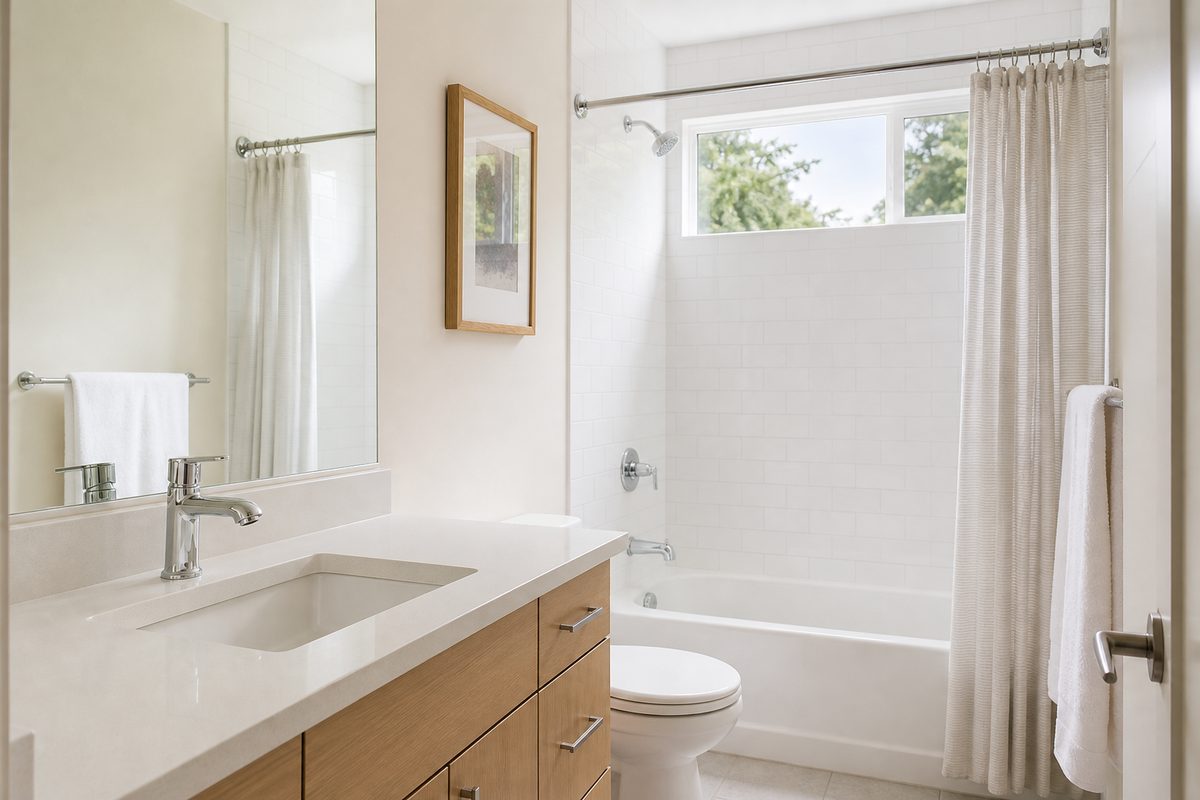
Bathrooms are the other room where a staged home and a clean home diverge sharply. Go past the surfaces.
Start with the toilet, including the base, the bolt caps, the hinge points where the seat attaches, and the wall behind it. Replacing the seat outright is a small, satisfying move-in ritual and takes about ten minutes.
Then the shower or tub. Scrub the grout lines, run a blade along the caulk seam to see whether it is sound or peeling, and pay attention to the door track if there is one. In Spokane, the film on glass and fixtures is usually not soap scum at all. It is mineral scale from hard water, and it needs an acidic descaler rather than more elbow grease. We wrote a full walkthrough of removing hard water stains that applies to nearly every home in the county.
Finish with the exhaust fan cover, which comes off and washes in the sink, and the medicine cabinet interior. Then run the water in every fixture for a few minutes, especially in a house that has been vacant, and check under the sinks again while the water is running.
Floors last, and think about carpet before the furniture lands
Floors are the last stop for the same reason they always are: everything above them lands there. Vacuum first, including the edges and the closet floors, then mop hard surfaces with a light touch and a clean rinse.
Carpet is the decision that has a deadline. If a carpeted home is coming to you with pet history, smoke history, or simply years of traffic, extraction cleaning is enormously easier and more effective before your furniture is standing on it. Once the bedroom set is in place, you are cleaning around it for as long as you own the house.
Hardwood in older Spokane homes deserves a lighter hand than people expect: minimal water, a wood-appropriate cleaner, and no standing moisture in the seams.
I have been having Frontline clean my house for many years now and they have come to my last 3 homes I have owned and been nothing but wonderful! They won’t disappoint, the best cleaning company in Spokane!
The spots new owners consistently miss
After enough of these, the misses are predictable. None of them look dirty from eye level, and all of them are easy right now and awkward later.
- Window tracks and sills, which collect a season of grit that a wipe of the glass does not touch.
- Return air vent covers and supply registers, which hold a visible ring of dust the system will otherwise recirculate through your new house.
- The tops of door casings and interior doors, plus the door edges themselves.
- Baseboards behind where furniture will sit, which is your only chance for years.
- Closet shelves and rods, and the floor of every closet.
- Laundry hookups, including the washer gasket and detergent drawer if a machine conveyed with the house.
- The garage floor and utility shelving, which is where the last owner’s decisions tend to accumulate.
- Light switch plates and outlet covers, which take a minute and change how new a house feels.
If the home is older, clean like it
Spokane has a lot of housing stock built well before 1978, especially on the South Hill, in Browne’s Addition, and across the older north-side neighborhoods. That matters for a move-in clean. The EPA notes that homes built before 1978 are more likely to contain lead-based paint, and that lead dust can form when that paint is scraped, sanded, or disturbed, including during repairs. Their recommended household practice is the same one that makes for better cleaning anyway: wet methods, a damp mop or cloth rather than dry sweeping and sanding.
Practically, in an older home we keep three habits. Damp everything, so nothing becomes airborne. Do not aggressively scrape painted trim or sills to make them look newer. And if you are planning renovation work, get the cleaning done around it rather than trying to clean through it, because original woodwork, plaster, and old hardwood all reward patience more than pressure.
New construction and freshly renovated homes
The opposite case has its own trap. A brand-new or newly remodeled home looks pristine and is quietly full of drywall dust, which is fine, pale, and everywhere: on top of door casings, inside cabinet boxes, in window tracks, in the HVAC returns, and settled invisibly on flat paint. It reappears for weeks because the first pass only got what was visible.
Plan on two passes a few days apart, use damp methods rather than a broom, vacuum with a good filter, and change the furnace filter after the dust settles rather than before. A builder’s final clean is usually a surface pass on a deadline, not the detailed clean the house needs before you live in it.
Doing it yourself, or handing it off
A move-in clean is genuinely doable on your own if you have the house to yourself for a day or two before the truck. Block the time, work the order above, and accept that the kitchen and bathrooms will take most of it.
The reason people hand this one off more often than a routine clean is that the timing is unforgiving. Closing dates move. Keys arrive late. The truck does not care. A crew can do in one visit what takes a family a long weekend, and it happens on the calendar day you need it to. That is what our move-in and move-out cleaning is built for, and when a home needs more than a reset, a full deep cleaning covers the interiors, the buildup, and the neglected detail work in a single pass.
If you are on the other side of the same move, our move-out cleaning checklist covers the home you are leaving, and what to expect from a first cleaning explains how a first visit with a crew actually runs.
Questions we get from people mid-move
Should you clean a new house before moving in?
Yes, if you have any access at all before the truck. An empty house is the only time cabinet interiors, closet shelves, baseboards, and the floor under the refrigerator are all reachable without moving anything. The same work after your furniture is placed takes substantially longer and gets done less thoroughly.
What is included in a move-in cleaning?
A move-in clean covers the whole home top to bottom with an emphasis on interiors: inside cabinets and drawers, inside the refrigerator and oven, closets, baseboards, doors and frames, window sills and tracks, all bathroom fixtures and grout, plus vacuuming and mopping every floor. The distinguishing feature is that it deliberately cleans the places that furniture and belongings will cover.
Is move-in cleaning the same as a deep clean?
They overlap heavily, and the difference is timing and access. A deep clean happens in a lived-in home and works around furniture and possessions. A move-in clean happens in an empty one, which means the interiors and the hidden surfaces get real attention. If your new place is already partly furnished, the two blend together.
Do you clean before or after the furniture arrives?
Before, whenever the schedule allows. If it does not, keep the boxes contained to one or two rooms, ideally not the kitchen or the bathrooms, and clean the rest of the house first. Then clear the staging rooms and finish those last.
How long does a move-in cleaning take?
It depends on the size of the home, its condition, and how much appliance interior work is involved, so the honest answer is that we scope it in person. A small, well-maintained home is a short visit. A larger home that has been vacant, has heavy kitchen buildup, or is coming off a renovation is a considerably longer one.
Start the new house clean
You only get one first day in a house, and the version of it where every drawer is already wiped and every floor is already done is a meaningfully better one. It is also the last easy chance the house will give you for a long time.
If you are moving anywhere in Spokane or the surrounding area, tell us the address, the closing date, and the day the truck comes, and we will build the visit around it. Request a free estimate and we will send a written estimate within a business day, with a free in-home consultation if you would like one. Phone works too: (509) 323-7587.