
cleaning tips ·
How to Remove Hard Water Stains in Spokane Homes
Hard water stains are a fact of life in Spokane. Here is how to remove limescale from glass, fixtures, and tile safely, plus what to never use.
By Frontline Housekeeping Plus

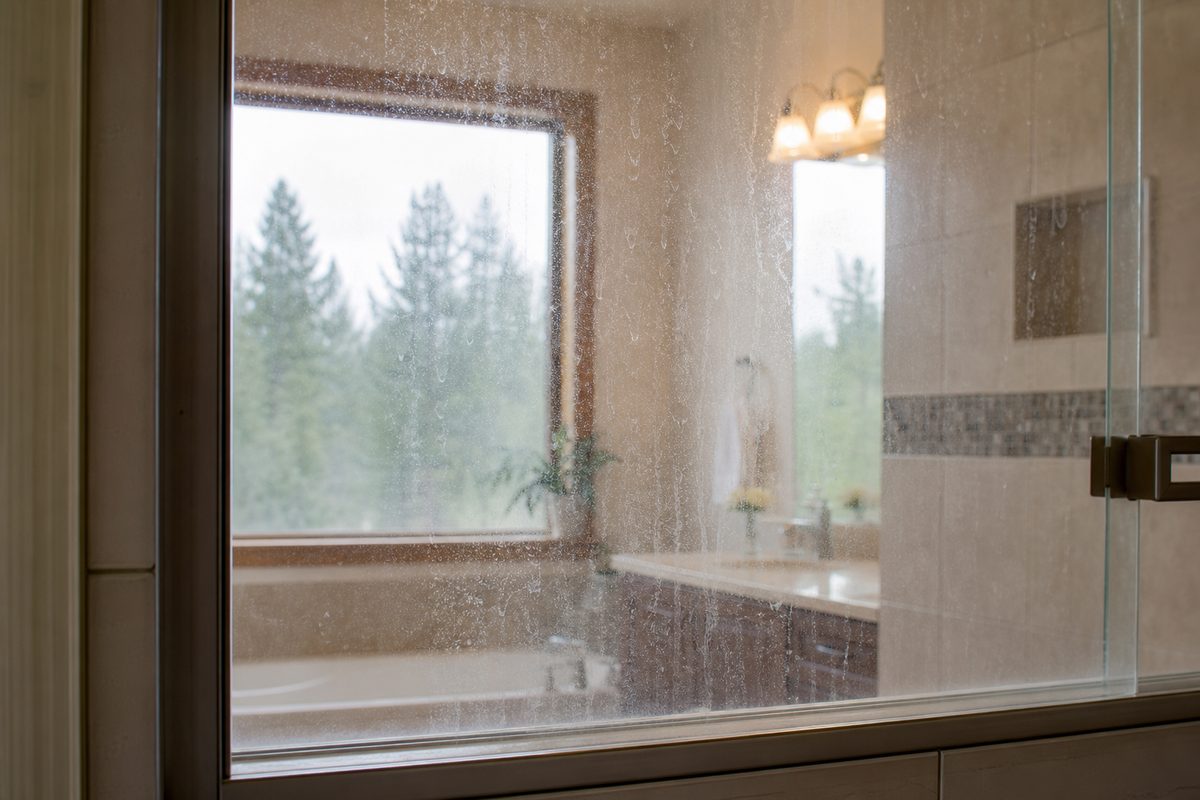
If you live in Spokane, you have met hard water stains whether you knew the name for them or not. They are the cloudy film on the shower glass that no amount of regular spray seems to touch, the white crust ringing the base of the faucet, the chalky spots on your dishes that show up after the rinse. After 23 years of cleaning Spokane homes, we can tell you this is one of the most common frustrations we hear about, and it has very little to do with how often you clean. It has to do with what comes out of the tap here.
The good news is that hard water stains are not dirt, and they respond to the right method far better than they respond to elbow grease. The bad news is that the wrong method can scratch glass, etch stone, and make the problem look worse. Here is how we handle mineral buildup in real Spokane bathrooms and kitchens, surface by surface, plus the few things you should never reach for.
Why Spokane homes get hard water stains
Spokane sits on top of the Spokane-Rathdrum Prairie Aquifer, which the EPA designated a Sole Source Aquifer back in 1978, meaning it is the principal drinking water supply for the whole area. It is wonderfully clean water. It is also hard water, because as it moves through the gravel and rock of the aquifer it picks up dissolved calcium and magnesium along the way.
That is the short version of why your fixtures fight you. The USGS Water Science School defines water hardness simply as the amount of dissolved calcium and magnesium in the water, and classifies anything above 121 mg/L as calcium carbonate as hard, and above 180 mg/L as very hard. Spokane-area water sits comfortably in the range where you will see deposits without any special effort on your part. Every time a droplet evaporates on a surface, the water leaves but the minerals stay behind. Do that a few thousand times on a shower door and you get the film. Do it around a faucet and you get the crust.
This is not a sign that anything is wrong with your water or your home. It is just the local reality, the same way four distinct seasons and wildfire smoke are local realities. Once you understand that you are cleaning minerals rather than grime, the whole job gets easier.
What hard water stains actually are (and why soap scum is different)
People lump soap scum and hard water stains together because they show up in the same places, but they are two different problems and they come off two different ways. Telling them apart saves you a lot of wasted scrubbing.
Hard water stains are mineral deposits: calcium, magnesium, and the limescale they form. They are alkaline, they feel chalky or gritty, and they need an acid to break them down. Vinegar works on these.
Soap scum is a waxy buildup of soap residue combined with body oils and, yes, some of those same minerals. It is greasy rather than chalky, and it responds better to a degreasing cleaner and a non-scratch pad than to acid alone.
Most Spokane showers have both at once, which is why a single product sometimes only gets you halfway. If you wipe a surface and it still feels filmy after the acid step, you are probably looking at the soap-scum layer, and a little dish soap on a soft pad finishes the job.
What causes hard water stains to build up
The minerals are always in the water, but a few habits decide whether you get a light haze or a thick crust:
- Standing water that air-dries. Droplets left on glass, chrome, or tile after a shower are the single biggest cause. The water evaporates and leaves the minerals welded in place.
- Heat. Hot water holds and deposits minerals readily, which is why showerheads, the inside of kettles, and water heaters scale up fastest.
- Time between cleanings. A thin fresh deposit wipes away in seconds. The same deposit left for three months bonds to the surface and needs soaking and patience.
- Rough or pitted surfaces. Older glass, worn chrome, and unsealed grout give minerals more to grip, so they collect faster and hold tighter.
None of these are about cleaning hard. They are about not letting the water sit and not letting the buildup compound, which is exactly where a steady cleaning rhythm earns its keep.
Are hard water stains permanent?
Almost never, but the honest answer has an asterisk. Fresh and moderate hard water stains come off completely with the right acid and enough dwell time. Even thick, years-deep limescale usually surrenders to repeated soaking, it just takes more than one pass.
The asterisk is etching. On glass, if mineral deposits have sat long enough, or if someone has gone at them with an abrasive pad, the surface underneath can be permanently pitted. At that point the cloudiness is in the glass itself, not on top of it, and no cleaner brings it back. The same is true of natural stone that has been hit with acid. So when we say stains are not permanent, we mean the deposit is removable. The damage from removing it the wrong way is what becomes permanent, which is the whole reason method matters.
The safe way to remove hard water stains with vinegar
White vinegar is the workhorse here, and it is cheap, safe, and already in most Spokane kitchens. The acetic acid dissolves the alkaline mineral deposit. The trick almost everyone gets wrong is dwell time: vinegar needs to sit on the deposit, not get sprayed and immediately wiped.
Here is the method we use on glass, chrome, and ceramic tile:
- Warm the vinegar slightly if you can. Mildly warm vinegar dissolves minerals faster than cold. You can mix it half and half with water for light buildup, or use it straight for heavier deposits.
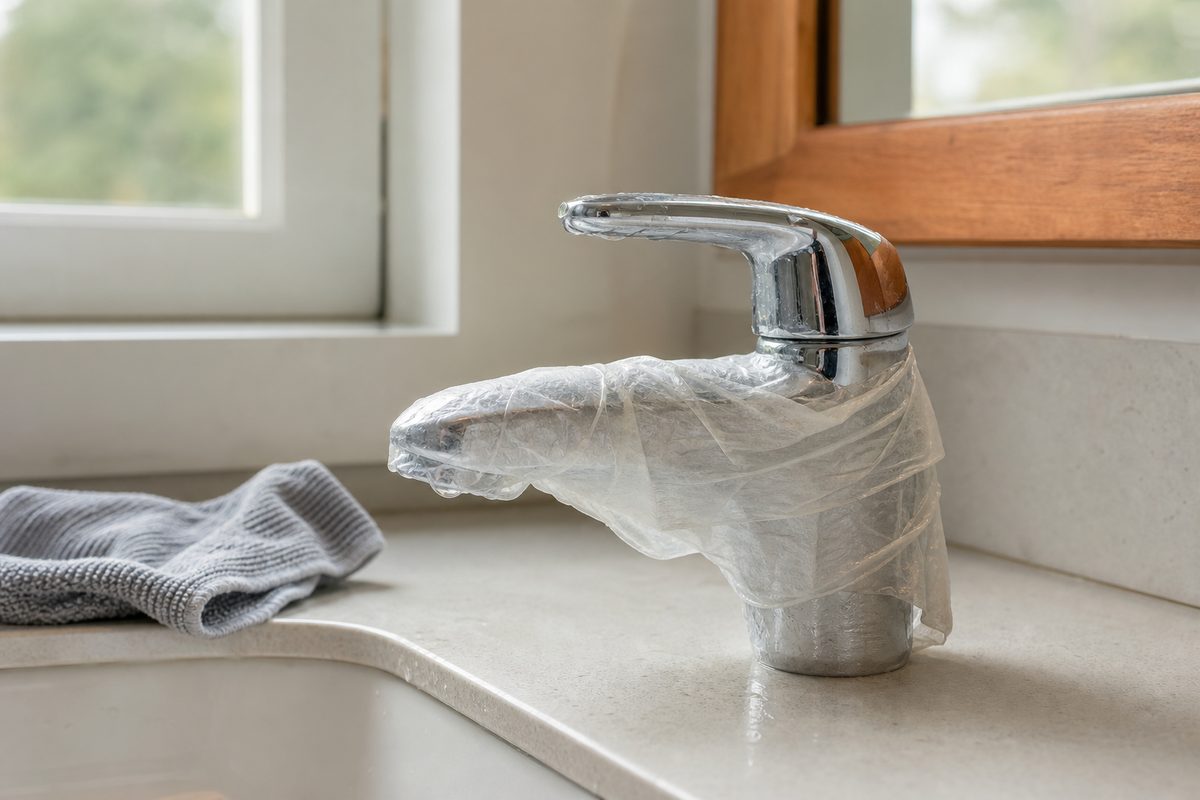
- Keep it in contact with the surface. A spray bottle works for vertical glass if you re-spray every few minutes. For faucets and showerheads, soak a cloth or paper towels and wrap the fixture so the vinegar stays put.
- Give it time. Fifteen minutes for a light film, longer for crust. For a badly scaled showerhead, a bag of vinegar tied around it and left to soak does the work overnight while you sleep.
- Agitate gently, then rinse. A soft non-scratch pad, an old toothbrush for crevices, or just a microfiber cloth lifts the loosened deposit. Rinse thoroughly with clean water and dry the surface so you are not leaving fresh droplets to start the cycle over.
Which product to reach for on a hard water stain
Vinegar handles the large majority of household hard water stains, but it is not the only safe option, and a few stubborn cases call for something stronger.
- Plain white vinegar is the default for glass, chrome, ceramic tile, and glassware.
- A cut lemon does the same job as vinegar on small fixtures and smells better, since citric acid is also a mild acid.
- A dedicated limescale or calcium remover is worth buying for heavy buildup that vinegar only softens. Read the label, follow the dwell time, ventilate the room, and never combine it with other cleaners.
- A soft non-scratch pad or a cleaning brush is your partner for every method. The acid loosens the bond, the pad lifts the residue. Acid alone on a heavy deposit often needs that gentle help.
When something is labeled for limescale or calcium specifically, it is formulated to be stronger than vinegar while still being safe for the surface named on the bottle. That is the moment to reach for it: when you have given vinegar a fair, patient try and the deposit has only loosened rather than released.
What you should never use on hard water stains
This is the part that protects your home, and it is short. A wrong move here causes damage you cannot undo.
- Never use vinegar, lemon, or any acid on natural stone. Granite, marble, travertine, and other natural stone contain minerals that acid eats into. The result is etching, a dull, rough, lighter patch that is permanent. Hard water spots on a stone countertop or stone shower surround call for a cleaner made specifically for stone, never an acid. If you are unsure whether a surface is natural stone, treat it as if it is.
- Never use abrasive pads, steel wool, or scouring powder on glass or chrome. They scratch, and on glass those micro-scratches read as permanent cloudiness, exactly the look you were trying to remove.
- Never mix cleaning products. Acids combined with bleach or with certain commercial cleaners can release dangerous fumes. One product at a time, well rinsed before the next.
Removing hard water stains surface by surface
Different surfaces in the same bathroom want slightly different handling. Here is how we approach the usual suspects.
Glass shower doors. This is where hard water stains are most visible and most stubborn. Lay vinegar-soaked paper towels or a cloth against the glass, or spray and re-spray to keep it wet, for at least fifteen minutes. Work in sections with a soft pad, rinse, and squeegee dry. For a long-neglected door, expect to repeat the soak. Resist the urge to grab anything abrasive.
Chrome faucets and handles. Wrap them in vinegar-soaked cloths, let them sit, then work the crevices and the base with an old toothbrush. The crust around the base of a faucet hides where the fixture meets the counter, so do not stop at the visible parts.
Showerheads. Mineral buildup clogs the little nozzles and weakens the spray. Untie or unscrew the head if you can, or tie a bag of vinegar around it in place, and soak it for several hours or overnight. A toothpick or a quick rub clears any nozzle that is still blocked afterward.
Toilet bowls. Hard water leaves a ring and sometimes a stubborn stain below the waterline. Vinegar poured in and left to sit, then worked with a brush or a pumice stone made for porcelain, lifts it. Use the pumice only on porcelain and keep it wet, never dry.
Dishes and glassware. Cloudy spots after the dishwasher are minerals, not a dirty machine. A vinegar rinse, or a rinse aid, cuts them. A glass with permanent etching from years of buildup, on the other hand, will not come back.
How to prevent hard water stains from coming back in a hard-water city
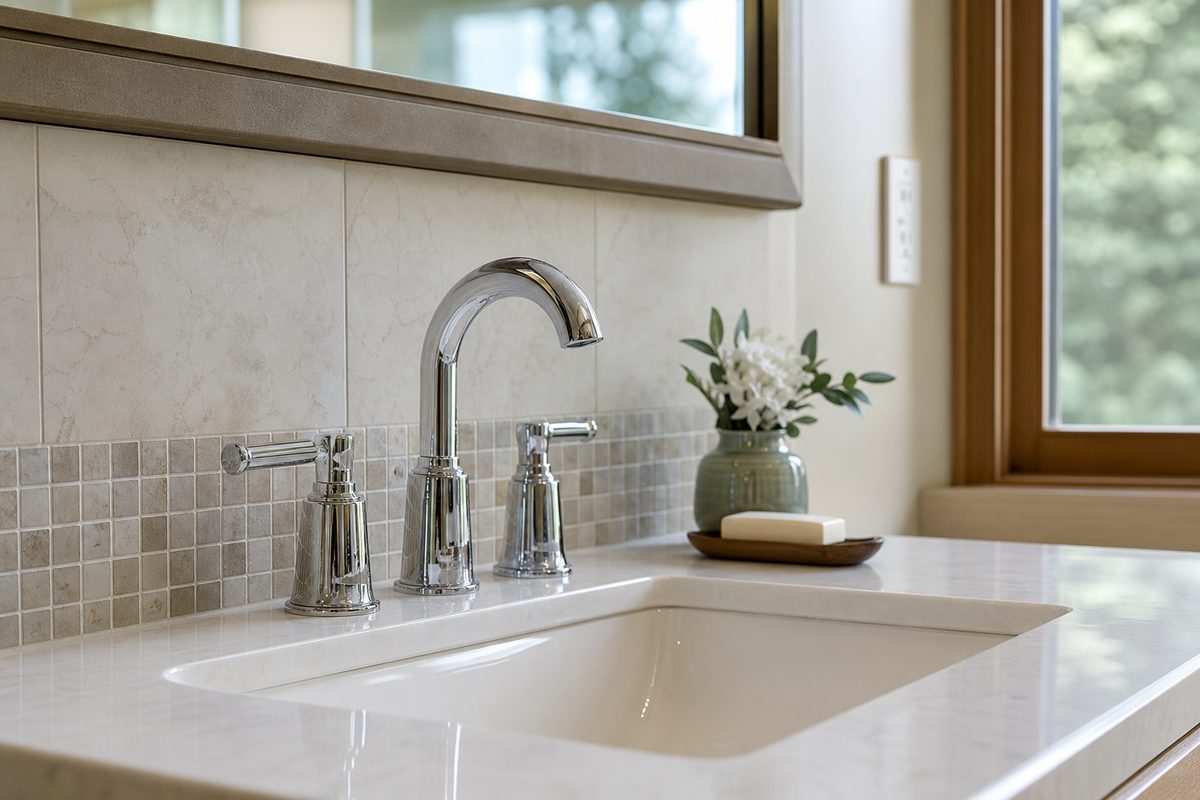
In Spokane, the water is not going to change, so prevention is the only thing that turns this from a recurring battle into a non-issue. The deposit can only form where water sits and dries, so the entire strategy is about not letting that happen.
- Squeegee the shower glass after each use. This is the single highest-payoff habit in a hard-water home. Thirty seconds of squeegeeing keeps droplets from evaporating into film, and a door that gets squeegeed daily almost never needs the vinegar treatment.
- Keep a microfiber cloth near the sink and give the faucet a quick dry-off when you think of it. Dry chrome cannot grow a crust.
- Stay on a steady cleaning rhythm. Fresh, thin deposits wipe away in seconds, while three months of buildup needs soaking and effort. This is exactly why regular house cleaning keeps mineral buildup in check: the problem never gets a chance to compound.
- Consider a water softener if hard water is a constant frustration across the whole house. It will not undo existing stains, but it reduces how fast new ones form. That is a plumbing decision, not a cleaning one, so weigh it against your situation.
Run through these and you stop fighting the same shower door every season. For the bathrooms that have already gone too long, a deep cleaning resets bathrooms that have gone too long and gives you a clean baseline to maintain.
When to hand it off to a Spokane cleaning crew
There is a point where hard water buildup stops being a fifteen-minute job and becomes a soak-scrub-repeat afternoon, especially in a home that has had a few owners or a few years of deferred bathroom cleaning. A heavily scaled glass enclosure, a stone shower that needs the right products, or simply a busy household with no extra weekend hours are all good reasons to bring in help.
We have cleaned homes across Spokane and the surrounding area for 23 years, which means we have met your water and your fixtures many times over. Our crews know which surfaces take vinegar and which absolutely cannot, how long to soak a scaled showerhead, and how to leave glass clear without scratching it. When buildup has gone past routine cleaning, working through the deep-clean checklist on a single visit resets the whole bathroom at once.
Frequently asked questions about hard water stains
What is the best thing to remove hard water stains?
For most household surfaces, plain white vinegar is the best and safest first choice, because its acetic acid dissolves the calcium and magnesium deposits that make up the stain. The key is dwell time: let it sit in contact with the deposit for fifteen minutes or more, then agitate gently with a soft pad and rinse. For very heavy buildup, a dedicated limescale or calcium remover made for that surface does the same job with more strength.
Does vinegar remove hard water stains?
Yes. Vinegar is acidic, and hard water stains are alkaline mineral deposits, so the acid breaks them down. The reason people think it does not work is usually that they spray and wipe immediately. Vinegar needs minutes of steady contact, sometimes an hour for thick deposits, so wrap it on fixtures or keep glass wet with it and give it time.
Are hard water stains permanent?
Almost never. The mineral deposit itself is removable, even years-deep limescale, though heavy buildup may need repeated soaking. What can be permanent is etching: glass that has been scratched by abrasive pads, or stone that has been damaged by acid. In those cases the cloudiness is in the surface itself, not a deposit on top of it, so removing it the right way is what keeps it from becoming permanent.
What causes hard water stains?
Hard water carries dissolved calcium and magnesium. When a droplet of that water dries on a surface, the water evaporates and the minerals are left behind. Repeat that thousands of times on shower glass or around a faucet and the minerals build into the film and crust you see. In Spokane, the water drawn from the Spokane-Rathdrum Prairie Aquifer is naturally hard, so deposits form without any special conditions.
What should you not use vinegar on?
Never use vinegar, lemon, or any acid on natural stone such as granite, marble, travertine, or limestone. The acid reacts with minerals in the stone and etches it, leaving a dull, rough patch that cannot be repaired. Also avoid acids on some older or specialty finishes when you are unsure, and never mix vinegar with bleach or other cleaners. For stone, use a cleaner made specifically for it.
How do you prevent hard water stains from coming back?
Stop water from sitting and drying. Squeegee the shower glass after every use, keep a microfiber cloth by the sink to dry the faucet, and stay on a steady cleaning rhythm so deposits never compound. A whole-house water softener reduces how fast new deposits form, though it will not remove existing ones. In a hard-water city like Spokane, these small habits matter far more than scrubbing harder.
If hard water has gotten the better of your bathrooms and you would rather not spend the weekend soaking and scrubbing, we are glad to help. Tell us about your home for a written estimate within a business day, with a free in-home consultation if you would like one, and we will get your glass clear and your fixtures gleaming again.