
cleaning tips ·
The best cleaning products for hard water in Spokane homes
A product and appliance guide to the best cleaning products for hard water: descalers, chelators, detergent dosing, softener vs filter, from a Spokane crew.
By Frontline Housekeeping Plus

Walk down the cleaning aisle of any Spokane grocery store and you will find a wall of bottles that promise to beat mineral buildup. Most of them work, on a few surfaces, and the wrong one on the wrong surface does damage no product can undo. The best cleaning products for hard water are not a single brand or bottle. They are a small kit of product categories, each matched to a job: an acid for scale, a surfactant for grime, a chelator for laundry and dishes, and a gentle abrasive for the rare spot that needs it.
We have cleaned Spokane homes since 2002, and the water here has shaped what we carry more than anything else. This guide covers choosing and using those products, especially in the appliances that quietly suffer most: the dishwasher, the washing machine, the coffee maker, and the kettle. If what you need right now is how to remove hard water stains from shower glass, faucets, or tile, that is a separate guide, surface by surface. This one is about what to buy and how to use it.
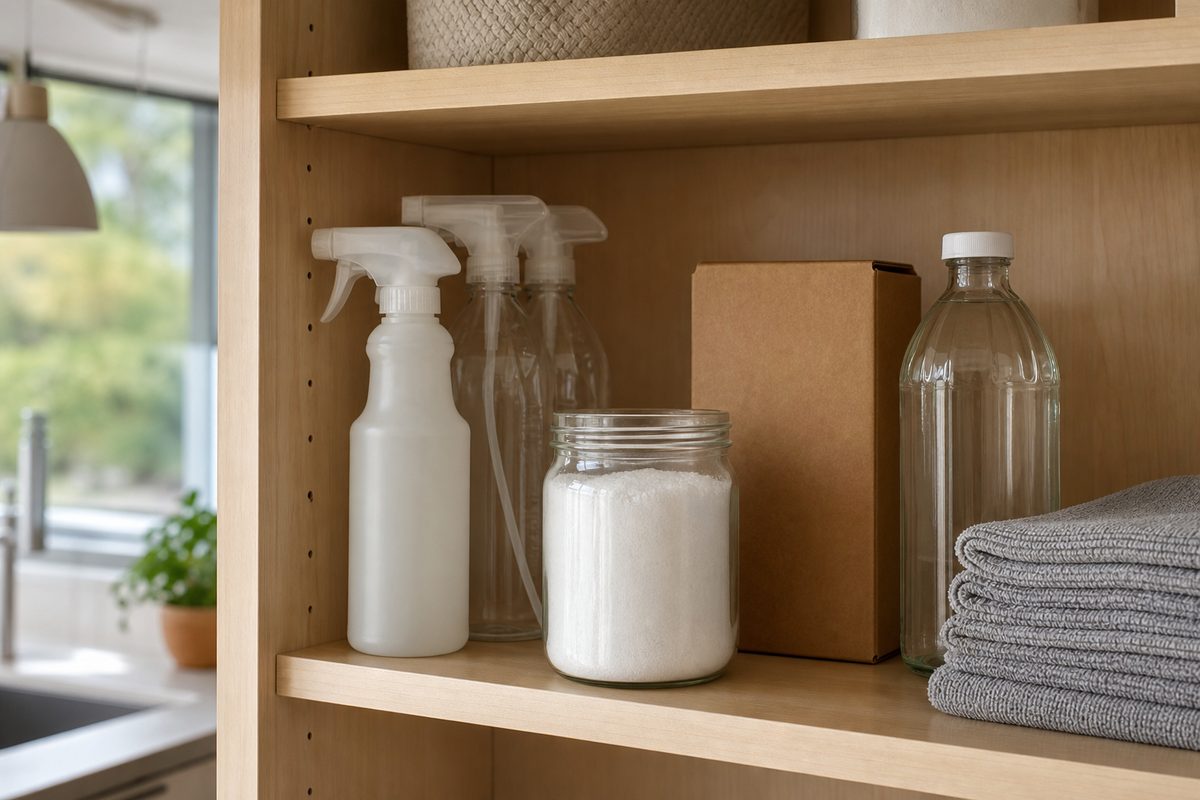
The four product families, and what each one is for
Acidic descalers dissolve mineral scale by reacting with it. The gentle end is white vinegar and citric acid; the strong end is the dedicated limescale and calcium removers. Acid is the only thing that truly removes scale, which makes it the heart of the kit. It is also the family that does the most damage on the wrong surface: it etches natural stone and can wear rubber seals inside appliances over time.
Surfactant cleaners are your everyday all-purpose spray and dish soap. They lift grease and soil and carry it away in water, and they do almost nothing to mineral scale. That is the source of most hard-water frustration: someone scrubs a chalky faucet base with an all-purpose cleaner, watches it fail, and blames the product. It is not weak, it is the wrong family.
Chelating agents are the family most people have never heard of and use every day. A chelator grabs dissolved calcium and magnesium and holds them so they cannot bond with soap or settle out as scale. Sodium citrate, EDTA, and phosphonates are common examples, and they are why a good detergent performs in hard water at all. Water conditioners and laundry boosters are the same idea sold on their own.
Abrasives such as baking soda, scouring powders, and non-scratch pads physically lift residue. They are for the stubborn spot an acid has already loosened, and they come last. On glass, glossy cooktops, fiberglass, and finished wood, an abrasive leaves fine scratches that catch new deposits.
Matching the family to the surface
The rule we teach every new crew member is short: acid for scale, surfactant for soil, chelator for water, abrasive for the last stubborn spot. Then the exceptions.
- Natural stone (granite, marble, quartzite, slate): never acid. A pH-neutral stone cleaner, then a dry buff.
- Glass, ceramic, porcelain, stainless steel: acid is safe with dwell time. No abrasives on glass.
- Chrome and brushed nickel: short acid dwell only, then rinse and dry.
- Fiberglass and acrylic: mild acid or a surfactant cleaner, never a scouring pad.
- Appliance gaskets and seals: the manufacturer’s descaler over vinegar whenever the manual gives you a choice.
For bathroom surfaces, our hard water stain guide covers each one with the method and dwell time. This guide picks up where it leaves off.
How to read a hard water product label
The front of a bottle sells. The back informs.
The signal words. “Removes limescale” or “descaler” means an acid. “Cuts grease” or “all-purpose” means a surfactant. “Water conditioner” or “detergent booster” means a chelator. “Scouring” means an abrasive.
The surfaces it names. A descaler that lists “safe for stainless steel and glass” and says nothing about stone is telling you what it is not for. Silence is not permission.
The warnings. Acid products carry a “do not mix” warning for a reason. The EPA Safer Choice label means a product met the agency’s criteria for safer chemical ingredients without giving up performance. Our post on safer cleaning products for Spokane homes goes through labels ingredient by ingredient.
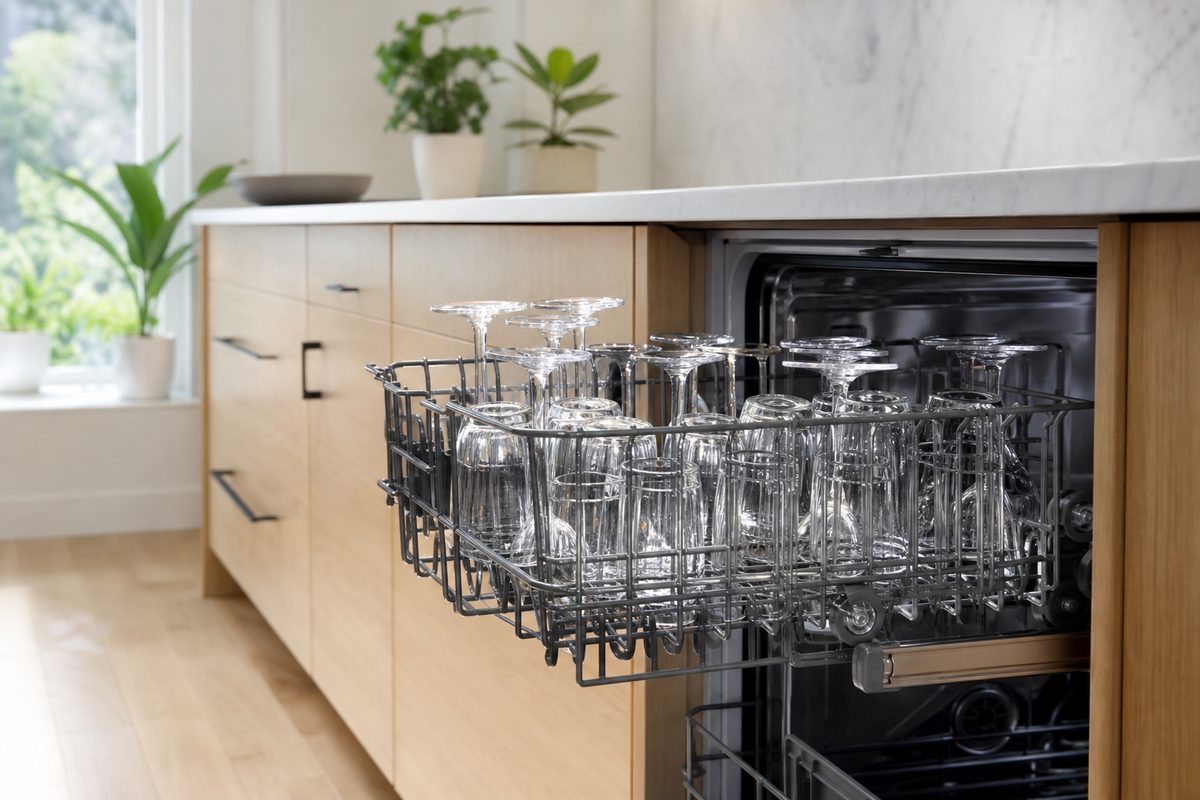
Why does my dishwasher leave white residue on my dishes?
This is the hard water question we hear most in Spokane kitchens, and it almost always comes down to three cheap fixes.
The detergent dose is too low for the water. Hardness minerals bind with part of the detergent before it can clean. The USGS Water Science School puts it plainly: in hard water, soap forms residue instead of lathering, and more of it is needed to clean. Use the full recommended dose, and if your machine has a water hardness setting in its menu (many newer models do), set it to the hard range so the machine adjusts its rinses.
There is no rinse aid. Rinse aid lowers the surface tension of the final rinse so water sheets off instead of drying in droplets. In hard water every droplet that dries leaves a spot, so rinse aid is not optional. Keep the dispenser full.
Scale is coating the inside of the machine. Spray arms, the heating element, and the filter collect scale, and a scaled machine washes worse every month. Run a dishwasher cleaner or a citric-acid descaling cycle on an empty machine about monthly, and rinse the filter at the same time. If the manual permits vinegar, a cup in a bowl on the top rack through a hot cycle works; if it asks for a purpose-made descaler, believe it.
Laundry in hard water: dosing, boosters, and dingy towels
Hard water is why towels go stiff and whites go gray in Spokane even when nothing about the routine has changed. Minerals tie up part of the detergent, and the mineral-soap residue settles into the fabric instead of rinsing away.
Do you need more or less detergent with hard water? More, within reason. Most caps mark a hard-water line, and that is the one to use. Going far past it does not help; detergent that cannot rinse out is its own residue.
Boosters and water conditioners. This is where the chelator family pays for itself. A conditioner added with the detergent grabs the hardness minerals so the detergent works at its normal dose. Sodium-citrate conditioners hold the minerals in solution; washing soda and borax also work but leave a fine sediment that needs a good rinse.
Descale the washing machine. Front-loaders in particular collect scale on the drum and heating element. A monthly empty hot cycle with a washing machine cleaner, or a citric-acid descaler where the manual allows it, keeps it in check.
Reviving gray towels. The hard-water dose plus a conditioner, on the warmest setting the fabric allows, brings most towels back in a cycle or two. Skip fabric softener while you do it; it coats fibers and traps the residue.
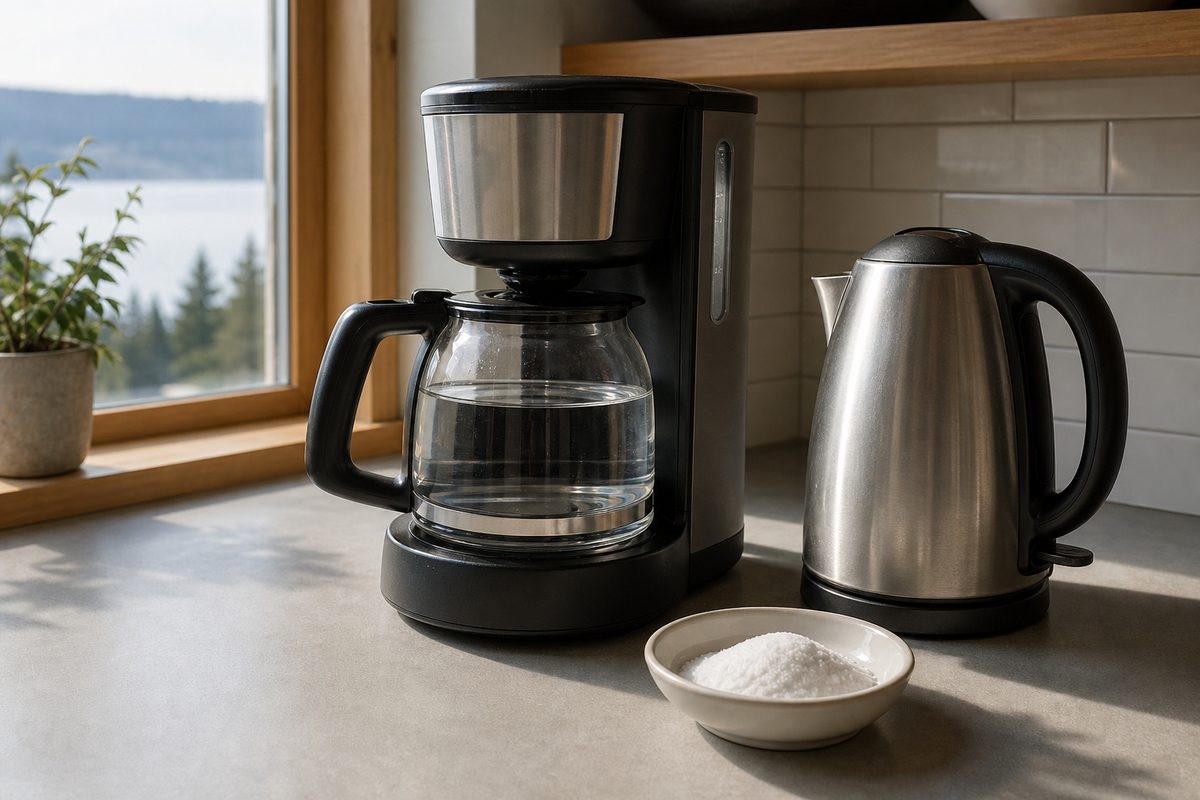
Descaling a coffee maker and a kettle
Heat makes minerals fall out of solution faster, so anything that heats water scales from the inside. The signs are the same across drip machines, pod brewers, espresso machines, and kettles: slower brewing, louder operation, flat-tasting coffee.
How often should you descale your coffee maker? Follow the manufacturer first. Keurig’s own guidance, for example, is every three to six months, or when the descale indicator lights on models that have one. In Spokane’s water, the short end of that range is the safer habit.
Vinegar, citric acid, or the manufacturer’s solution? All three are acids and all three dissolve scale.
- White vinegar is inexpensive and works well in a kettle or basic drip machine. Its drawbacks are the smell, the rinse cycles it takes to clear, and the fact that some manufacturers advise against it because of its effect on seals.
- Citric acid is what many purpose-made descalers are built on. It is odorless, rinses clean in fewer cycles, and is our default for kettles and drip machines when the manual allows a generic descaler.
- The manufacturer’s solution is the right answer for pod brewers, espresso machines, and anything under a warranty you care about.
The method is the same for all three: run the descaler through a full cycle, let it stand if the instructions say to, then run fresh water through until no taste or smell remains. A kettle is the easiest case: fill, boil, stand, pour out, boil fresh water twice.
The water heater, and where we stop
The same USGS page notes that heated hard water deposits minerals that lower a water heater’s efficiency and shorten its life. This is the one appliance here where we do not hand out product advice. Descaling a water heater involves the plumbing, the manufacturer’s procedure, and for tankless units, dedicated flush equipment. Read the manual, and when in doubt, have a licensed plumber do it.
Water softener vs filter: which solves which problem
This comes up in nearly every consultation. We do not install either, but we can tell you what each one does so you ask the right questions.
A water softener removes hardness. Water passes over a resin that trades calcium and magnesium for sodium or potassium, and the resin is recharged with the salt you add to the brine tank. Softened water stops scale at the source, so every appliance in this guide goes back to normal doses. The tradeoffs are the salt, the maintenance, the added sodium, and the fact that many people keep an unsoftened tap for drinking.
A water filter removes something other than hardness. Carbon filters take out chlorine, taste, and odor; sediment filters catch particles. A reverse osmosis unit at the kitchen sink does strip minerals from that one tap, but a whole-house filter generally does not soften water. Products sold as “salt-free softeners” change how scale forms rather than removing minerals, and results vary.
Which one do you need? Scale, spots, stiff laundry, and short appliance life are a hardness problem, and only a softener addresses it. Taste, smell, and chlorine are a filter problem.
A Spokane hard-water shopping list
By family rather than brand, this is the kit our crews carry for hard-water homes.
- White vinegar and food-grade citric acid powder: the gentle acids for kettles, drip machines, glass, and everyday descaling.
- One dedicated limescale or calcium remover for heavy buildup. Read the surface list on the back.
- A pH-neutral stone cleaner: the only thing that touches granite, marble, or quartzite.
- Rinse aid and a hard-water-rated dishwasher detergent.
- A laundry water conditioner or booster, plus a washing machine cleaner for the monthly empty cycle.
- The manufacturer’s descaling solution for any pod brewer or espresso machine under warranty.
- Microfiber cloths and non-scratch pads.
That list, plus a calendar reminder, handles most of what hard water throws at a Spokane home. It is also the kit we use inside a deep cleaning, where descaling the dishwasher and kettle is part of the job. Our deep clean checklist for Spokane homes lays the rest of that list out room by room.
Frequently asked questions about hard water cleaning products
What is the best cleaner for hard water buildup?
An acid. Vinegar and citric acid handle light to moderate scale on glass, ceramic, stainless steel, kettles, and drip coffee makers, and a dedicated limescale remover handles heavy buildup. Surfactant cleaners do not dissolve mineral scale. Keep every acid off natural stone, and use the manufacturer’s descaler inside any appliance whose manual asks for one.
Is citric acid better than vinegar for descaling?
For most appliances, yes. Citric acid is odorless, rinses out in fewer cycles, and is the base of many purpose-made descalers, so it is gentler on seals than repeated vinegar soaks. For pod brewers and espresso machines, the manufacturer’s own solution is the safest choice for the warranty.
Do you need more or less detergent with hard water?
More, up to the hard-water line on the cap, because minerals in the water tie up part of the detergent before it can clean. A water conditioner or booster lets the detergent work at a normal dose instead. Overdosing past the hard-water line does not help and leaves its own residue.
Why does my dishwasher leave white spots on glasses?
Almost always hard water minerals drying on the glass. The fix is the full hard-water detergent dose, a full rinse aid dispenser, and a monthly descaling cycle so scale inside the machine is not adding to the problem. If your dishwasher has a water hardness setting, set it to the hard range.
Is a water softener or a water filter better for hard water?
For hardness itself, only a softener removes the calcium and magnesium that cause scale, spots, and stiff laundry. A filter removes chlorine, taste, odor, or sediment, which are different problems. Many Spokane homes end up with a softener for the house and a filter or reverse osmosis unit at the kitchen tap for drinking.
When the buildup is ahead of you
Hard water is a maintenance problem, and maintenance is easier with a second set of hands. Our recurring house cleaning visits keep everyday scale from settling in on counters, sinks, and fixtures, and a deep cleaning resets the appliances and the places buildup hides. We have done this for Spokane households for 23+ years, in the same water you are dealing with, so the products in our caddies have earned their spot.
If you are anywhere in Spokane or the surrounding area and hard water has been winning, tell us about your home and we will send a written estimate within a business day, with a free in-home consultation if you would like one.