
cleaning tips ·
How to clean pet hair off furniture: a Spokane guide
Pet hair clings to every cushion and rug. Here is how to clean pet hair off furniture in a Spokane home, plus the dander routine that keeps it down.
By Frontline Housekeeping Plus

If you have ever vacuumed the couch, stepped back, and watched a fresh layer of fur appear in the afternoon light, you already know why so many pet owners go looking for how to clean pet hair off furniture and come away frustrated. The problem is rarely effort. It is that hair does not sit loose on upholstery the way crumbs do. It works itself down into the weave and holds on, and a standard vacuum pass glides right over the top of it. We have cleaned Spokane homes since 2002, and pet households are a large share of them, so we have spent a lot of years learning which methods actually pull hair out of fabric and which ones just move it around.
There is a local wrinkle too. Spokane air runs dry for months at a stretch, and dry air means static. Static is what makes hair cling to the sides of a sofa, the front of a dryer, and the vertical face of a cushion, places gravity alone would never put it. That same dryness is why our homes fight household dust harder than homes in wetter climates do. Handle the static and the hair gets dramatically easier to remove. Here is the whole approach, in order.

Why pet hair is so hard to get off furniture
Pet hair has a texture that works against you. The strands are fine, slightly barbed, and they carry a static charge in dry indoor air. Drop a hair on a woven cushion and it does not lie flat: it slips between the threads, angles itself into the weave, and locks in place under the friction of everyone who sits down afterward.
That explains the two things pet owners notice most:
- Suction alone does not do it. A vacuum removes what is loose. Hair that is threaded into the fabric needs to be agitated free first, which is why a bare upholstery nozzle can pass over a cushion and leave it looking barely improved.
- It comes back an hour later. Hair you disturb without capturing goes airborne, drifts, and settles somewhere else in the room. If you brush hair off a chair onto the rug, you have not removed it, you have relocated it.
The fix is a sequence rather than a tool. Loosen the hair, gather it, then vacuum what is left. Skip the first step and you will keep repeating the third.
Hair is only half the problem: dander
The fur you can see is the part that bothers your eyes. The part that bothers your lungs is dander. The Asthma and Allergy Foundation of America explains that pet allergies come from proteins in dander, saliva, and urine rather than from the hair itself, which is why a short-haired pet or a so-called hypoallergenic breed still sets off symptoms in a sensitive household.
Dander is microscopic, light enough to stay airborne for a long time, and sticky enough to cling to fabric, carpet, pillows, and even walls. AAFA also notes that these allergens can remain at high levels for months, so this is not something a single good weekend of cleaning ends forever. It is a maintenance problem, and the maintenance is mostly about soft surfaces.
That means the plan below is not just cosmetic. Every step that pulls hair out of upholstery pulls dander with it.
The order that works
Cleaning a pet household in the wrong order guarantees a second pass. Work like this:
- Strip and launder what comes off. Throw blankets, slipcovers, pet bedding, and the cushion covers that unzip.
- Clear and dust the high surfaces. Shelves, tops of frames, ceiling fan blades, and light fixtures, because dander settles on all of them.
- Do the upholstery. Loosen, gather, then vacuum.
- Do rugs and carpet. Same principle, more passes.
- Do hard floors last, since everything you knocked loose above has landed there.
If you have followed our deep clean checklist, this is the same top-to-bottom logic with the pet steps built in. Gravity should be working for you, not against you.
Upholstery, step by step
This is the part most people ask about, so here is the method we actually use on fabric sofas and chairs.
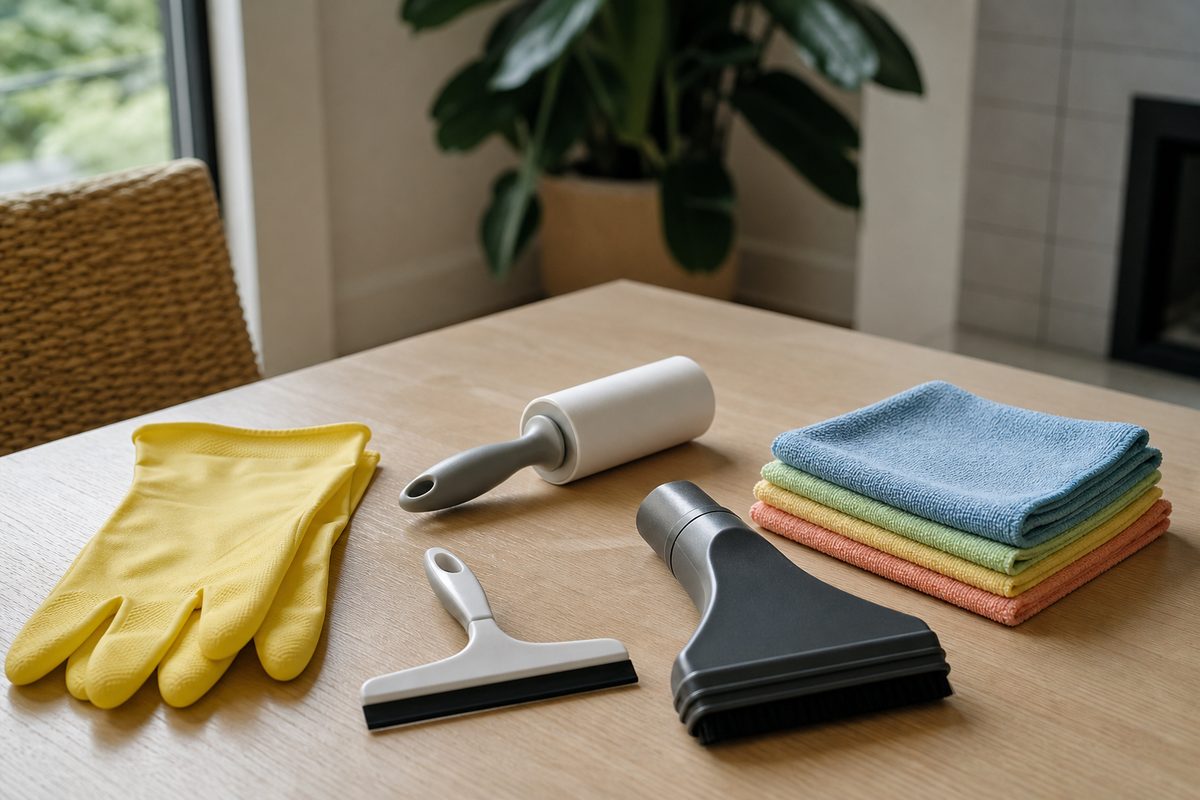
Start with a damp rubber glove. Put on an ordinary household rubber glove, dampen the palm slightly, and drag your hand across the cushion in one direction with firm pressure. The friction and the slight tack pull hair up out of the weave and roll it into visible clumps you can lift off. Rinse the glove when it loads up and keep going. It looks almost too simple, and it consistently outperforms tools that cost far more.
Or use a squeegee. A flat rubber window squeegee does the same job on larger flat surfaces, and it is faster on a long sofa seat. Pull it toward you in short strokes and the hair gathers into rows you can pick up by hand.
Then vacuum in two directions. Switch to the upholstery attachment, and go over the whole piece vertically first, then horizontally. Working across the grain of the fabric agitates the fibers and releases hair the single-direction pass leaves behind. Use the crevice tool along every seam, in the gap where the back meets the seat, and under the cushions, because that is where the heaviest accumulation lives.
Finish the vertical surfaces. Sofa sides, chair backs, and skirts collect a surprising amount of hair through static, and they are the easiest thing to forget because you do not sit on them.
Different fabrics, different touch
- Microfiber and microsuede hold hair tightly but respond very well to the glove method. Follow with a soft brush in one direction to reset the nap.
- Leather does not trap hair, it just carries it. Wipe with a slightly damp microfiber cloth, then dry. Skip anything abrasive.
- Velvet and chenille need a light hand. Use a soft upholstery brush attachment and follow the nap rather than fighting it.
- Woven and tweed are the worst offenders, and the ones where the two-direction vacuum pass earns its keep.
Carpet, rugs, and the entry
Carpet is a reservoir. Hair and dander sift down past the surface, out of reach of a quick pass, and a single vacuum run over a high-traffic pet area rarely gets more than the top layer.
- Slow down. Vacuum speed matters more than vacuum power. Half your normal pace, with overlapping passes, removes considerably more than a fast run.
- Cross-hatch here too. Go one direction, then perpendicular. On area rugs where pets sleep, add a third diagonal pass.
- Use a rubber broom on stubborn patches. Dragging a stiff rubber broom across carpet raises embedded hair into a pile you can vacuum or pick up.
- Do the edges and under the furniture. Baseboards, carpet edges, and the strip under a sofa collect hair that the middle of the room does not.
- Give the entry extra attention. Paws track in grit that grinds hair deeper into the fibers. A washable mat inside the door does more than it looks like it does, which is the same lesson our winter mud, snow, and salt season teaches every Spokane household.
Carpet and upholstery that hold odor or that have not had a deep treatment in a long while eventually need extraction rather than surface work. Hot water extraction flushes hair, dander, and soil out of the fiber base in a way that vacuuming cannot, which is why a periodic carpet and upholstery cleaning resets a pet household better than any amount of weekly effort.
Filters, vents, and the air itself
Everything you loosen has to go somewhere, and in a pet home a meaningful share of it ends up circulating.
- Use a vacuum with a HEPA filter. A vacuum without good filtration can pass fine dander straight through and exhaust it back into the room, which makes the air worse while the carpet looks better. AAFA specifically recommends a HEPA-filter vacuum for households with pet allergies.
- Change the HVAC filter more often than the package says. Pet homes load filters faster. A clogged filter stops trapping and starts making the system work harder.
- Wipe the return and supply vent covers, which build a visible fringe of hair and dust that the system keeps recirculating.
- Watch your humidity. The EPA recommends keeping indoor relative humidity between 30 and 50 percent and below 60 percent. In a Spokane winter, most homes run under that range, which is exactly the condition that makes hair cling with static. A humidifier in the main living area helps the hair problem and the comfort problem at the same time.
Cut the shedding before it reaches the furniture
The cheapest hair to clean is the hair that never lands on the couch.
- Brush your pets on a schedule, ideally outdoors or in a room that is easy to clean. Regular grooming during a shedding stretch removes far more hair than any cleaning routine downstream of it.
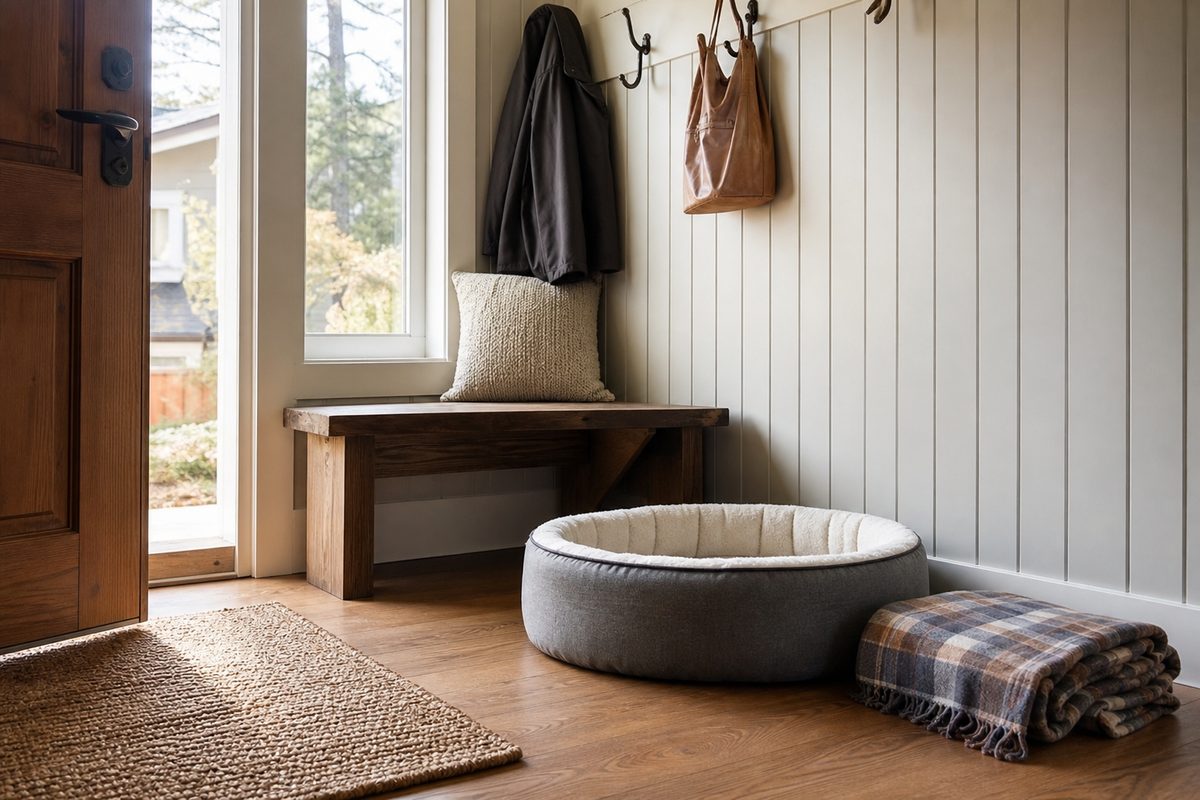
- Give them a designated soft spot. A washable bed or a blanket on their favorite cushion concentrates the hair onto something that goes in the laundry.
- Wash pet bedding weekly on the warmest setting the fabric allows. AAFA advises washing blankets and throw rugs weekly in hot water for allergy control.
- Wipe paws and coats at the door after wet or dusty outings, which keeps grit from working hair deeper into your floors.
A realistic weekly routine
You do not need to do all of the above every week. In a typical pet household, this holds the line:
- Daily, five minutes: a quick glove or lint-roller pass over the seat your pet actually uses, and a shake of the entry mat.
- Twice a week: HEPA vacuum the rooms where the pets spend their time, slowly, with the crevice tool along the sofa seams.
- Weekly: wash pet bedding and throw blankets, damp-dust the hard surfaces, do the full two-direction upholstery pass on the main sofa.
- Monthly: move the furniture and vacuum underneath, wipe the vent covers, check the HVAC filter.
- Seasonally: extraction on carpet and upholstery, and a full top-to-bottom reset.
That last one is where most people decide to hand it off, and it is a reasonable place to draw the line. Our crews run HEPA-filter vacuums, work the seams and undersides most routines skip, and treat pet areas as their own category rather than an afterthought during a regular house cleaning visit.
Anna, Bailey and Alana did an excellent job. Met all of our expectations and even handled our dogs with charm. We have used Frontline for years to house clean and windows. Always professional and well done.
Questions we hear from pet owners
What is the best way to get pet hair off furniture?
Loosen it before you vacuum it. A damp rubber glove or a rubber squeegee dragged across the fabric in one direction pulls embedded hair up into clumps you can lift off, and a two-direction vacuum pass with the upholstery attachment finishes the job. Vacuuming alone glides over hair that is woven into the fibers.
Does a lint roller work on pet hair?
On clothing and leather, yes. On woven upholstery it only picks up what is sitting on the surface, so it is a good touch-up between real cleanings rather than the cleaning itself. For a cushion that has weeks of hair worked into it, a glove or squeegee removes far more in less time.
How do I stop pet hair from sticking to the couch?
Most of the clinging is static, which is why it gets worse in a dry Spokane winter. Keeping indoor humidity in the 30 to 50 percent range the EPA recommends makes a real difference. A washable throw over your pet’s favorite spot handles the rest, since the hair collects on something you can put in the wash.
Is pet dander the same as pet hair?
No, and the distinction matters. Hair is the visible nuisance; dander is microscopic skin flakes carrying the proteins that actually trigger allergies. Dander settles into carpet, upholstery, and bedding and lingers long after a room looks clean, so soft surfaces are where the allergy work happens.
How often should I vacuum if I have pets?
Vacuum the rooms your pets use at least twice a week, and daily in the highest-traffic spot if someone in the house has allergies. AAFA recommends vacuuming fabric furniture and carpets weekly as a baseline, and pets are exactly the situation that pushes you above a baseline.
Do air purifiers help with pet dander?
A HEPA air cleaner captures airborne dander and helps in the room it is running in, particularly a bedroom. It does not touch what has already settled into your carpet and cushions, so treat it as a companion to cleaning the soft surfaces, not a replacement for it.
When to bring in help
A pet household is not dirtier than any other home. It just has a steadier input, and steady inputs reward a system rather than a burst of effort. If the sofa has reached the point where the weekly pass is not making progress, a reset is worth more than another Saturday.
We have cleaned Spokane homes since 2002, including a great many with dogs, cats, and both at once. If you are anywhere in Spokane or the surrounding area, tell us about your home and your pets and we will send a written estimate within a business day, with a free in-home consultation if you would like one.