
cleaning tips ·
How to keep dust down in your house: a Spokane guide
Spokane's dry, windy summers push fine dust into every home. Here is how to keep dust down in your house, where it comes from, and a routine that keeps it away.
By Frontline Housekeeping Plus

If you have ever wiped a shelf on Monday and found a soft gray film back by Thursday, you already know the problem this guide sets out to solve. Learning how to keep dust down in your house is less about dusting more often and more about understanding where the dust is coming from and cutting it off closer to the source. In a dry, windy climate like ours, that matters even more. We have cleaned Spokane homes since 2002, and dust is the single most common complaint we hear, right alongside hard water. The good news: a home that dusts up fast can be brought under control with a handful of steady habits.
Spokane sits in a high, dry basin where the wind picks up fine grit off open ground and carries it for miles. Add road dust, construction, agricultural dust off the surrounding farmland, and a long wildfire season, and our homes simply have more airborne particles working their way inside than a home in a wetter climate does. You cannot change the outdoor air, but you can change how much of it settles on your furniture. Here is the approach we use, in the order that actually works.
Where household dust actually comes from
Before you can keep dust down, it helps to know what you are up against. Household dust is a mix of things: flakes of dead skin, fabric and carpet fibers, pet dander, pollen, soil, and fine particles that drift in from outdoors. A meaningful share of it is not generated inside your home at all. It is tracked in on shoes and clothing and pulled in through gaps around doors, windows, and your HVAC system, then stirred back into the air every time someone walks across the room.
That outdoor share is exactly why Spokane homes dust up faster than many people expect. The Spokane Regional Clean Air Agency tracks coarse particulate matter, called PM10, which includes larger particles such as dust, and it lists local sources including paved and unpaved roads, construction, and agricultural dust off the surrounding farmland. On a gusty summer afternoon, a lot of that fine grit ends up on your side of the window screen.
Knowing the sources reframes the whole job. If most of the dust is arriving from outside and hiding in the soft materials inside, then the winning move is not to chase it around with a feather duster. It is to block it at the entry points, remove it in a way that actually traps it, and keep the air moving through a good filter.
Why is my house so dusty, even after I clean?
This is the question we hear most, and there are usually a few culprits working together:
- Dry dusting that re-spreads. Feather dusters and dry rags lift the fine particles into the air, where they hang for a while and then resettle on the surface you just cleaned. You are not removing the dust, you are relocating it.
- A vacuum that leaks. A vacuum without a sealed system and a good filter can push fine dust straight through and blow it back into the room. The floor looks clean while the air gets dustier than when you started.
- A clogged HVAC filter. Your furnace and air conditioner move the whole house’s air through that filter. When it is loaded, it stops catching much and just recirculates dust from room to room.
- The spots everyone misses. Ceiling fan blades, the tops of doors and cabinets, baseboards, blinds, and vent covers quietly build up, then shed onto everything below.
- Carpet and clutter. Carpet holds fine dust deep in the pile, and every flat surface covered in objects is a surface that collects and hides it.
Fix the method and the sources, and the same amount of cleaning suddenly holds for far longer.
Start at the source: keep dust from getting in
Because so much dust arrives from outside, the highest-value step is also the easiest: stop it at the threshold.
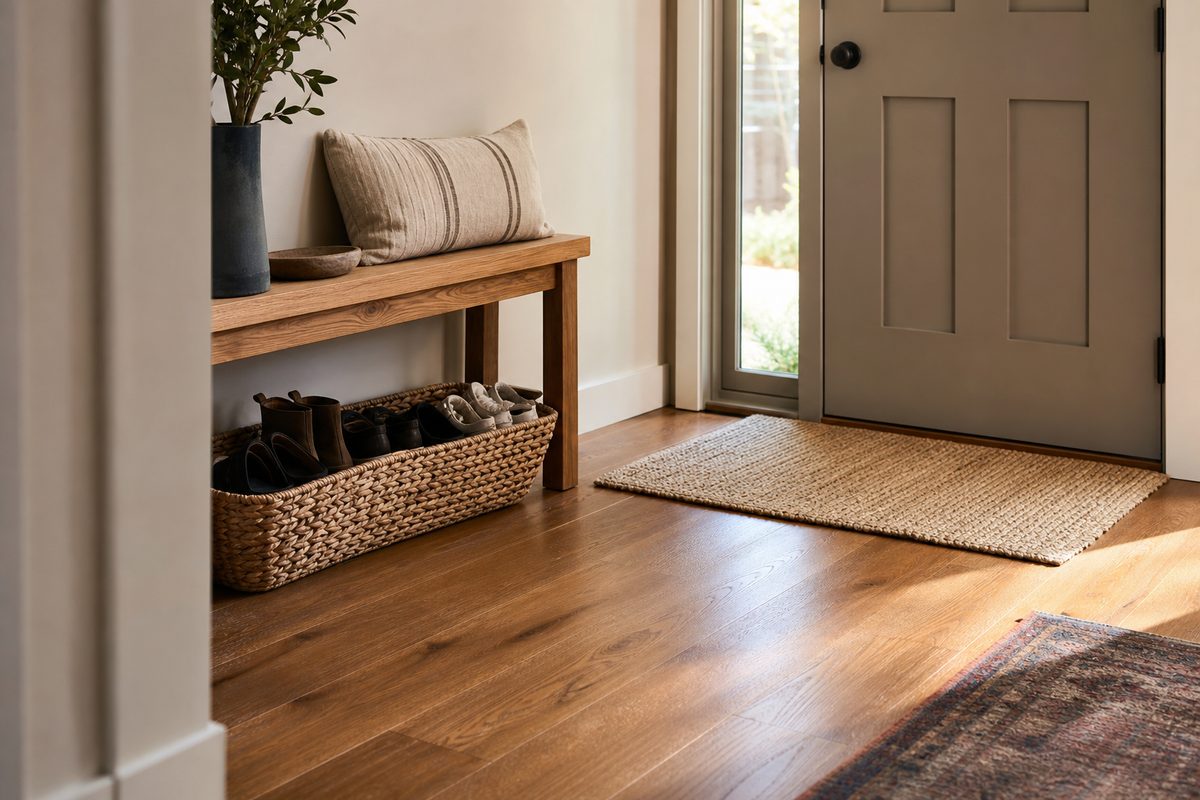
- Build a real shoe zone. Put a sturdy mat outside the door and a second, absorbent mat just inside it, then make taking shoes off at the door the house rule. In a place with as much outdoor grit as ours, this one habit removes a genuine chunk of what would otherwise become floor dust.
- Check your screens and seals. Torn window screens and worn weatherstripping let outdoor dust ride the wind straight in. On the next mild day, walk the house and note any screens to patch and any doors and windows that need fresh weatherstripping. The EPA’s guidance on improving indoor air quality puts source control first for a reason: it is almost always the most effective step.
- Groom your pets. Regular brushing, ideally outdoors, pulls loose hair and dander before it becomes airborne dander in your living room. Pet owners tend to feel this change the fastest.
- Close up during dust and smoke events. When the wind is howling or the smoke rolls in, keep windows shut and run the HVAC on recirculate. This is the same discipline we cover in our guide to cleaning up after wildfire smoke, and the two problems overlap more than people think.
Dust the right way, from the top down
How you dust matters as much as how often. The method we use in every home comes down to a few rules:
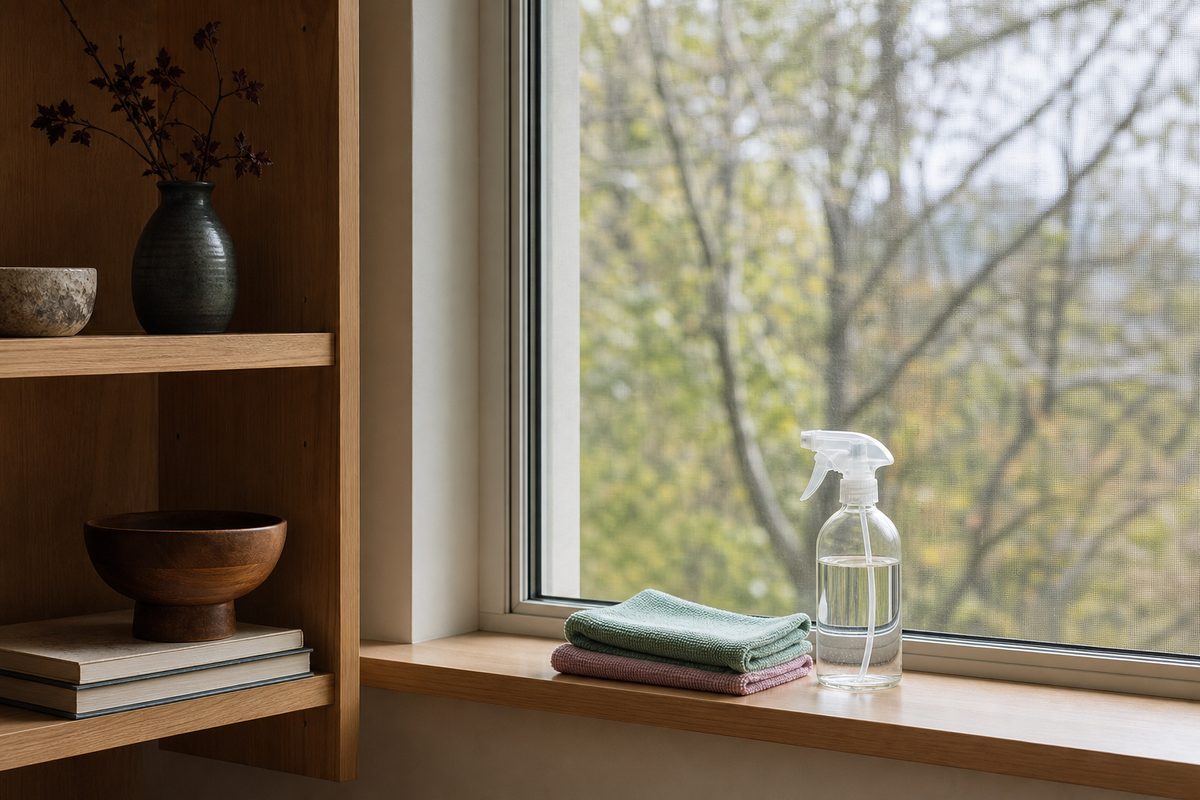
- Go damp, not dry. A lightly dampened microfiber cloth grabs and holds fine particles. A dry cloth or a feather duster just launches them. This single change does more than any product on the shelf.
- Work top to bottom. Start high with ceiling fans and the tops of cabinets and shelves, then mid-level surfaces, then floors last. Anything you knock loose up high drifts down, so cleaning the floor first only means cleaning it twice.
- Do not skip the verticals and hidden spots. Blinds, door frames, baseboards, light fixtures, and the tops of the fridge and cabinets are where dust hides in plain sight.
- Vacuum with a sealed, HEPA-filter machine. A true HEPA filter is built to trap the very fine particles a standard vacuum can blow right back out. It is the difference between removing dust and rearranging it, and it is why our crews run HEPA-filter passes as standard.
- Wash the soft stuff on a schedule. Bedding, throw blankets, slipcovers, and washable curtains all hold dust and shed it back into the room. Laundering them regularly, on the warmest setting the fabric allows, empties a reservoir of dust most people never think about.
- Cut the clutter. Every knickknack is a dust shelf. Thinning what sits out on open surfaces makes the surfaces that remain far faster to keep clean.
None of this is complicated. The reason it works is that each step either removes dust for good or stops it from going back into the air, instead of just moving it from one surface to the next. When a home has gotten ahead of you and you want a single reset to build the routine on top of, a top-to-bottom deep cleaning clears the backlog in one visit, and our room-by-room deep-clean checklist shows exactly what that covers.
We hear this from customers all over the region, especially those on the outskirts where wind and open ground make dust a constant companion.
We live in the country and fight dust constantly. So when it came time to take care of the china hut, windows and ridges on the log walls of our house I called Frontline.......the young lady who came was very thorough and professional. I was very pleased with the results!
Filters, air, and the dryness factor
Your HVAC system and the air itself make up the part of dust control most people overlook.
- Change the filter on a schedule. A fresh, well-rated furnace filter is one of the cheapest, highest-impact things you can do, because the system pulls the whole house’s air through it. Set a reminder and change it regularly, and more often during smoke season or if you have pets.
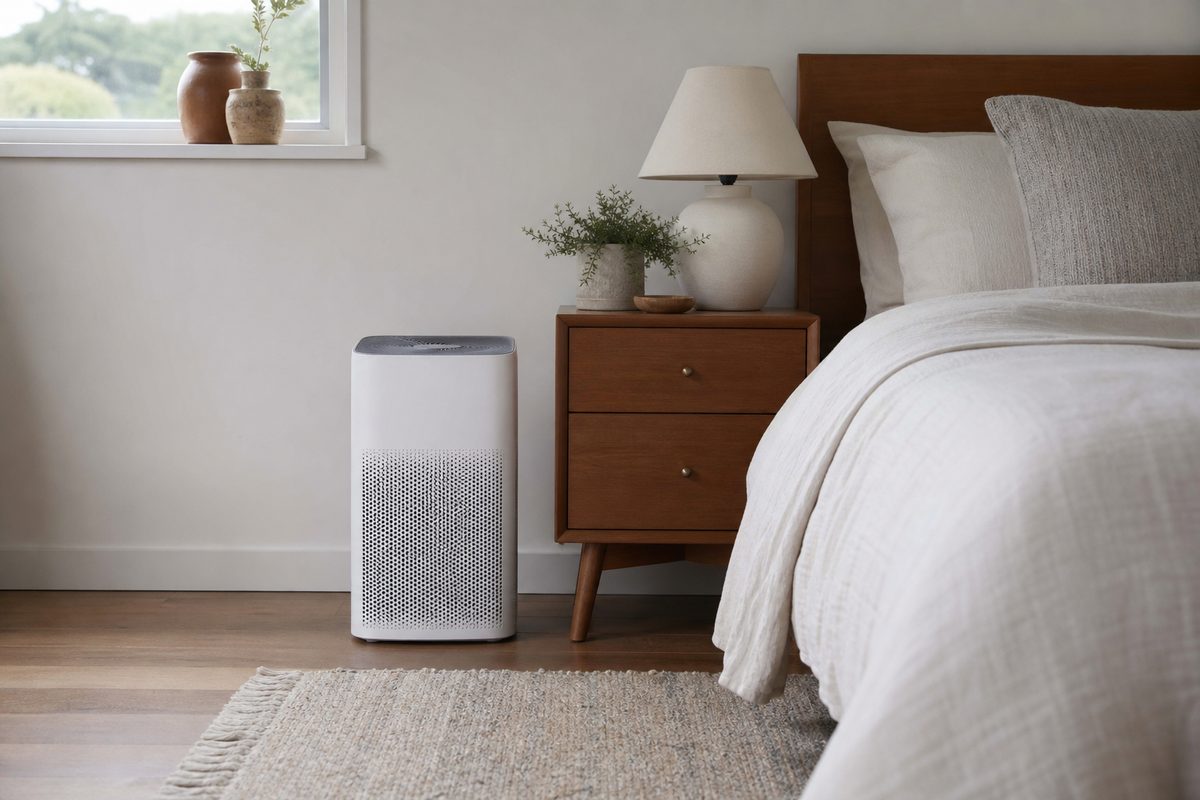
- Consider a HEPA air purifier for the rooms you live in. Running a true HEPA air cleaner in the bedroom and main living area pulls fine dust out of the air before it can settle, which means the surfaces in those rooms stay clean noticeably longer. The EPA lists air filtration as one of its three core strategies for cleaner indoor air, alongside source control and ventilation.
- Mind the dryness. Spokane’s famously dry air keeps fine dust airborne longer than a humid climate does, so it drifts and resettles more. Keeping indoor humidity in a comfortable middle range, rather than bone dry, helps some of that fine dust settle where a HEPA vacuum and a damp cloth can collect it.
How often should you dust?
There is no single right answer, because it depends on your household, your pets, and the season. As a working rule, the high-traffic, high-touch surfaces in your main living areas benefit from a light damp dusting a couple of times a week, while the whole-house pass, meaning blinds, baseboards, fan blades, and the high and hidden spots, holds up well anywhere from once a week to once a month depending on how fast your home loads up. In Spokane, most homes need to dust more often in late summer and midwinter than in the milder shoulder seasons. The honest test is your own finger on a shelf: if it is loading up faster than your routine keeps up with, tighten the schedule or tighten the sources.
When you would rather hand it off
A consistent dust routine is very doable on your own. But if you are short on time, managing allergies, or simply tired of fighting the same gray film every week, this is exactly the kind of steady, methodical work we take off people’s hands. We have kept Spokane homes clean for 23+ years, and our crews dust top to bottom with damp microfiber and run HEPA-filter passes as a matter of course, paying attention to the fan blades, vents, and baseboards where dust hides.
Regular house cleaning keeps the routine going without you having to think about it, and if you are anywhere across Spokane and the surrounding area, we would be glad to help. Tell us about your home and we will send a written estimate within a business day, with a free in-home consultation if you would like one.
Dust questions we hear from Spokane homeowners
Why is my house so dusty even after I clean?
Usually it is method, not effort. Dry dusting and a leaky vacuum push fine particles back into the air, where they resettle within the hour, and a clogged HVAC filter recirculates dust through every room. Switch to damp microfiber, a sealed HEPA-filter vacuum, and a fresh furnace filter, and the same cleaning holds far longer.
What is household dust actually made of?
It is a blend of dead skin flakes, fabric and carpet fibers, pet dander, pollen, and soil and fine particles carried in from outdoors. A large share of it originates outside your home and gets tracked or drawn in, which is why sealing entry points and taking shoes off at the door make such a difference.
Do air purifiers really help with dust?
Yes, for the airborne portion. A true HEPA air cleaner captures fine dust while it is still floating, so less of it settles on your surfaces and you dust less often as a result. It does not replace cleaning, though. Dust already settled into carpet, upholstery, and bedding still needs a HEPA vacuum and laundering to remove.
How often should I dust my house in Spokane?
A light damp dusting of main living areas a couple of times a week, plus a fuller pass anywhere from weekly to monthly, suits most homes. Expect to do it more often in late summer, when wind and wildfire season load the air, and in deep winter, when the house is closed up and the furnace runs constantly.