
cleaning tips ·
Post construction cleaning checklist for Spokane homes
A post construction cleaning checklist for Spokane remodels and new builds: how to clear drywall dust in the right order, room by room, without spreading it.
By Frontline Housekeeping Plus

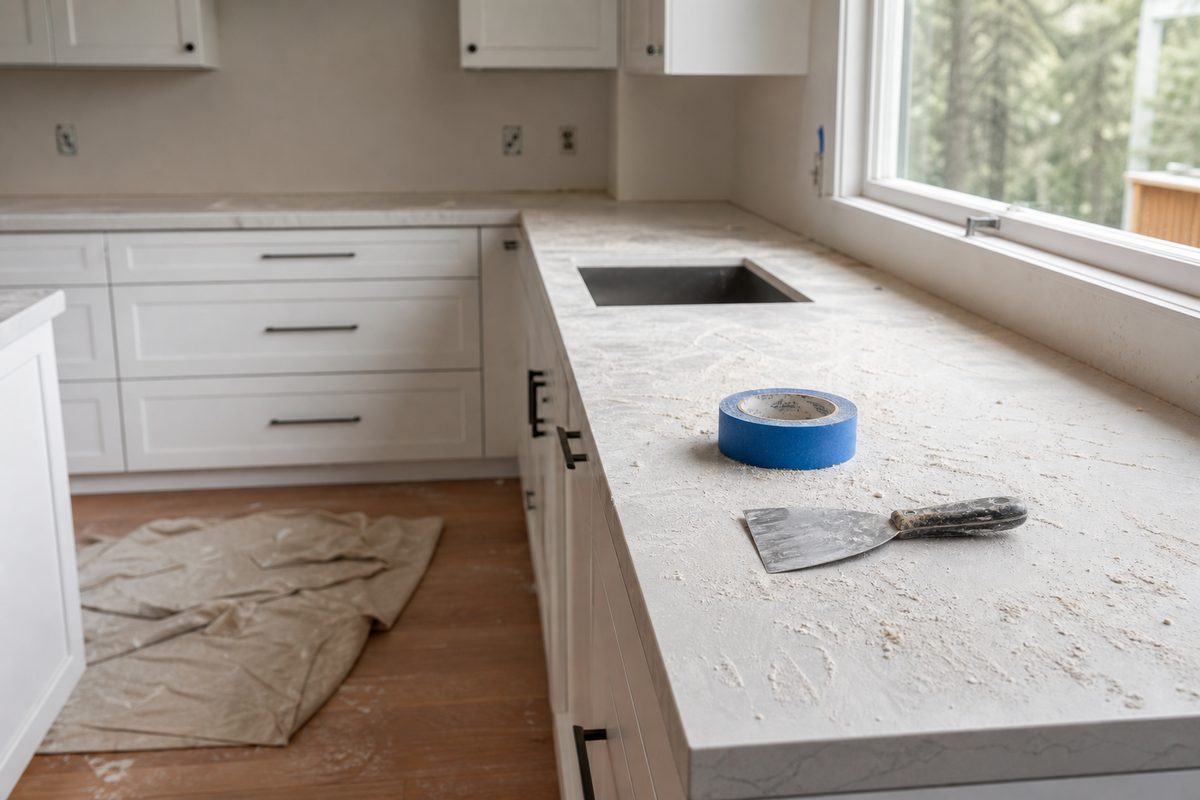
The contractor pulls the plastic down, sweeps up the big pieces, hands you the keys to your own kitchen, and leaves. The room looks finished. Then the afternoon light comes through the window at an angle and you see it: a fine gray film on the countertops, the tops of the cabinet doors, the blades of the ceiling fan, the inside of a drawer you have not opened yet. That is where a post construction cleaning checklist earns its keep. We have cleaned Spokane homes since 2002, through basement finishes in Perry District bungalows, kitchen gut jobs on the South Hill, and brand-new builds out toward the valley, and the pattern is always the same. The build is done. The dust is not.
Why construction dust is not like ordinary house dust
Regular household dust is mostly fabric fibers, skin, pollen, and whatever blows in off a Spokane summer wind. It is soft, it is light, and a damp cloth handles it. Construction dust is a different material entirely, and treating it like normal dust is the reason so many people end up cleaning the same room three times.
- It is mineral, not fluff. Drywall dust is gypsum. Tile and concrete dust is silica. Sanding and cutting these materials produces particles that are abrasive rather than fluffy, and dragging a dry rag across a finished surface can leave fine scratches in it.
- It travels far past the work zone. Even with plastic sheeting and a zipper door, dust migrates through the return-air system, under doors, and on shoes into rooms nobody worked in. Homeowners are routinely surprised to find it in a closet at the other end of the house.
- It stays airborne for days. The heavy particles drop within hours. The very fine ones from sanding or dry cutting can circulate for days, which is why the room you cleaned on Monday looks hazy again on Wednesday.
- Some of it is a genuine irritant. OSHA’s guidance on respirable crystalline silica is written for job sites, but the underlying point applies at home too: dust created by cutting, sawing, grinding, or drilling stone, concrete, brick, and mortar is fine enough to reach deep into the lungs, and it is worth respecting during cleanup, not just during the work.
That combination, abrasive, everywhere, and slow to settle, is what shapes every step below.
Before you start: two things to settle first
Wait for the dust to fall. If the last sanding happened this morning, cleaning tonight is largely wasted effort. Give the space at least a day with the HVAC off or on recirculate and the doors closed. Bigger jobs and heavier sanding need longer.
Gear up. Gloves, safety glasses, and an N95 respirator, not a paper dust mask. Cleanup stirs the fine particles right back into the air, so the act of cleaning is often dustier than the room looked when you walked in.
The three phases, and which one you actually need
Commercial crews split post-construction work into three passes, and the vocabulary is worth knowing because it is what your contractor is using.
Rough clean happens while trades are still coming and going. It is debris removal: offcuts, packaging, buckets, stray screws, a first vacuum so the finish trades can work. It is not detail work, because more dust is coming.
Final clean happens once every surface is in its final state. Paint dry, flooring down, fixtures mounted, counters set. This is the heavy pass and the one this checklist is built for: detailed dusting, glass, cabinets, appliances, floors, top to bottom.
Touch-up comes after the last punch-list items and the final walkthrough, right before you move furniture back in or move in entirely. It is a light pass for new smudges, fresh fingerprints, and the dust that settled out of the air in the meantime.
For a single-room remodel, most Spokane homeowners realistically need one thorough final clean and a lighter touch-up a week later. For a whole-house renovation or a new build, all three phases matter.
The post construction cleaning checklist
Everything here follows one rule: gravity wins. Every surface you clean sheds dust onto whatever is beneath it, so you go from the ceiling down and finish on the floor. And within each surface, you dry-remove first, then wipe.
Start high
- Ceiling corners, crown molding, and the edges where wall meets ceiling.
- Ceiling fan blades, on top as well as underneath. Vacuum first; a dry wipe here rains dust across the whole room.
- Light fixtures, recessed-can trim rings, and pendant shades. Drywall dust settles inside glass shades and shows the moment the light is on.
- Tops of door frames, window casings, upper cabinets, the refrigerator, and any tall furniture. Nobody sees these at eye level, and every one of them is holding a stripe of gray.
Walls, trim, and doors
- Vacuum walls with a soft brush attachment before anything wet touches them. Fresh paint is more delicate than it looks, and dry-removing first is what keeps you from grinding grit into it.
- Wipe baseboards, chair rails, and window casings, including the top edge of every baseboard, which is a dust shelf.
- Doors, both faces, plus the top edge and around the hardware. Sanding dust collects in the panel details and around the knob.
- Check for paint overspray, adhesive residue, caulk smears, and the pencil marks trades leave on trim.
- Peel and clean off the manufacturer stickers and labels on new windows, appliances, tubs, and fixtures. This is the single most commonly skipped item on any punch list.
Windows, tracks, and screens
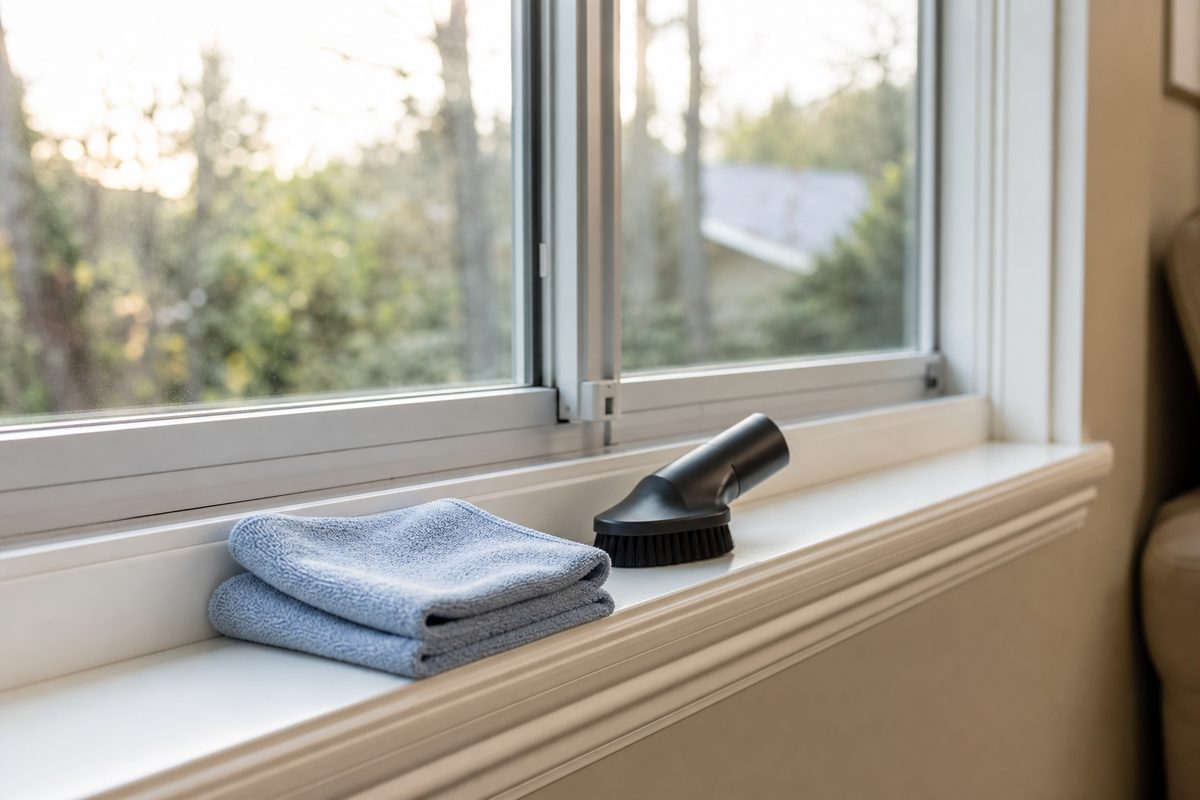
- Vacuum the tracks and sills before wiping. Tracks fill with grit, and running a wet cloth through first just makes mud.
- Wash interior glass last, after the dusty work above it is done, or you will do it twice.
- Remove any protective film left on new glass, and check the frames for compound and paint flecks.
- Rinse screens outdoors and let them dry completely before reinstalling.
Cabinets, drawers, and closets
- Open every door and drawer. Dust gets inside during the build, and closing them does not make it go away.
- Vacuum the interiors, then wipe. Do the underside of shelves and the inside face of every door.
- Clean the top of the upper cabinets and the toe-kick underneath. Both are out of sight and both are filthy.
- Wipe hardware, hinges, and drawer glides, where fine grit turns into grinding noise later.
Kitchen and bathrooms
- Appliances inside and out, including the coils and the sides of the refrigerator, the interior of a new oven, and the seals on the dishwasher.
- Countertops and backsplash, plus the seam where they meet, which catches grout haze and caulk crumbs.
- Sinks, faucets, showers, and tubs, with attention to construction debris in the drains and grit under the faucet base.
- New tile usually needs grout haze removed, which is its own step and not the same as a general wipe-down.
- Mirrors, glass shower doors, and any polished chrome last, once the dusty work is finished.
Floors last
- Vacuum everything with a HEPA-filter vacuum, including carpet, hard floors, and stair treads and risers. A standard vacuum can pass the fine particles straight through and blow them back into the room.
- Vacuum a second time. On a heavy job, the first pass genuinely does not get it all.
- Peel up floor protection, then check for adhesive residue and paint drips before you mop.
- Damp-mop hard floors, changing the water often. Gray water spread thin is just a haze that dries back onto the finish.
- Carpet that lived through a remodel almost always holds embedded grit, so vacuum slowly and in two directions.
The HVAC step everyone skips
Your furnace and air conditioner pulled construction dust through the whole system while the work was happening, and until you deal with that, the system will keep handing it back.
- Replace the HVAC filter as soon as the work is done, and check it again in a couple of weeks. On a heavy remodel it can load up fast enough to choke airflow.
- Vacuum and wipe every supply register and return grille, including the slats. The return grille is usually the dirtiest thing in the house at this point.
- Vacuum the visible duct interior just inside the registers where you can reach it.
- Run a portable HEPA air cleaner in the room for a few days afterward. It catches what is still floating rather than waiting for it to land on your clean counters.
How long this actually takes
A single bathroom or a small bedroom remodel is an afternoon if you are methodical. A kitchen is a long day. A whole-house renovation or a new build is a multi-day job, and it is genuinely harder than it looks, because most of the work is detail work: drawer interiors, cabinet tops, window tracks, register slats, sticker residue. None of it is difficult. All of it is slow.
Two things stretch the timeline more than square footage does: how much sanding happened, because sanding dust is the kind that keeps resettling, and how much new material went in, since every new window, appliance, and fixture arrives with film, stickers, and adhesive that has to come off by hand. If the space is still empty, clean it now. It is far easier before the furniture arrives.
Angel and Katie M. did an excellent job. Every countertop, sink, toilet, shower and tub were immaculately clean and sparkling. They dusted everything including the special request to dust the doors .The house even smells clean and fresh after they have left.
Questions we hear after a remodel
How long does construction dust take to settle?
The heavy particles drop within a few hours, but the fine dust created by sanding and dry cutting can stay airborne for a day or more, and in a poorly ventilated space it keeps resettling intermittently for a week or two. That is why we recommend waiting a day before the final clean and planning a lighter touch-up pass about a week later.
What is included in post construction cleaning?
A final clean covers detailed dusting from ceiling to floor, walls and trim, doors and frames, inside and outside all cabinets and drawers, windows including tracks and sills, sticker and adhesive removal, appliances inside and out, full kitchen and bathroom detail, HVAC registers, and a HEPA vacuum plus damp mop of every floor. Debris and material removal is usually the contractor’s rough-clean phase, not part of the final clean.
Should you use water or dry methods on construction dust?
Dry first, then damp. Water on raw drywall dust turns it into a paste that clings to the surface and is harder to remove than the dust was. Vacuum with a HEPA filter and dry microfiber to take the bulk of it away, then follow with a damp cloth to pick up the residue. This is the opposite of how we clean wildfire smoke residue, where damp methods come first.
Do I need post construction cleaning after a small remodel?
Usually yes, and usually beyond the room itself. Even a single-bathroom project sends dust into the hallway, the adjacent bedrooms, and the HVAC system. The room that was worked on is obvious. The rooms nobody touched are the ones people forget, and they are where the lingering dusty feeling comes from weeks later.
Is post construction cleaning the same as a deep clean?
They overlap, but they are not the same job. A deep clean resets a lived-in home: buildup, grease, soap scum, neglected corners. A post-construction clean removes a specific kind of debris left by a specific event, and it adds tasks a deep clean does not include, such as sticker and adhesive removal, grout haze, paint overspray, and cleaning inside brand-new cabinetry.
When to hand it off
There is no mystery to this work. There is just a lot of it, and it is unforgiving of shortcuts, because the surfaces are new and the dust is abrasive. If you have the time and the right vacuum, the checklist above will get you there.
If you would rather have the space simply be finished, that is what our post-construction cleaning service is for. We bring HEPA vacuums, we work top to bottom, and we do the tedious parts: drawer interiors, register slats, cabinet tops, sticker residue, tracks. On a heavier job we will often pair it with a deep cleaning of the rest of the house, because the dust rarely stayed in the room it started in. If dust in general is a running battle at your place, we wrote a separate guide on keeping dust down in a Spokane home.
We have been doing this in Spokane and the surrounding area since 2002. Tell us about your project on our free estimate page and we will send a written estimate within a business day, with a free in-home consultation if you would like one.