
cleaning tips ·
Deep Clean Checklist: Every Room, in Order
A room-by-room deep clean checklist that works top to bottom, in the right order, from a Spokane cleaning crew. What to clean, how often, and what to skip.
By Frontline Housekeeping Plus

A good deep clean checklist is not a longer version of your weekly tidy-up. It is a different job done in a deliberate order, reaching the buildup that routine cleaning never touches: the grease film on the range hood, the soap scum welded into the shower glass, the dust riding the tops of your kitchen cabinets. After cleaning Spokane homes since 2002, we have learned that the order you work in matters as much as the effort you put in. Clean top to bottom, room by room, and you only clean each surface once. Clean out of order, and you spend the afternoon redoing work gravity already undid for you.
This is the checklist our crews actually use, adapted so you can run it yourself on a free weekend. It is built for Spokane homes specifically, which means it accounts for our hard water, our wildfire-smoke summers, and the mud and grit that four real seasons track across a floor.
Deep cleaning vs regular cleaning: what is actually different
Regular cleaning keeps a home livable week to week: dishes, counters, a vacuum pass, a wipe of the bathroom, the visible surfaces. Deep cleaning goes after the buildup that maintenance cleaning never reaches, because you do not get to it on a Tuesday night. That is the inside of the oven, the grout lines, the baseboards, the window tracks, the dust on top of the door casings, and the grime behind and under the furniture.
The simplest way to think about deep cleaning vs regular cleaning is depth and reach. A regular clean handles the surfaces you use every day. A deep clean handles the surfaces you forget exist until you finally look at them in raking afternoon light. Most homes need both: the deep clean resets the house, and a steady rhythm of regular house cleaning that keeps the results going holds the line until the next one.
It is worth saying plainly what deep cleaning is not. It is not disinfecting. The CDC notes that cleaning with soap, water, and scrubbing removes most germs, and that for most homes, routine cleaning is enough. Deep cleaning is about removing buildup. Disinfecting is a separate, narrower step we will come back to near the end.
How to use this deep clean checklist (work top to bottom, room by room)
Two rules carry the whole job, and they are the two most people get wrong.
Top to bottom. Start high and finish at the floor. Ceiling fans, the tops of cabinets and the fridge, light fixtures, and crown trim first. Then mid-level surfaces: counters, shelves, furniture. Floors last. Anything you knock loose up high drifts down, so if you mop first you will be vacuuming dust off a clean floor an hour later. Top to bottom cleaning means gravity works for you instead of against you.
Room by room, dry before wet. Finish one room before you carry your supplies to the next, and within each room do your dry work, the dusting and vacuuming, before your wet work, the wiping and mopping. Dusting after you have wiped a surface just lands grit back onto a damp counter. A room-by-room deep cleaning checklist also keeps you from the most demoralizing version of this job, which is half-cleaning eight rooms and finishing none.
What order to deep clean a house
People ask what order to clean a house more than almost anything else, and the answer is a sequence that keeps water and mess flowing in one direction.
- Kitchen. It is the hardest room and the one where you will not have energy if you save it for last. Start the oven or any soaking tasks early so they work while you clean around them.
- Bathrooms. The other wet, detail-heavy room. Like the kitchen, it rewards a let-it-soak approach.
- Bedrooms and closets. Lighter, drier work, a good recovery after the two hard rooms.
- Living and dining rooms. Dusting, upholstery, and surfaces.
- Floors throughout, last. Vacuum the whole house, then damp-mop the hard floors, working from the far corners back toward the door so you never walk across what you just cleaned.
That order moves you from the dirtiest, most time-consuming rooms to the easiest, and it leaves all the floors for one final pass once everything above them is done.
Kitchen deep cleaning checklist
The kitchen is where deep cleaning earns its name. Grease is the enemy, and grease does not wipe, it has to be dissolved and lifted. Start anything that needs to soak first, then work the room top to bottom while it does.
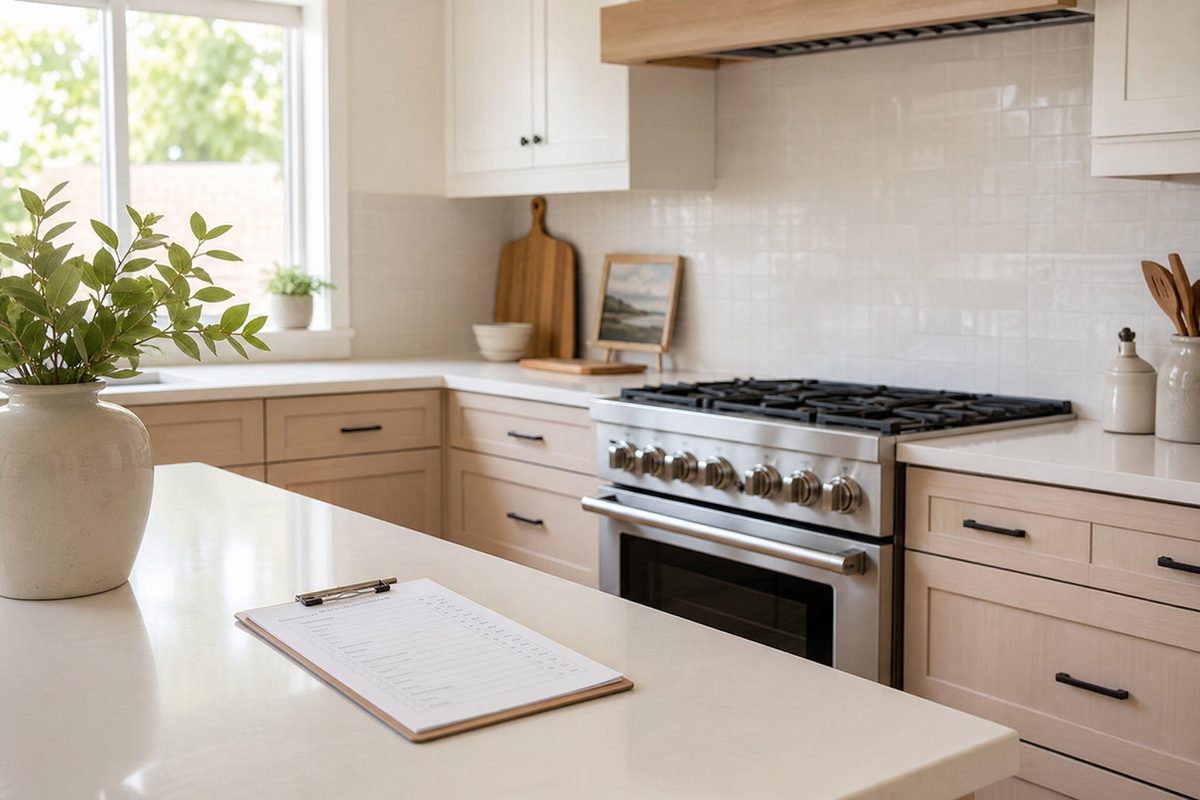
- Up high first: dust the tops of the cabinets and the fridge, the range hood exterior, and any light fixtures. These collect a sticky grease-and-dust film that ordinary dusting smears around, so use a degreasing cloth.
- Inside the oven and microwave. Start the oven cycle or a soak early. For the microwave, steam a bowl of water for a couple of minutes to loosen the splatter, then wipe.
- The range hood filter. Pop the metal mesh filter out and soak it in hot, soapy water. The grease it holds is why the whole kitchen smells like last week’s cooking.
- Inside the fridge. Pull the shelves, toss what has expired, and wipe everything down. Do the door gaskets, where crumbs and mildew gather.
- Cabinet faces and hardware, the dishwasher front, and the small appliances that live on the counter and never move.
- The sink and faucet. This is a hard-water hotspot in Spokane. Mineral scale builds fast on faucets and around the drain. The same approach we use for removing Spokane’s hard-water stains works here: a mild acidic cleaner like diluted vinegar dissolves the scale that scrubbing alone will not budge.
- Backsplash and counters, then the floor as part of the final whole-house pass.
Bathroom deep cleaning checklist
The bathroom is the other room where soaking time does the heavy lifting, and where Spokane’s hard water shows up worst. Apply your cleaners first, let them work, and clean the rest of the room while they sit.
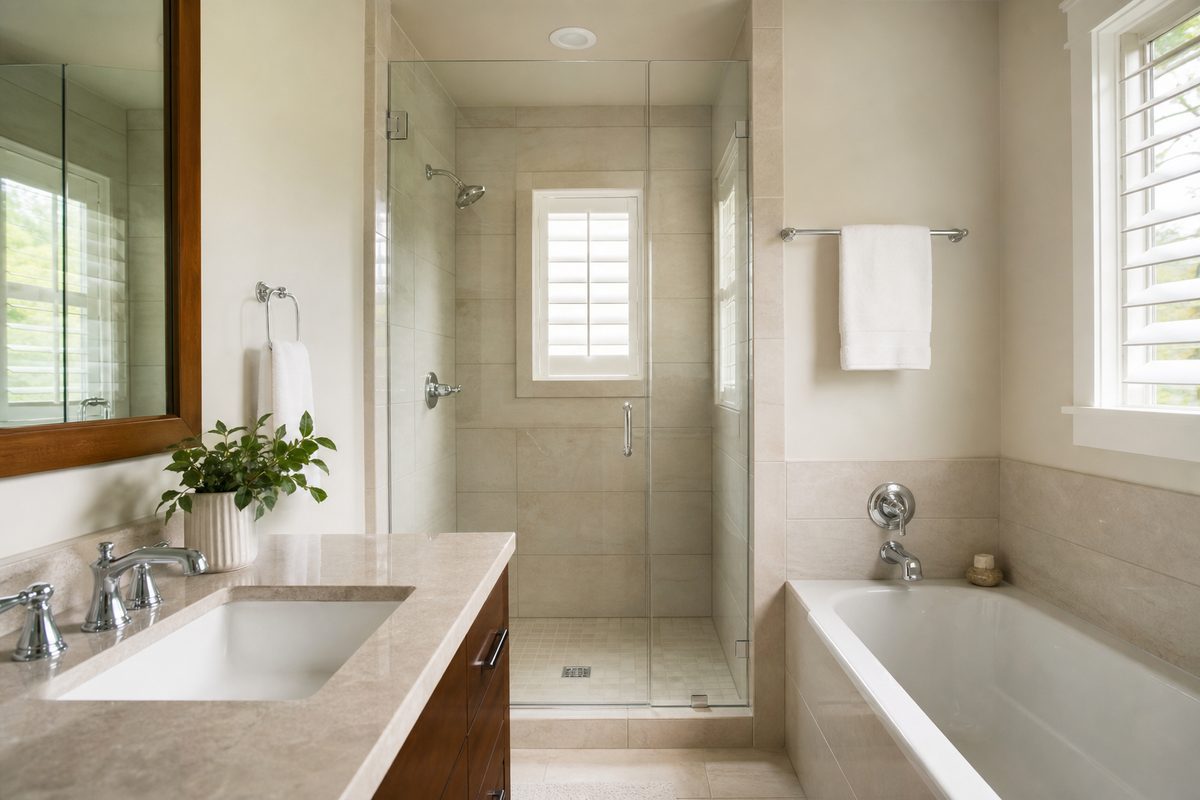
- Exhaust fan cover and light fixtures first, up at the top of the room where dust collects unseen.
- Shower and tub. Spray the walls, then give the soap scum and hard-water film time to break down before you scrub. Glass shower doors hold mineral spotting that an acidic cleaner clears better than elbow grease.
- Grout. Deep cleaning is when grout actually gets attention. Work a paste into the lines, let it sit, then scrub with a stiff brush. This is the single task that makes a tiled bathroom look new again.
- Toilet, inside and out, including the base and the bolts behind it, the spots a quick weekly clean always misses.
- Vanity, sink, and faucet, another hard-water magnet. Descale the faucet and the drain.
- Mirror and any glass, then the floor, including behind the toilet and into the corners.
Bedrooms and closets
After two demanding rooms, bedrooms feel light. The work here is mostly dry, and it is about reaching the surfaces you stopped seeing.
- Ceiling fan blades and light fixtures, dusted top-down before anything below them.
- The headboard, the tops of door and window frames, and the high edges of furniture.
- Under the bed, where dust gathers heaviest. Pull it out and vacuum, do not just reach.
- Strip the bed and wash bedding, including the mattress pad and any pillow protectors. Rotate or flip the mattress and vacuum it while it is bare.
- Closet floors and shelves, plus a quick pass on the tops of hanging clothes where dust settles.
- Baseboards and the floor, saved for the whole-house floor pass at the end.
Living and dining rooms
These are your gathering rooms, and they hold more dust than they look like they do, especially after a Spokane wildfire-smoke summer drives fine particles into the soft furnishings.
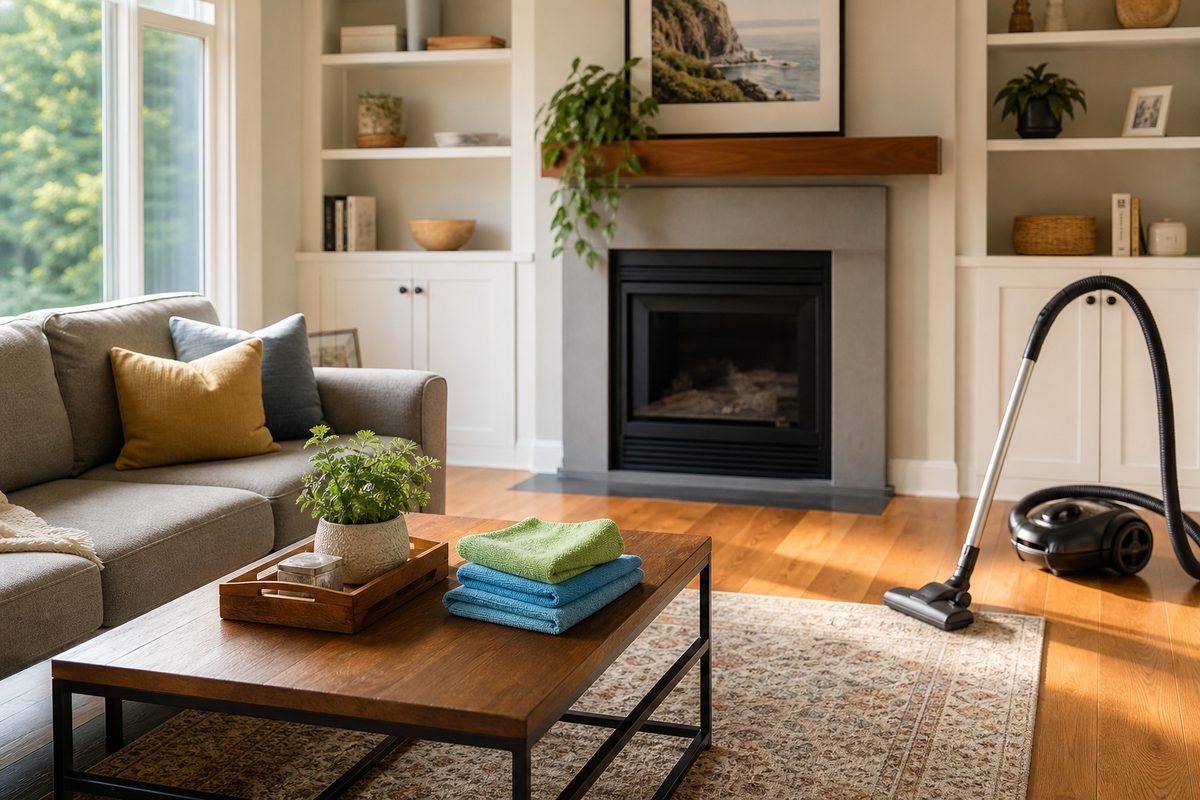
- Ceiling fans, light fixtures, and the tops of tall shelves and the entertainment center, first.
- Shelves, picture frames, and decor, wiped, not feather-dusted, so you lift the dust instead of moving it.
- Electronics and screens with a dry microfiber cloth.
- Upholstery. Vacuum the cushions, under them, and the crevices. A HEPA-filter vacuum matters here, because soft furnishings hold fine particles a standard vacuum can blow back into the room.
- Window glass, sills, and tracks, where Spokane grit and pollen collect.
- Baseboards, then the floor at the end.
Floors, baseboards, and the spots people miss
Floors come last because everything you cleaned above eventually lands on them. Vacuum the entire house first, hard floors and carpet alike, then damp-mop the hard floors, working backward toward the door.
A deep clean is also your chance to hit the spots a weekly clean always skips:
- Baseboards and the tops of door casings, which wear a visible line of dust.
- Window tracks and sills, where grit, pollen, and dead bugs collect.
- Light switches, doorknobs, and cabinet handles, the high-touch points.
- Behind and under furniture, the appliances, and the toe-kicks beneath the cabinets.
- Air-return vent covers and registers, which collect dust the whole season and recirculate it.
- Entry mats and the floor just inside the door, where Spokane’s seasonal mud and winter grit land first.
How often should you deep clean your house?
For most Spokane homes, two or three deep cleans a year is the right rhythm, with steady maintenance cleaning in between. That is the general guidance across the cleaning industry, and it matches what we see in real homes.
A few things move you toward the more-frequent end. Pets and kids add mess and dander, so quarterly often makes sense. Allergy sufferers benefit from more frequent deep cleans, because that is when the hidden dust actually leaves the house. And Spokane’s calendar adds two natural triggers of its own: a spring clean after a long shut-up winter, and a fall reset after wildfire-smoke season has driven fine soot into everything. Smaller households of one or two people who keep up with weekly cleaning can stretch to once or twice a year.
The kitchen and bathrooms, the grease-and-grime rooms, are the ones to deep clean most often. The bedrooms can wait longest.
Clean first, disinfect only when you need to
There is a real difference between cleaning and disinfecting, and most homes need far less disinfecting than the cleaning-product aisle implies. The CDC’s guidance is to clean first and disinfect only when it is actually needed, such as when someone in the house is sick or someone is at higher risk of getting sick.
The order matters: clean before you disinfect, because dirt and grime shield germs from the disinfectant and make it less effective. So in a deep clean, the cleaning you are already doing, soap, water, and scrubbing, is doing the real work. Reserve disinfectant for the high-touch surfaces and the times that warrant it, rather than dousing the whole house in it by default.
Spokane realities that change the checklist (hard water, smoke, four seasons)
A generic deep clean checklist will not account for what a home in the Inland Northwest actually goes through. Three local realities reshape ours.
Hard water is the constant one. Spokane’s mineral-rich water leaves scale on every faucet, in every drain, and across glass shower doors and fixtures. A deep clean here always includes descaling, not just wiping, because plain scrubbing barely touches mineral buildup.
Wildfire smoke is the summer one. When smoke settles over the region, fine soot works into upholstery, carpet, curtains, and bedding. A fall deep clean that includes HEPA vacuuming and laundering the soft furnishings is how that residue finally leaves the house.
Four real seasons mean four kinds of mess. Spring brings pollen and the dust of a long-closed-up house. Summer brings smoke. Fall brings leaves and grit. Winter tracks in mud, road grit, and ice-melt right through the entry. That is why entry mats, floors, and baseboards deserve extra attention here, whatever the date.
When to hand the deep clean off to a crew
An honest deep clean of a whole house is a full day of focused work, sometimes a weekend, and it is physical: kneeling at baseboards, scrubbing grout, reaching the tops of cabinets. Plenty of Spokane households would rather spend that day on something else, or simply cannot do the climbing and kneeling the job demands.
That is where a professional deep cleaning service in Spokane earns its keep. A crew brings the order, the reach, and the HEPA equipment, and gets the whole house done in one pass instead of a string of half-finished weekends. We deep clean homes across Spokane and the surrounding area, and we are happy to follow a deep clean with a regular rhythm that keeps it from building back up.
Deep clean checklist FAQ
How often should you deep clean your house?
Most Spokane homes do well with a deep clean two or three times a year, with regular maintenance cleaning in between. Homes with pets, kids, or allergy sufferers lean toward quarterly. Spokane’s calendar adds two natural triggers: a spring reset after winter and a fall clean after wildfire-smoke season.
What is the difference between deep cleaning and regular cleaning?
Regular cleaning keeps a home livable week to week, the visible surfaces and daily upkeep. Deep cleaning reaches the buildup regular cleaning skips: inside appliances, grout, baseboards, window tracks, and behind furniture. Most homes need both working together.
In what order should you deep clean a house?
Work room by room in this order: kitchen first, then bathrooms, then bedrooms and closets, then living and dining rooms, and floors throughout last. Within each room, go top to bottom and do dry work before wet work, so nothing you clean gets re-dirtied.
What is included in a deep clean?
Inside the oven, microwave, and fridge; range hood filters; descaled faucets and fixtures; scrubbed grout; baseboards and door casings; window tracks and sills; ceiling fans and light fixtures; behind and under furniture and appliances; vent covers; and a full vacuum and mop. It is the buildup a weekly clean never reaches.
How long does it take to deep clean a house?
For a typical home, plan on a full day of focused work, and a weekend for a larger house or one that has not had a deep clean in a while. The kitchen and bathrooms take the longest because soaking and scrubbing cannot be rushed.
Should you clean or disinfect first?
Clean first. Dirt and grime shield germs from disinfectant, so cleaning with soap and water before you disinfect makes the disinfectant work better. For most homes, cleaning is enough on its own, and disinfecting is reserved for high-touch surfaces and times when someone is sick.
A deep clean is a big job, but it is a satisfying one, and it makes the regular upkeep that follows far easier. If you would rather have it done right and done in a day, ask us for a written estimate. We have deep cleaned Spokane homes since 2002, we will send a written estimate within a business day, and we are glad to offer a free in-home consultation so you know exactly what the job involves before we start.