
seasonal ·
How to clean your Spokane home after wildfire smoke
Wildfire smoke leaves fine soot on every surface in a Spokane home. Here is how to clean it up after smoke season, in the right order, and what to skip.
By Frontline Housekeeping Plus

Every summer, smoke from wildfires across the inland Northwest, and as far away as British Columbia and Oregon, settles over Spokane. Some years it is a few hazy days. Some years the air sits at “unhealthy” on the Spokane Regional Clean Air Agency index for weeks at a stretch. When the smoke finally clears, it leaves something behind: a fine gray film of soot and ash on nearly every surface in your home, and a campfire smell that lingers in soft furnishings long after the sky turns blue again.
After more than two decades of cleaning Spokane homes through smoke season, we have learned that post-smoke cleanup is less about scrubbing harder and more about doing things in the right order, with the right method. Done wrong, you just move the soot around. Done right, a smoky house comes back to clean and stays that way. Here is how.

What wildfire smoke actually leaves behind
Wildfire smoke is mostly fine particulate matter, the pollutant air agencies call PM2.5, mixed with ash and soot. The particles are small enough to drift indoors through closed windows, gaps around doors, and your HVAC system, then settle on horizontal surfaces and work their way down into carpet, upholstery, bedding, and curtains. That is why a house can look fine at a glance and still smell like a campfire: the residue is in the soft materials, not just on the counters.
Three things shape the entire cleanup:
- It is everywhere, not just near the windows. Ceiling fans, the tops of cabinets and the fridge, baseboards, blinds, picture frames, and light fixtures all collect it. Gravity pulls the heavier ash down, but the fine particles coat verticals too.
- It moves the moment you disturb it. Dry dusting, sweeping, or a standard vacuum pushes the fine particles right back into the air, where they resettle an hour later. This is the single most common cleanup mistake, and it is why method matters more than effort.
- The smell rides on the residue. Odor is not floating around the room on its own; it is bound to the particles sitting on your surfaces and soaked into your textiles. Remove the residue and the smell goes with it. Air fresheners only cover it up for an afternoon.
First, figure out how bad it is
Before you start, take a slow walk through the house and gauge the contamination. The U.S. EPA recommends assessing the level of smoke, soot, and ash first, because the right cleaning steps depend on how heavy it is.
For most Spokane homes after a typical smoke spell, it is light: a faint dusty film on horizontal surfaces, a noticeable smell, maybe a haze you only see when the afternoon light rakes across a table. That is a thorough cleaning, not a restoration project, and everything below covers it.
If you are seeing visible ash, a strong persistent odor, or soot streaking on walls and ceilings, that is heavier contamination, often from a fire that burned close. At that point you are past routine cleaning, and it is worth bringing in help rather than spreading it around.
Two rules before you touch anything
Wait for the air to clear. Do not deep-clean while smoke is still in the air. Opening windows and stirring up surfaces during an active smoke event just pulls more PM2.5 inside and undoes your work. Check the current air quality for Spokane, which updates every hour, and wait for it to come back into the green range before you open the house up and start.
Work top to bottom. Ceiling fans and high shelves first, then mid-level surfaces, then floors last. Anything you knock loose up high drifts down onto whatever is below it, so cleaning the floor first just guarantees you clean it twice. The whole job goes faster when gravity is working with you instead of against you.
The EPA is clear on the core technique, and it is the opposite of how most people instinctively dust: use damp or wet methods, not dry ones, and skip the harsh chemicals.
Protect yourself while you clean
Ash is an irritant, and the cleanup itself stirs particles back into the air. For anything more than a light wipe-down, wear gloves, a long-sleeved shirt, and an N95 respirator so you are not breathing in what you are removing.
Hard surfaces: damp, gentle, minimal water
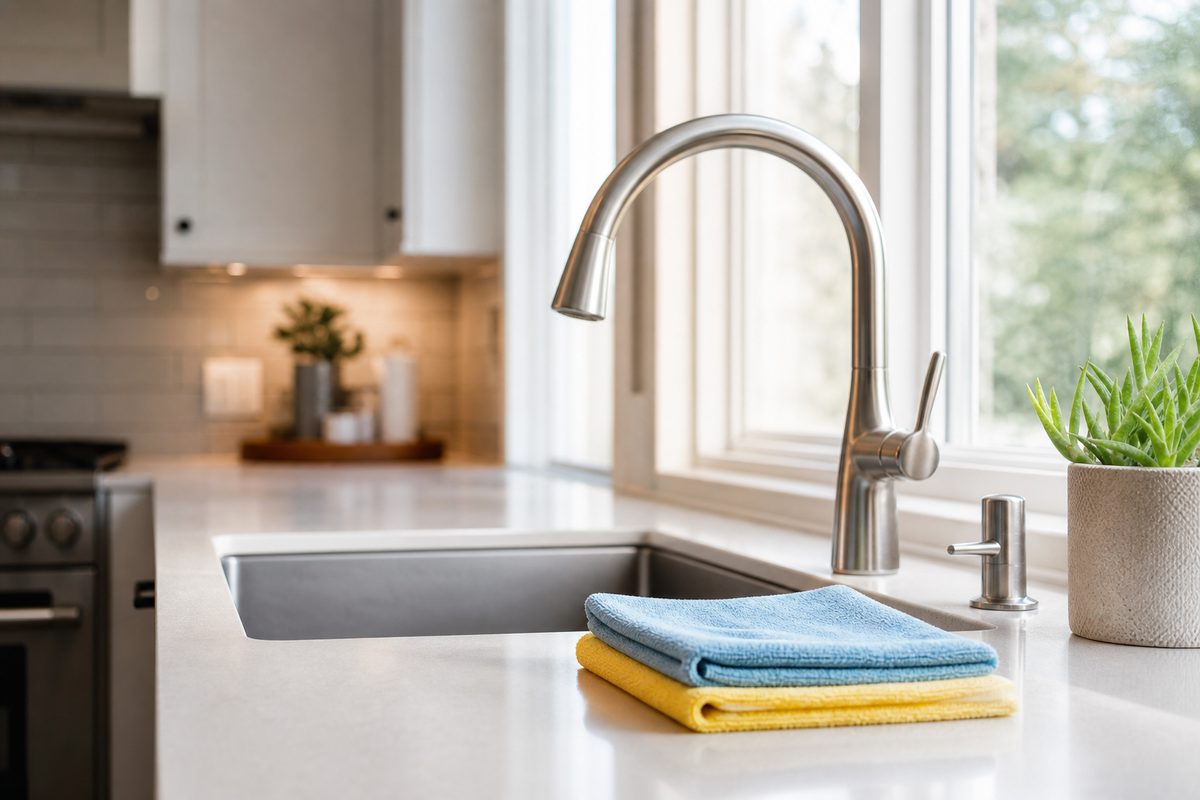
For counters, shelves, trim, sills, cabinet tops, and appliance exteriors, wipe with a damp microfiber cloth. The goal is to lift the residue and carry it away, not to smear it across the surface. A dry cloth or a feather duster re-aerosolizes the fine particles; a damp cloth traps them and holds them.
A few specifics that save you a second pass:
- Soap and water is enough. The EPA specifically advises against harsh chemical cleaners on ash residue, because they can react with it. Plain dish soap in warm water handles nearly every hard surface in the house.
- Use as little water as the job needs. You are wiping up a thin film, not flooding a surface. Too much water turns fine ash into a gray smear that is harder to remove.
- Rinse or swap cloths often. A loaded cloth just redistributes soot, so we cycle through several per room and rinse constantly. The moment a cloth stops feeling clean, it has stopped working.
- Do not forget the verticals. Cabinet faces, doors, door frames, and window frames hold residue too, and they are easy to skip because they do not look dusty from across the room.
Soft surfaces and textiles: where the smell hides
This is the part most people skip, and it is exactly why a house keeps smelling smoky after the counters are spotless. The odor is living in the soft materials.
- Vacuum with a HEPA-filter vacuum. Upholstery, rugs, mattresses, curtains, and the soft sides of furniture all hold smoke particles. A standard vacuum can pass those fine particles straight through the bag or filter and blow them back into the room, which makes the problem worse. A HEPA filter is the difference between removing the smoke and rearranging it. It is also why our crews run HEPA-filter passes during and after smoke season as a matter of course.
- Launder everything you can. Bedding, pillowcases, washable curtains, throw blankets, slipcovers, and cloth napkins all come clean in a normal wash, on the warmest setting the fabric allows. Do this even for items that do not smell strongly, because the residue is there whether you notice it or not.
- Air out what you cannot wash. For larger pieces that will not fit in the machine, vacuum them thoroughly with the HEPA vacuum and, once the outdoor air is genuinely clear, open the windows and let the house breathe for a few hours. Fresh air does real work here that no spray can match.
Floors come last
Floors are the last stop because everything you cleaned above eventually lands here. Vacuum hard floors and carpet with the HEPA vacuum first to pick up the settled particles, then damp-mop hard floors with the same light touch and plain soapy water. Carpet that still holds odor after a thorough HEPA pass may need a deeper extraction, which is worth it before you give up and assume the smell is permanent. It usually is not.
Windows, screens, and the spots people miss
Smoke residue concentrates anywhere air moves through, which makes a few easy-to-forget spots some of the dirtiest in the house.
- Window screens act like filters for the entire smoke season and end up coated. Pop them out, rinse them off outside, and let them dry completely before reinstalling.
- Interior glass and window tracks collect a visible line of soot. Wipe the glass and run a damp cloth through the tracks where it gathers.
- The easy-to-miss list: entry mats, the tops of door frames, return-air vent covers, the blades of ceiling fans, and the tops of door casings. None of them look dirty from eye level, and all of them hold residue.
Your HVAC and filters
Your furnace and air conditioner pulled smoky air through the house all season, which means the system is holding a load of it.
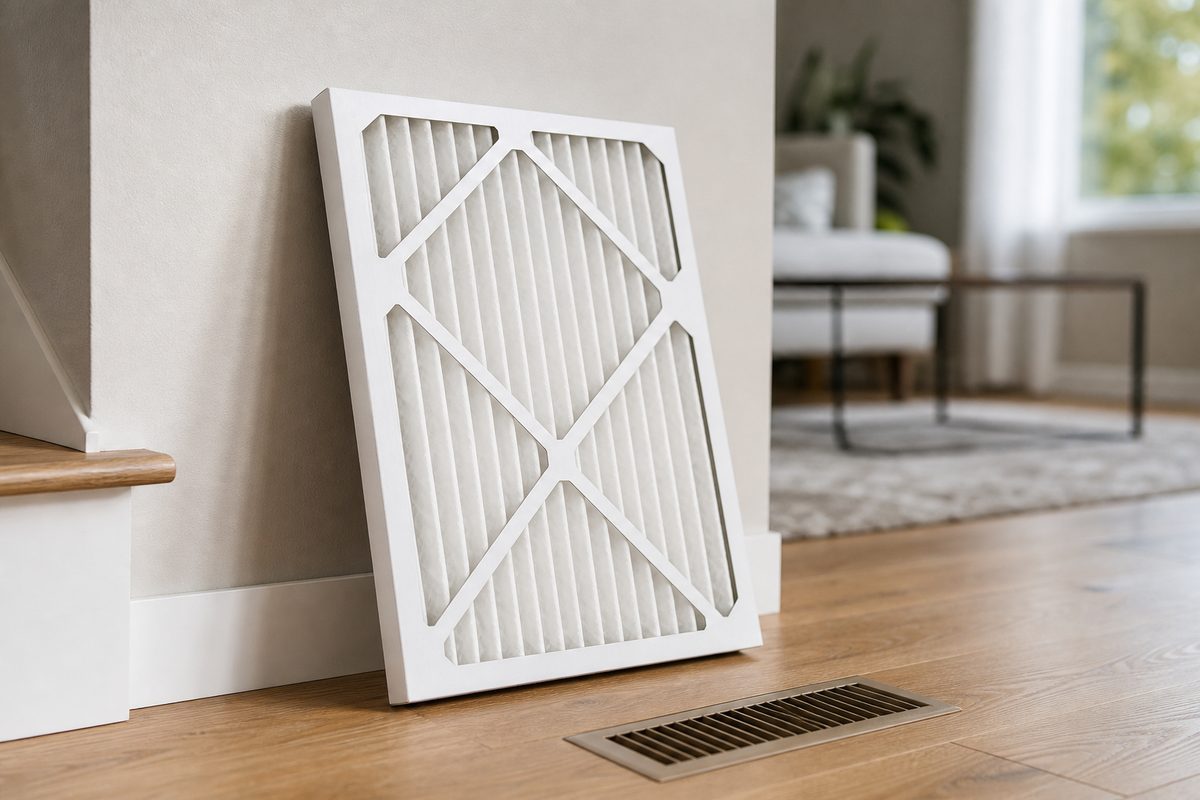
- Change the HVAC filter after a smoke event, and put in a higher-rated filter before the next one. A clogged filter makes the system work harder and stops trapping particles well, so a fresh, better filter does double duty.
- Wipe down the supply and return vent covers, which collect a visible ring of soot that the system will otherwise keep recirculating.
- On ducts, follow the EPA’s lead and clean them as needed, not automatically. If you can see dust and debris being pushed out of the registers, or particles visibly releasing into rooms, it may be time. If not, a filter change plus a thorough surface cleaning almost always does the job, and duct cleaning is an expense you can skip.
Get a head start on the next one
Spokane’s smoke seasons are not going away, so the best post-smoke cleanup is partly about getting ready for the next round. The EPA’s guidance on reducing smoke exposure indoors lines up with what we see work in real homes:
- Set up one clean room. Pick a room where the household spends the most time, run a portable air cleaner with a HEPA filter in it, and keep the windows and doors closed when the smoke rolls in. A single well-sealed room with clean air makes a hard week far more livable.
- Keep the house closed during smoke, and run your HVAC on recirculate rather than pulling in outside air.
- Stage your supplies now, while you are thinking about it: a spare high-rated furnace filter, a stack of microfiber cloths, and a working HEPA vacuum. When the air turns orange in August, you will be glad you did not have to go shopping for them.
A few questions we hear every smoke season
Will the smell go away on its own?
Some of it fades, but the part bound to your surfaces and textiles will linger for weeks or months until you physically remove it. Cleaning is what actually ends it.
Can I just run an air freshener or an ozone machine?
Air fresheners only mask the odor. Skip ozone generators entirely: health agencies caution against them because the ozone they produce is itself a lung irritant, which is the last thing you want after a smoke event. Removing the residue is the only thing that truly works.
How long does post-smoke cleanup take?
For a typical Spokane home after a normal smoke spell, plan on a focused weekend: a day for surfaces, textiles, and floors, and the laundry running alongside. A heavier event, or a larger home, takes longer.
When to bring in a crew
A normal smoke season is a weekend of careful, methodical work. A heavy one, a home with a lot of soft furnishings and hard-to-reach surfaces, or a household with someone who should not be doing the cleanup, is a good time to hand it off.
We have cleaned Spokane homes through more than twenty wildfire-smoke seasons. During and after smoke events, our crews run HEPA-filter passes and pay extra attention to the places residue hides: registers, sills, baseboards, ceiling fans, blinds, and door frames. When the smoke has settled in deeper than a routine clean can reach, a deep cleaning resets the whole house at once.
If you are anywhere in Spokane or the surrounding area and the smoke has worn out its welcome, tell us about your home and we will send a written estimate within a business day, with a free in-home consultation if you would like one.