
seasonal ·
How to clean a fireplace and wood stove in Spokane
How to clean a fireplace or wood stove in a Spokane home: cold ash removal, hearth and glass, soot on the mantel and walls, and what to leave to a chimney pro.
By Frontline Housekeeping Plus

Knowing how to clean a fireplace properly matters more in Spokane than in most cities, because so many homes here still heat with wood for at least part of the winter. A wood stove or open hearth is often the warmest spot in the house from October through March. It is also the messiest. Ash drifts, soot settles as a gray film on the mantel and the wall above it, and stove glass goes from clear to brown in a few weeks of steady burning. We have cleaned Spokane homes since 2002, and this is how we keep a fireplace room clean through the season, and where the line sits between housekeeping and a job for a chimney professional.
Why a wood-heated house gets dirty in a different way
Most household dirt comes in through the door. Fireplace dirt is made inside, every day the fire runs, and it comes in three forms that each want a different method.
Ash lifts every time you open the stove door or poke the fire, rides the warm air across the room, and settles on the bookshelf and the windowsill, not just the hearth. Ash wants containment.
Soot is fine, slightly oily, and it clings. Over a winter it builds into a dull film on the mantel, the wall above the fireplace, the ceiling near the stove pipe, and the top edges of nearby picture frames. Because it accumulates slowly, most people stop seeing it, until a frame comes down in March and leaves a clean rectangle. Soot wants a dry method first.
Smell lives in curtains, rugs, and upholstery, bound to particles in the fabric, which is why a house with a stove can smell smoky when nothing is burning. Smell wants the textiles laundered and a HEPA vacuum.
Keeping those three separate is what makes fireplace cleaning go quickly. Getting soot wet before it has been lifted dry is how a five-minute job becomes a repaint.
Rule one: cold, and only cold
Before anything else: the firebox has to be completely cold. Not “the fire went out last night.” Cold to the touch through the whole ash bed, because embers buried in deep ash can stay hot for a surprisingly long time. We do not touch a firebox on a cleaning visit unless it has clearly sat unused for a day, and we would ask you to hold to the same rule. If you burn daily through the coldest stretch of a Spokane winter, plan the ash cleanout for a mild day, or the morning after a night you deliberately let the fire die.
Removing ash the right way
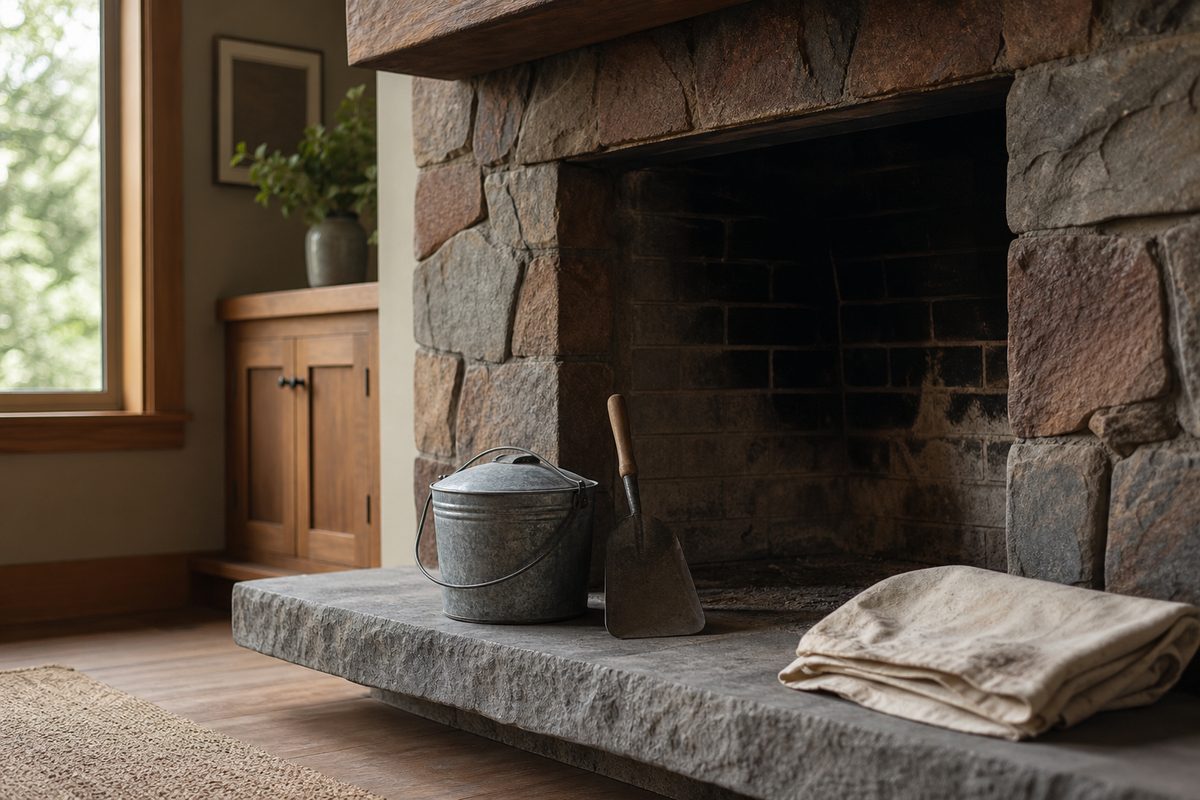
The U.S. Fire Administration’s fireplace and wood stove safety guidance is short and worth following to the letter: put ashes in a metal container with a lid, and place the container outside, at least ten feet from your home. Here is how that looks in practice.
- Lay down protection. An old sheet across the hearth and the floor in front of it. It is far easier to shake out a sheet than to lift fine gray dust out of carpet.
- Scoop, do not sweep. Use a small metal shovel to lift the bulk of the ash into the bucket, moving slowly so it does not billow.
- Leave a thin layer during the heating season. An inch or so of ash insulates the floor of the firebox and helps the next fire catch. Take it all out in spring.
- Lid on, bucket outside. Onto concrete or gravel, away from the siding, the deck, and anything that can burn. Not the garage, not a plastic can. Leave it a couple of days before it goes anywhere else.
- Then, and only then, vacuum the fine stuff. More on the vacuum below, because this is where people wreck equipment.
Cleaning the firebox, grate, and hearth
Once the bulk ash is out, the firebox needs less than people expect. Brush the walls of a masonry firebox with a stiff dry brush from the top down, let the dust settle, and lift it with the ash vacuum. Shiny black or tar-like creosote glazing on the walls belongs on the list for your chimney sweep, not something to scrub with a household cleaner. Take the grate and andirons outside, scrub them with a stiff brush and warm soapy water, and let them dry fully so they do not rust.
The hearth is where the real cleaning happens, because it is the surface you look at every day.
- Brick and natural stone take warm water, a little dish soap, and a stiff brush, a small area at a time, blotting up the dirty water so it does not soak into the mortar. Test any stronger cleaner on a hidden spot first, since some stone reacts badly to acidic products.
- Tile and slate wipe clean with the same soapy water and a microfiber cloth. Slate shows every streak, so finish with a clean damp cloth and then a dry one.
- The hearth pad under a wood stove traps ash in its texture. Vacuum first, then damp-wipe.
If your fireplace is original to an older Spokane house, the brick and mortar may be soft and the surround painted or plastered: least water, least pressure, and never a wire brush on old brick.
Stove glass: the ash trick that actually works
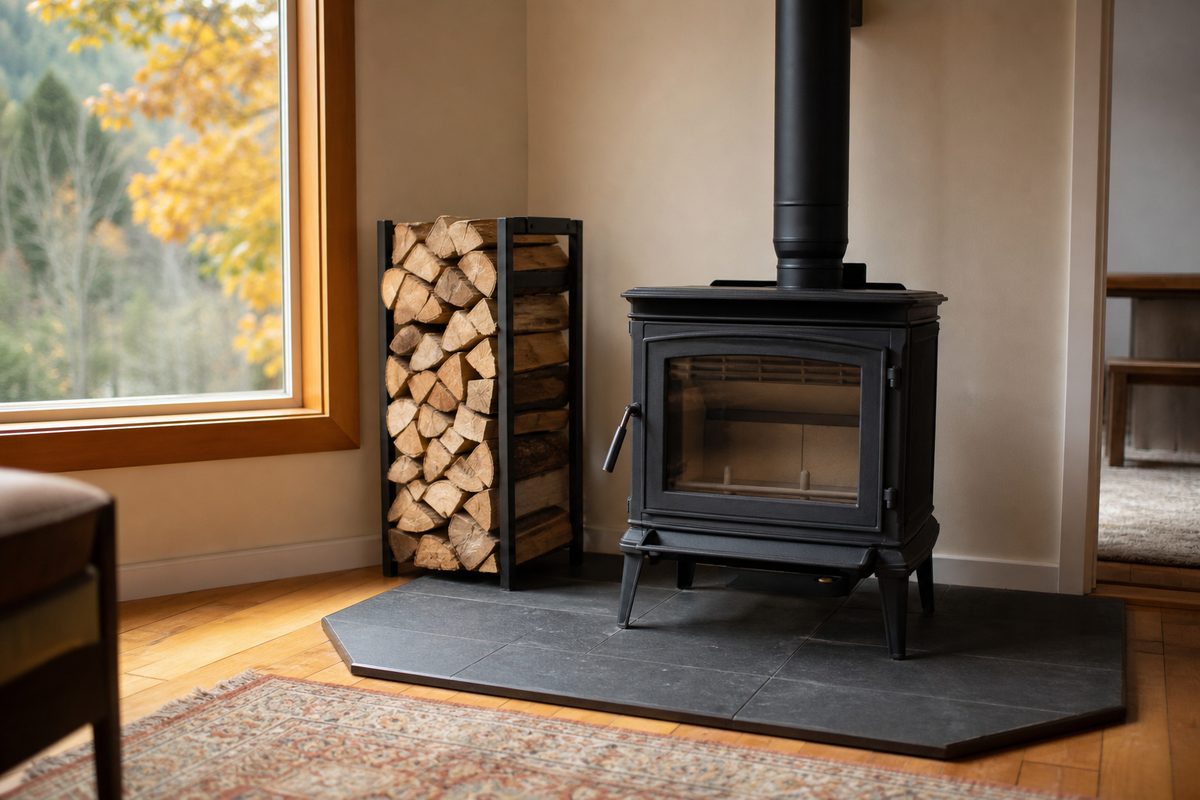
Blackened stove glass is the number one complaint we hear from stove owners, and the fix is sitting inside the stove. Dip a damp, crumpled paper towel into a little fine, cold, white ash from the firebox and rub the inside of the glass in small circles. The ash is a mild abrasive and the residue lifts with very little effort. Wipe the haze away with a clean damp cloth, then buff dry. For stubborn brown glazing, repeat rather than pressing harder, and skip ammonia or gritty abrasives that can scratch the glass or damage the door gasket.
A few things that keep the glass cleaner between cleanings:
- Burn dry, seasoned wood. Wet or resinous wood is the main reason stove glass browns so fast. The Spokane Regional Clean Air Agency has practical guidance on seasoning firewood and loans moisture meters to county residents. The same page carries the current burn restrictions, which matter here because wood heating is the county’s largest single source of fine particle pollution and stagnant winter days bring temporary bans on fireplaces and older stoves.
- Run the stove hot enough. A smoldering, damped-down fire deposits far more soot than a properly hot one.
- Clean the glass cold, and often. A light film wipes off in a minute. A season of buildup takes real work.
The soot film on the mantel, the walls, and the ceiling
This is the part of fireplace cleaning that is genuinely housekeeping, and the part most guides skip. The rule that saves you a repaint is simple: dry first, wet second, and never the reverse. Soot is oily, and a wet cloth on a sooty wall pushes it into the paint as a gray streak that will not come out. Instead:
- Vacuum the surface with a soft brush attachment, moving lightly, to lift the loose soot without rubbing it in.
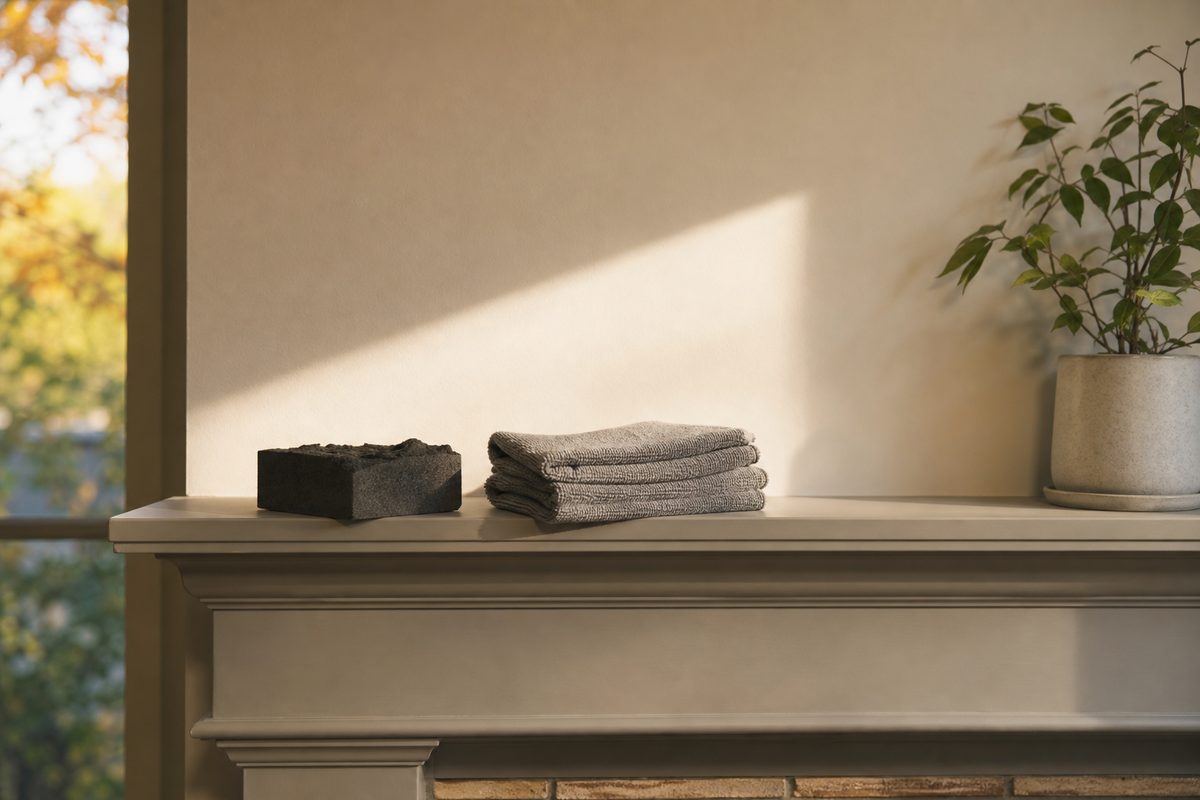
- Use a dry cleaning sponge (sold as a soot sponge or chemical sponge at hardware stores) in straight, overlapping strokes, the way you would wipe a chalkboard. It pulls the soot off without water. Slice off the dirty face of the sponge as it loads up.
- Only then wipe with a damp cloth and a mild solution of warm water with a small amount of dish soap, working a small section at a time and drying as you go.
- Flat and matte paint needs a lighter hand than satin or semi-gloss. If a test spot on flat paint starts to burnish or lift, stop at the dry-sponge step.
The same sequence works on a painted or stained wood mantel. On raw brick above the firebox, use the dry sponge and vacuum, then the soapy water and stiff brush from the hearth section.
The three-foot zone
The U.S. Fire Administration’s heating fire safety page asks you to keep anything that can burn at least three feet from a fireplace or wood stove. That is a fire rule first, but we treat it as a cleaning rule too.
Walk the zone before the season starts. Move the basket of magazines, the throw on the chair nearest the stove, the kindling box that has crept closer every year, and the rug edge under the stove door. What stays inside the zone should be hard-surfaced and easy to wipe: the hearth, the tool set, a metal wood ring. That removes the fire hazard, and it means the surfaces that collect the most ash and soot are the ones you can clean in a minute.
A maintenance rhythm that holds through a Spokane winter
The hard part of fireplace cleaning is that the fire is running again tomorrow. This is the rhythm that keeps up without taking over your weekends.
Every few fires, or weekly: scoop the excess ash (leaving that thin layer), wipe the stove glass, vacuum the hearth and the floor in front of it with the brush attachment, and shake out the hearth rug outside.
Monthly: damp-wipe the hearth properly, dry-sponge the mantel and the wall above it, dust the top edges of nearby frames and shelves, and vacuum the upholstery and rugs nearest the fire with a HEPA-filter vacuum. This is the visit that keeps the smell down.
Start and end of season: the full reset. Firebox emptied to the floor, grate scrubbed, hearth and surround cleaned, walls and ceiling dry-sponged, curtains and slipcovers laundered, and the furnace filter changed. Fall is the natural time, and it fits neatly into a fall deep cleaning before winter. A wood stove also makes the whole house dustier, so the habits in our guide to keeping dust down in a Spokane home pay off doubly here.
What we do not do: chimney sweeping and inspection
We want to be plain about this. Cleaning the flue, smoke shelf, damper, and chimney cap is a specialist trade with its own equipment and certifications, and it is not a housekeeping service. We clean the room: firebox, hearth, glass, mantel, walls, and everything the fire has made dirty inside the house. A certified chimney sweep cleans and inspects the chimney itself.
The U.S. Fire Administration recommends having your chimney inspected and cleaned each year by a professional, and we would put that at the top of the fall list, ahead of any cleaning we do. Creosote in a flue is invisible from the living room, and it is what turns a cozy stove into a chimney fire. Book the sweep early, before the first cold snap fills their calendar.
Frontline is not only professional by very friendly, they use products that not only clean your home but are good for the environment. They clean things I didn’t know needed clean! I would highly recommend them to anyone wanting the clean home dreams are made of!
Questions we hear from wood-heated homes
How often should you clean a fireplace or wood stove?
During the heating season, scoop excess ash and wipe the stove glass every few fires or weekly, and do a proper hearth, mantel, and wall cleaning about once a month, with a full reset at the start and end of the season. The chimney itself should be inspected and cleaned by a professional once a year.
Should you leave some ash in a wood stove?
Yes, during the season. A thin layer, roughly an inch, insulates the floor of the firebox and helps the next fire catch. Remove ash when it builds beyond that, and take it all out at the end of the season so the stove sits clean and dry through summer.
How do I get soot off the wall above my fireplace?
Vacuum lightly with a soft brush, then use a dry cleaning sponge in straight strokes to lift the soot without water. Only after that, wipe with a damp cloth and a mild dish-soap solution, a small section at a time. Never start with a wet cloth, because that smears oily soot into the paint.
What is the best way to clean wood stove glass?
Wait until the stove is cold, then rub the inside of the glass with a damp paper towel or newspaper dipped in a little fine white ash from the firebox. Wipe clean with a damp cloth and buff dry. Burning dry, seasoned wood and running the stove hot enough keeps the glass clear far longer.
How do you dispose of fireplace ashes safely?
Scoop cold ash into a metal container with a tight lid and set it outside, at least ten feet from the house, on concrete or gravel, away from anything that can burn. Leave it a couple of days before disposing of it. Never use a plastic bin, a paper bag, or a household vacuum.
When the fire has won
Some winters the stove runs hard for five months straight, and by March the whole room has a gray cast the monthly wipe-down never caught up with. A deep cleaning resets the firebox, hearth, glass, mantel, walls, ceiling halo, and every soft surface in the room in the right order in one visit, and for households that heat with wood all winter, regular house cleaning with extra attention to the fireplace room keeps the soot from ever getting ahead.
If you are anywhere in Spokane or the surrounding area and the fireplace room needs more than you have time for this fall, tell us about your home and we will send a written estimate within a business day, with a free in-home consultation if you would like one. We will happily leave the chimney to the sweep.