
seasonal ·
The fall home reset checklist for the clocks-change weekend
A one-weekend fall home reset checklist for Spokane homes: alarm batteries, furnace filter, high dust, and the seasonal textile swap, in the order that works.
By Frontline Housekeeping Plus

The most useful fall home reset checklist is the one you actually finish, and in Spokane the clocks-change weekend is the best trigger on the calendar for it. On the first Sunday in November the clocks fall back, you get an extra hour, the light disappears from the evenings, and the house is about to be closed up for five or six months. That weekend is already marked on everyone’s calendar, which is exactly why it works as an annual reminder. We have cleaned Spokane homes since 2002, and the households that treat that one weekend as a fixed reset are the ones who are not scrambling in December.
This is deliberately the short version. It is a weekend, not a project. If you want the full top-to-bottom job, with the windows, the screens, and the rugs out on the driveway, that is a different piece of work and we walk through it in our fall deep cleaning guide for Spokane homes. What follows is the annual maintenance layer that sits on top of your normal cleaning: the safety checks, the air quality items, and the seasonal swaps that only need doing once or twice a year and are easy to forget until something goes wrong.

Why the clocks-change weekend, and not some other one
Every fall checklist you find online tells you to do these things. Almost none of them tell you when, and that is the whole problem. “Sometime this fall” is not a date. It slides into November, then into the holidays, and then it is February and the furnace filter is gray.
The clocks-change weekend solves that in three ways. It is fixed, so it recurs whether or not you remember it. It lands right before the heating season really takes hold in Spokane, which is the exact moment when a fresh filter and a working carbon monoxide alarm matter most. And it is a weekend when the evenings suddenly get dark and nobody feels like being outside anyway, which is a better mood for indoor work than a bright October Saturday.
The safety piece of this has a long history behind it. Fire agencies and consumer safety groups have promoted changing alarm batteries when you change your clocks for decades, precisely because tying a task to an existing habit is what makes it stick. The rest of the list rides along on the same logic.
Start with the alarms, because they are the only life-safety item
Everything else on this list is comfort and upkeep. The alarms are not, so they go first, while you still have energy.
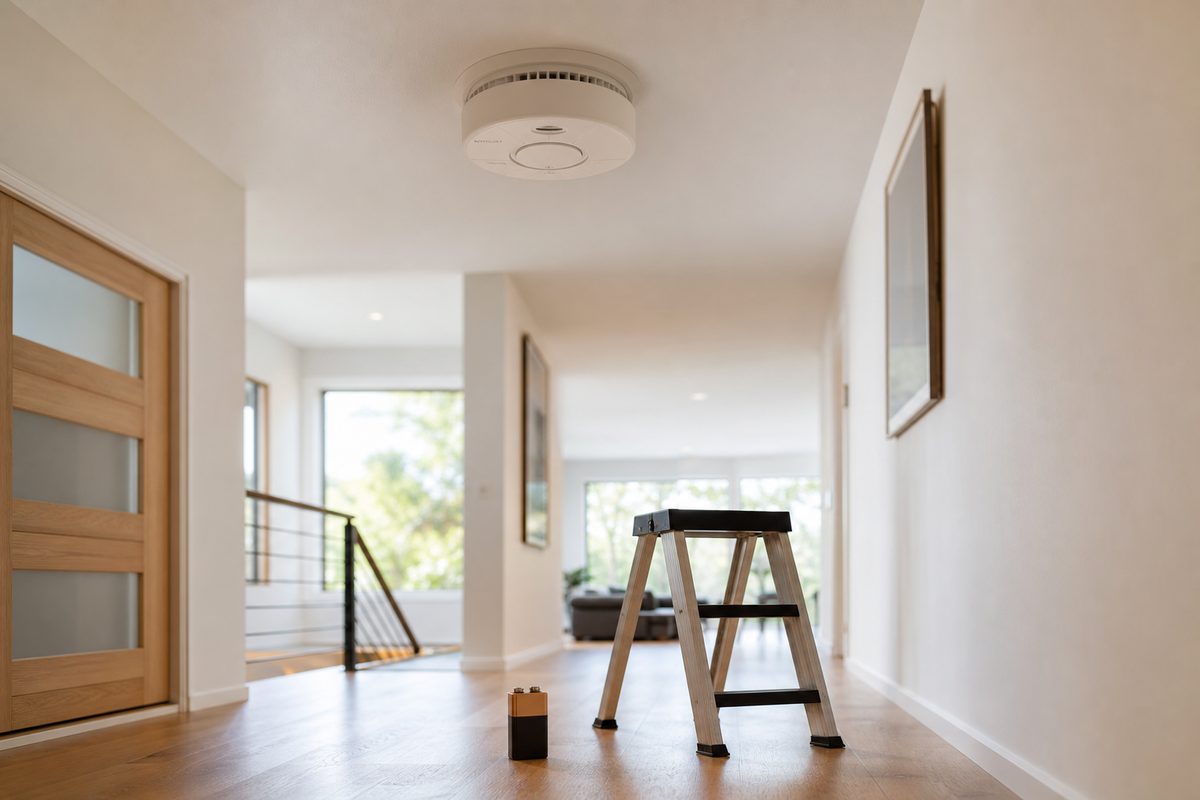
Walk the house and test every smoke alarm and every carbon monoxide alarm by holding the test button until it sounds. The U.S. Fire Administration recommends testing alarms monthly, which almost nobody does, so treat this weekend as the one test you will definitely perform. If an alarm does not sound, the problem is the alarm or the battery, and either way it is not protecting anyone until you fix it.
Then handle the batteries. The Consumer Product Safety Commission advises replacing alarm batteries at least once a year unless the alarm has a sealed 10-year battery, in which case there is no battery to change and the whole unit gets replaced at end of life. Hardwired alarms still have a backup battery, and that backup needs the same annual attention.
While you have the step ladder out, check the age of the units. Smoke alarms are not permanent fixtures. The manufacture date is printed on the back or side of the alarm, and the U.S. Fire Administration is direct about it: replace the entire alarm 10 years from that date. An alarm from the year you moved in has probably aged out without anyone noticing, because a decade of silence looks identical to a decade of working properly.
A few Spokane-specific notes on placement while you are up there:
- Carbon monoxide alarms matter more here in winter, because gas furnaces, fireplaces, and wood stoves all run hard from November on and the house is sealed while they do it. If you have a level of the house with no CO alarm, this is the weekend to fix that.
- Wipe the alarm covers. They sit on the ceiling collecting dust all year, and heavy dust in the sensing chamber is a common cause of nuisance chirping and false alarms. A light vacuum pass with the brush attachment is all it takes.
- Check the units near the kitchen and the garage door, which are the two most likely to have been disabled at some point during a smoky dinner and then quietly forgotten.
The furnace filter, before the heat runs all winter
A Spokane house runs its furnace from roughly October to April, and for most of those months the windows stay shut. Whatever your filter fails to catch gets recirculated through every room, over and over, for half a year. That is why the filter is the single highest-value ten-minute task on this list.
Put in a fresh one now, at the start of the season rather than partway through. Note the size, which is printed on the frame of the old filter, and buy two while you are at it so the mid-winter change does not require a trip out in the snow. Write the date on the cardboard edge of the new filter with a marker, because a filter with a date on it is a filter you will actually replace on schedule.
On filter grade, the practical advice is to use the best-rated filter your system is designed to handle and then change it on time, rather than buying the highest-rated filter available and leaving it in for a year. A clogged high-grade filter restricts airflow and makes the system work harder, which is worse than a clean mid-grade one. The EPA’s guidance on air cleaners and HVAC filters in the home is a good reference if you want to think it through properly, and it makes the important point that filtration supplements source control and ventilation rather than replacing them.
While you are thinking about air, take five more minutes on the parts of the system you can actually reach:
- Vacuum the supply and return vent covers. They collect a visible fur of dust that the system pushes right back into the room the moment the heat kicks on.
- Check what is sitting on top of the returns. Furniture pushed against a return in the summer rearrange is a common and invisible cause of a room that never gets warm.
- Reverse your ceiling fans to push warm air down instead of pulling it up, and wipe the blade tops while you are at it, since they are carrying a full summer of dust and are about to start moving air over your head.
Dust high, then low, then floors
This is the cleaning half of the weekend, and it is short on purpose. You are not deep cleaning. You are hitting the high, once-or-twice-a-year surfaces that a normal weekly clean skips, in the order that keeps you from doing the job twice.
Work from the ceiling down. Light fixtures and fan blades, then the tops of door frames, cabinets, and the refrigerator, then window sills and blinds, then baseboards, then floors last. Anything you knock loose up high lands on whatever is below it, so cleaning the floor first only guarantees you clean it again. If dust is a running battle in your house, and in a lot of Spokane homes it is, our post on how to keep dust down between cleanings goes deeper on why it accumulates the way it does.
Two more things belong in this pass, both of them air-quality items that pay off across the whole heating season:
- Wash or vacuum the window coverings. Blinds and curtains hold a season’s worth of dust and, in a Spokane summer, wildfire smoke residue as well. That gets stirred back into a sealed house every time the heat cycles.
- Run a HEPA vacuum over upholstery and rugs, not just the open floor. Soft surfaces are where the fine stuff settles, and they are about to be the surfaces everyone sits on for six months.
The seasonal swap, which is the part people enjoy
Now the textiles, which is the fastest way to make the house actually feel like the season changed rather than just being cleaner.
- Bedding. Wash the summer sheets and light blankets, store them, and put the flannel and the heavier quilts on. Do this in one pass per bedroom so nothing ends up in a pile on a guest bed until January.
- Entry mats. Spokane winters mean mud, snowmelt, and road salt tracked to the door daily. Swap in a mat sized for real boots, and put a boot tray or a second interior mat behind it. This one change prevents more floor damage than anything else on the list, and we get into the details in our guide to handling winter mud, snow, and salt.
- Closets. Move the coats, boots, hats, and gloves to the front and the shorts and sandals to the back. If you did not wear it this summer, that is useful information, and the donation box is right there.
- Towels and bath mats. Wash the bath mats, which almost never get washed on their own schedule, and rotate in the heavier towels.

Ten minutes on the outside, if the weather cooperates
You are not doing the gutters in a weekend reset, but a short walk around the house catches the things that turn into expensive problems in a Spokane freeze.
Disconnect and drain the garden hoses so a hard freeze does not split a hose bib. Look at the entry steps and railings for anything loose while the ground is still bare. Find the snow shovel and the ice melt now, rather than at ten at night during the first real storm. And glance at the gutters and downspouts from the ground; if they are visibly packed with leaves, that is a real task to schedule, not a weekend one.
What to hand off
The honest limit of a one-weekend reset is anything requiring a tall ladder, a full day, or moving heavy furniture. Interior windows and screens, light fixtures over a stairwell, blinds that need to come down to be cleaned properly, under and behind the appliances: those are real work, and skipping them year after year is how a house slowly gets away from you.
That is the case for pairing the weekend reset with a periodic professional clean rather than choosing between them. The reset handles the annual safety and swap items that only you can do in your own house. A deep cleaning handles the reach-and-scale items on a schedule, and ongoing house cleaning keeps the baseline steady in between so the seasonal reset stays a weekend instead of turning into a rescue mission. Some of our longest-running Spokane clients have run exactly that pattern for years.
Frontline Housekeeping is a local company which provides many services, all exceptional! Our experiences began nineteen years ago following a motor vehicle accident and resulting surgery. They came to my rescue, literally! My home was spotless. Then, for over a decade and a half they provided quarterly services in our home cleaning windows, curtains, wood floors and paneling. What a joy to return home! Now they continue to come monthly and I remain extremely grateful and pleased with their work. I strongly recommend you to this company.
Questions we get about the fall reset
When should you do a fall home reset?
Late September through early November, and ideally before the furnace has been running for weeks. The clocks-change weekend on the first Sunday in November is the most reliable anchor because it is a fixed date you cannot forget. Earlier is fine, later gets squeezed by the holidays.
Should you change smoke alarm batteries when the clocks change?
Yes, unless your alarms have sealed 10-year batteries, which are not meant to be opened. The Consumer Product Safety Commission recommends replacing alarm batteries at least once a year, and tying it to the clock change is simply the easiest way to remember. Hardwired alarms have backup batteries that need the same annual replacement.
What should you do to your house when the clocks change?
Test the smoke and carbon monoxide alarms and change their batteries, put in a fresh furnace filter, reverse the ceiling fans, dust high surfaces and vent covers, and swap the bedding, entry mats, and closets over to winter. It is a half-day to a full weekend depending on the size of the house.
How often should you change a furnace filter?
Follow the manufacturer’s interval for your filter type, then adjust for your household. Homes with pets, allergies, or a smoky Spokane summer behind them generally need changes more often than the label suggests. Checking it monthly and replacing it when it looks loaded is more reliable than any fixed schedule.
Is a fall reset the same as a fall deep clean?
No. The reset is annual maintenance layered onto your normal cleaning: alarms, filter, high dust, seasonal swaps, and it fits in a weekend. A fall deep clean is the full top-to-bottom job including windows, screens, blinds, and behind the appliances, and it takes considerably longer.
Make it a habit, not a heroic effort
The reason this works is repetition. The first year it feels like a list. By the third year it is just what you do on the weekend the clocks change, it takes half the time, and nothing on it has been neglected long enough to become a real problem. If you want to extend the same thinking across the whole calendar, our guide to cleaning through Spokane’s four seasons lays out what belongs in each one.
And if the reach-and-scale items keep getting pushed to next year, that is a normal and solvable thing. We have cleaned Spokane homes for 23+ years, through every kind of fall reset, and we can take the parts of the list that need a crew, a ladder, and a full day. Tell us about your home and we will send a written estimate within a business day, with a free in-home consultation if you would like one.