
seasonal ·
Winter Snow and Salt Floor Cleaning in Spokane
A Spokane guide to winter snow and salt floor cleaning: how to lift ice-melt stains and road grit safely, plus the mudroom system that stops the mess.
By Frontline Housekeeping Plus

Every Spokane winter, the same thing walks in the front door: a slurry of snowmelt, road sand, and white crusty salt, riding in on everyone’s boots. Winter snow and salt floor cleaning is the chore we hear about most from January through March, because the mess is relentless. You mop the entry at breakfast, and by the time the kids are home there is a fresh grit trail down the hall again. After more than two decades cleaning Spokane homes through real winters, we have learned the floors near your doors take more abuse from November to March than the rest of the year combined.
The good news is that this is solvable, and most of the work is preventing the mess rather than scrubbing it. Below is what Spokane winter deposits on your floors, why salt leaves those chalky white stains, how to clean it safely, and the mudroom setup that stops most of it at the door.
What Spokane winter actually tracks onto your floors
Spokane does not get the occasional dusting some milder cities do. We get real, sustained winter, with snow on the ground for weeks and a freeze-thaw cycle that turns streets into slush, then ice, then slush again. To keep the roads passable, the city treats them. According to the City of Spokane’s street snow removal program, crews use liquid deicers along with salt and sand mixtures on arterial streets, hills, and bridges, and the Valley and county run similar operations.
All of that ends up on the pavement you walk across, and then it comes home with you. There are three culprits, and each does something different to your floors:
- Snowmelt and mud. Wet snow melts the instant it crosses your threshold. That water carries dirt and silt, and if it sits, it works into grout lines and hardwood seams and dulls the finish.
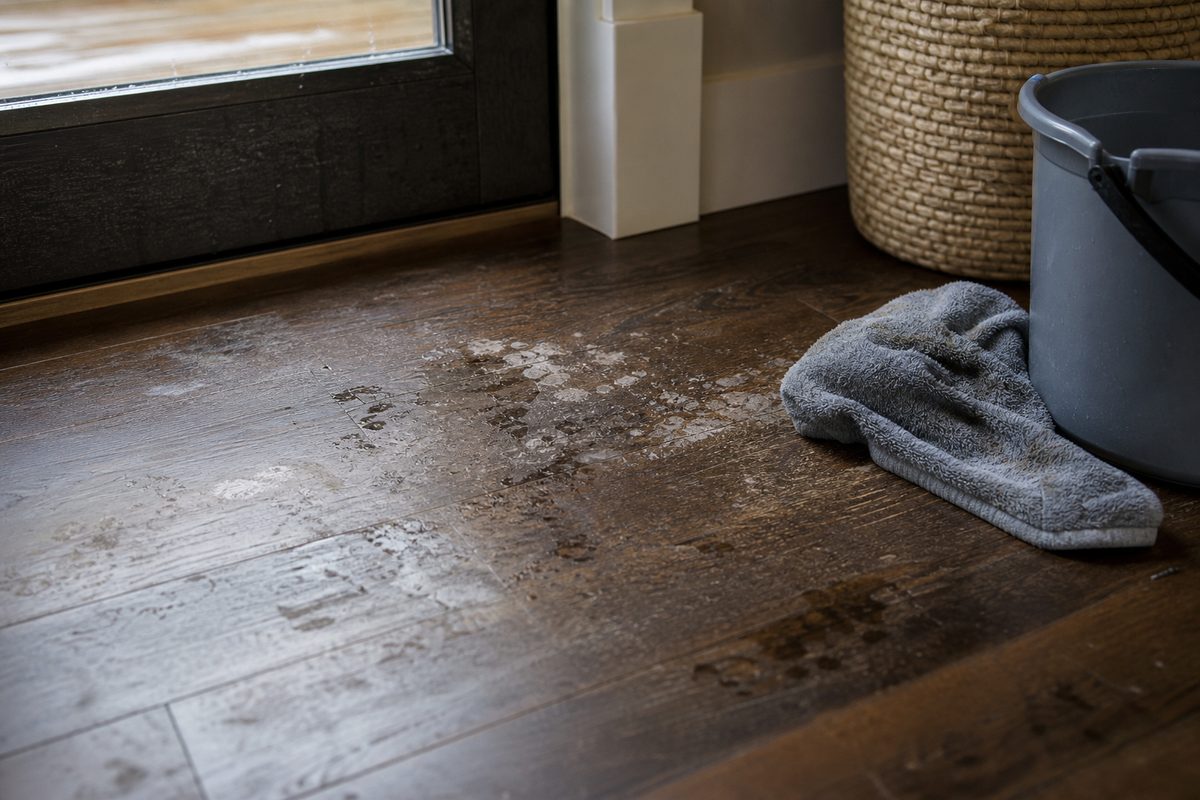
- Road sand and grit. The sand spread for traction is abrasive. Ground underfoot, it acts like fine sandpaper, leaving the dull, scratched traffic path you see in every Spokane entryway by February.
- Ice-melt salt. The one that leaves those chalky white stains. Whether it comes from a treated road or the bag by your own porch, salt is the most stubborn to clean up and the most likely to do lasting harm.
If your floors look fine in November and tired by March, this trio is why, and the lane from your entry through the kitchen takes the worst of it.
Why salt and ice melt leave white stains on hardwood and tile
Those cloudy white marks near the door are dried salt residue. Salt and most ice-melt products are alkaline, and as the tracked-in slush evaporates, the salt is left behind as a fine crystalline crust that sits on top of the finish and reads as a chalky white haze or ring. The National Wood Flooring Association notes that salt tends to leave a white, abrasive residue that can scratch up a hardwood surface, which is exactly what we see in real homes.
Two things make salt worse than plain mud:
- It is hygroscopic, meaning it draws and holds moisture. Salt pulls humidity out of the air and the wood itself, and that moisture cycling at the surface is what slowly clouds and dulls a hardwood finish around the entry.
- It is abrasive when dry. A dried salt crystal under a boot heel grinds into the finish the same way road sand does, so the longer salt sits, the more it scratches and the harder the white mark is to lift.
On tile, the salt usually wipes off the glazed surface, but the grout is the real trouble: it is porous, and salty water settles into the lines and dries there, leaving white streaks that ordinary mopping skates right over.
How to clean salt residue off floors in winter, step by step
The instinct most people have is to attack a salt stain with a wet mop and elbow grease. On hardwood especially, that is the wrong move, because standing water is its own enemy. Here is the gentle method we use on Spokane floors all winter.
- Dry first, always. Before any water touches the floor, vacuum or dust-mop to lift the loose salt crystals and grit. Dragging a wet mop across dry salt just grinds those abrasive crystals into the finish.
- Mix a neutral pH cleaner. Use warm water with a pH-neutral floor cleaner made for your floor type. Neutral is the key word, because salt is alkaline and an everyday all-purpose cleaner can leave its own film while a neutral cleaner lifts the residue without fighting the finish.
- Use a barely damp microfiber mop. Wring it out until it is just shy of dry; you want to dissolve and lift the salt film, not flood the boards. On hardwood, mop in the direction of the grain.
- Dry the floor behind you. Follow the mop with a clean dry microfiber cloth or towel so no moisture sits in the seams or grout. On hardwood, this single step prevents most water damage.
- For stubborn white haze, repeat, do not scrub harder. A second light pass lifts what the first one loosened. Aggressive scrubbing with an abrasive pad just adds scratches to a finish that salt has already stressed.
A quick word on vinegar, the internet’s favorite answer. A diluted vinegar-and-water solution can cut a salt haze on tile in a pinch, but use it carefully: vinegar is acidic, and used regularly on hardwood it can etch and dull the finish, and it should never go on natural stone like marble. For routine cleaning, a neutral pH cleaner is safer. For salt dried into tile grout, work a paste of baking soda and water into the line with a soft brush, let it sit, then wipe and rinse; it lifts residue from the pores without the scrubbing that wears grout down.
Cleaning winter mud, slush, and road sand the right way
Mud and slush are more forgiving than salt, but the same principle holds: get the grit up dry before you bring in water. Road sand is the quiet wrecker of Spokane floors, invisible until you see the dull traffic path it leaves where everyone grinds it into the finish walking the entry-to-kitchen lane.
So the order matters. Vacuum or sweep the traffic lane first, then damp-mop. For dried, caked-on mud, do not chip at it, because a dried clod often has grit baked in that scratches as you scrape; lay a damp cloth over it to soften it, then lift it off. Vacuum entry rugs and runners and shake them out, since a saturated mat just becomes a sponge that re-wets the floor underneath.
During a long Spokane cold snap, the entry floor may need a quick pass every day while the rest of the house holds up fine on its normal schedule. That is one reason many households keep up regular house cleaning through the winter so the high-traffic zones stay ahead of the grit.
Does road salt damage hardwood floors and tile grout?
Yes, left unchecked, and this is worth taking seriously if you have hardwood. Salt does three things to a wood floor over a season: the alkaline residue dulls and clouds the finish, the abrasive crystals scratch it underfoot, and the moisture it attracts can work into the seams. A full Spokane winter of untreated salt by the door leaves a visibly tired, hazy patch right where you come in. Tile handles salt better, but the grout does not.
The reassuring part is that none of this is sudden or irreversible if you stay on top of it. The damage comes from salt sitting for weeks, not from a single slushy afternoon, so cleaning promptly all winter brings your floors out the other side of March just fine. If a winter did get away from you and the entry finish looks dull, a deep cleaning to reset salt-dulled floors gets it back to a clean baseline before the next season.
The Spokane mudroom system: stop the mess at the door
Here is the truth after 23+ years of cleaning Spokane homes: the households with the least winter floor damage are not the ones who mop the most. They are the ones who stop the mess at the door. A good entry system is preventive and does most of the work for you, and the National Wood Flooring Association makes the same point, calling mats inside and outside the doorway the key step.
Build it in layers, working from outside in:
- An outside mat, coarse and ribbed. Just outside the door, so people knock off the worst of the snow and sand before they reach the threshold. A stiff, scrapy texture does more than a soft welcome mat.
- An inside mat, absorbent. Right inside the door, to soak up melting slush and the salty water with it. This is the mat that catches what the outside one missed. Wash or shake it out often, since a saturated mat stops working.
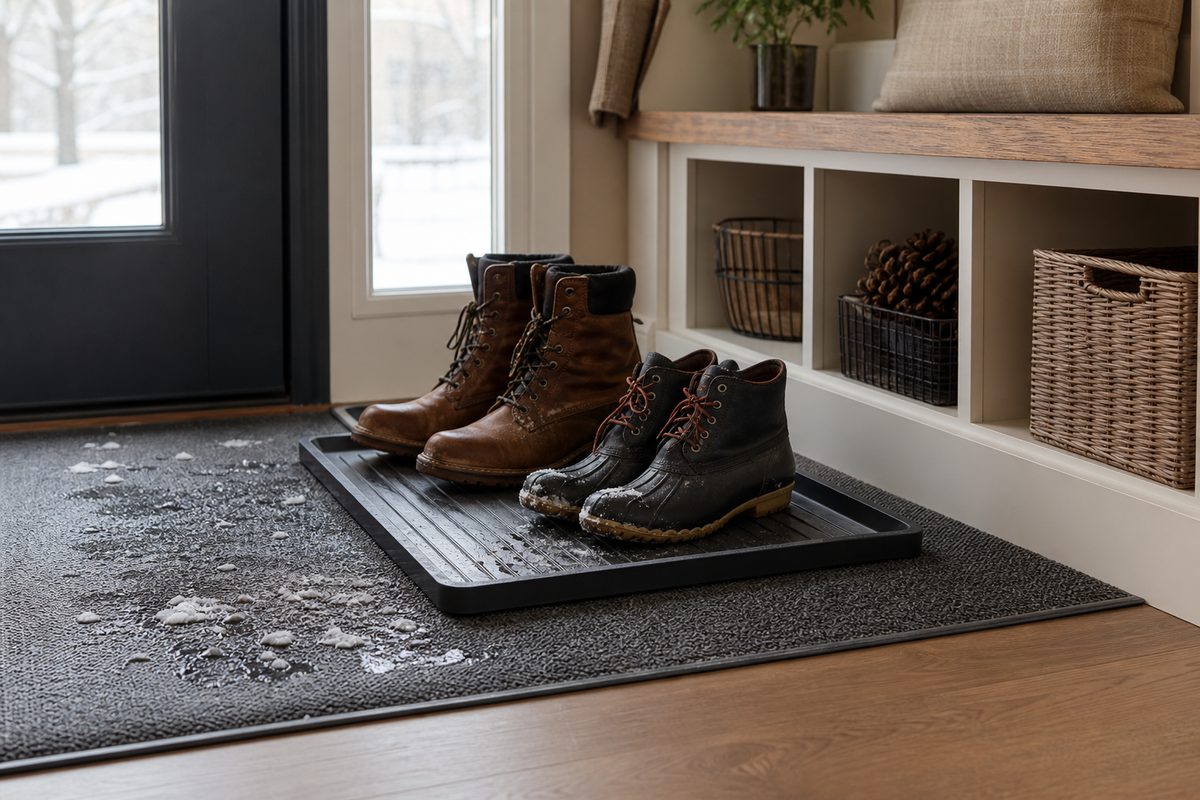
- A boot tray with a raised, ribbed bottom. The workhorse of a Spokane entry. Boots drip into the tray instead of onto your floor, and the salty meltwater pools where you can pour it out, not on your hardwood. A no-shoes-past-the-tray rule cuts tracked-in salt more than any cleaning product.
- A bench and a spot for everything. A low bench to pull off boots, hooks for wet coats, and a basket for hats and gloves. The easier you make it to shed the wet gear, the more reliably the household does it.
You do not need a dedicated room for this. A short stretch of wall by your busiest door, set up in these layers, functions as a mudroom and absorbs the brunt of a Spokane winter, giving wet, salty boots somewhere to go that is not your hallway.
Protecting your floors before the first snow
The best time to set up for winter is before it arrives, ideally in October while the weather is mild. A little prep in the fall saves a lot of scrubbing in February.
- Stage the entry system early. Have the mats, boot trays, and bench in place before the first real snow, not after the floors are already taking a beating.
- Seal hardwood and entry grout. An intact finish shrugs off salt and moisture far better than worn, thin spots, and sealed grout keeps salty water from soaking into the lines and streaking. Both are small off-season jobs that pay off all winter.
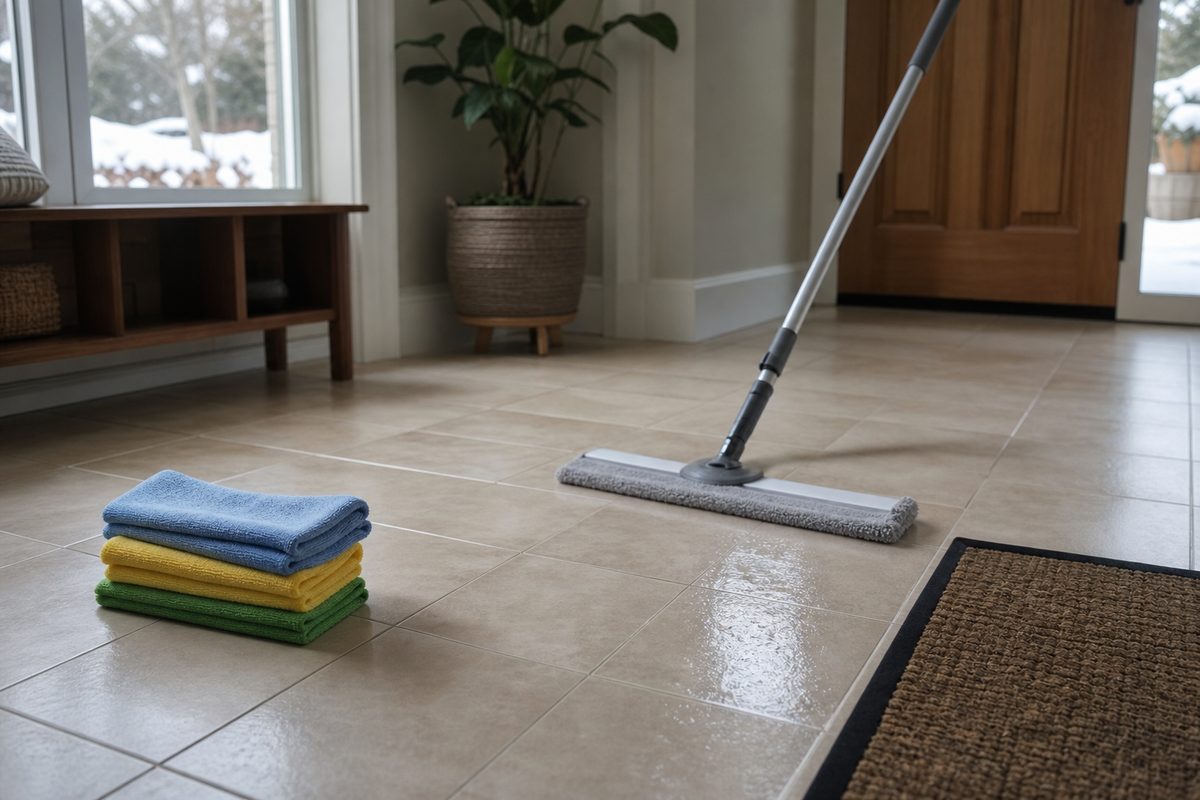
- Stock your winter cleaning kit. A neutral pH floor cleaner, a microfiber mop, a stack of cloths, and a small bucket kept near the door. When the supplies are right there, the quick wipe-up actually happens.
This seasonal rhythm is part of cleaning through Spokane’s four seasons, where each part of the year brings its own predictable mess. Winter is salt and slush, just as late summer is cleaning up after wildfire smoke. Knowing what is coming lets you set up for it instead of reacting.
Frequently asked questions about winter floor cleaning
How do you clean salt residue off floors in winter?
Vacuum or dust-mop first to lift the loose, abrasive salt crystals, then go over the area with a barely damp microfiber mop and a neutral pH floor cleaner. Follow immediately with a dry cloth so no moisture sits on the floor. For a stubborn white haze, do a second light pass rather than scrubbing harder.
Does road salt damage hardwood floors?
It can, over a full winter, if it is left to sit. Salt is alkaline and clouds the finish, the dry crystals scratch it underfoot, and the moisture it attracts can work into the seams. The damage comes from salt sitting for weeks, not from one slushy day, so prompt cleanup keeps hardwood safe.
What is the best way to clean winter mud and slush off floors?
Vacuum the traffic lane to pull up abrasive road sand first, then damp-mop. Let dried mud soften under a damp cloth instead of chipping at it, since dried clods often have grit baked in that scratches as you scrape. Wiping up slushy puddles while they are wet prevents most of the mess.
How do you keep snow and salt from being tracked through the house?
Use a layered entry system: a coarse ribbed mat outside, an absorbent mat just inside, a ribbed boot tray for dripping boots, and a bench for taking shoes off. A no-shoes-past-the-tray habit stops more salt than any cleaner and is the heart of a Spokane mudroom setup.
Can you use vinegar to remove salt stains from floors?
A diluted vinegar-and-water mix can cut a salt haze on tile in a pinch, but use it with care. Vinegar is acidic and, used regularly on hardwood, can etch and dull the finish, and it should never go on natural stone like marble. For routine cleaning, a neutral pH floor cleaner is the safer choice.
Why does salt leave white stains on hardwood and tile?
As tracked-in slush evaporates, the dissolved salt is left behind as a fine crystalline crust that reads as a chalky white haze. Salt is also hygroscopic, meaning it holds moisture against the floor, which clouds a hardwood finish over time. On tile, the white streaks usually come from salty water drying inside porous grout lines.
When to bring in a Spokane cleaning crew
Plenty of winter floor care is a quick wipe-up you handle yourself once the entry system is doing its job. But a long Spokane winter wears people down, and the high-traffic zones get ahead of you fast when there is snow on the ground for weeks. We have cleaned homes across Spokane and the surrounding area through more than twenty winters, so we know where the salt and grit collect and how to lift it without harming your finish, whether that means keeping the traffic lanes ahead of the mess all season or a single thorough reset.
If the salt and slush have worn out their welcome, tell us about your home for a written estimate and we will respond within a business day, with a free in-home consultation if you would like one.