
seasonal ·
Back to school cleaning checklist for Spokane homes
A back to school cleaning checklist for Spokane families: reset the drop zone, lunch station, homework surface, and closets before the first bell rings.
By Frontline Housekeeping Plus

Summer in Spokane ends the way it always does: camp chairs still in the entry, a cooler that never quite made it back to the garage, lake towels in a heap, and three months of relaxed bedtimes about to collide with a 7 a.m. alarm. A back to school cleaning checklist is not really about having a spotless house on day one. It is about removing the friction that turns September mornings into a search party for one shoe and a permission slip. We have cleaned Spokane homes since 2002, and the households that start the school year calmly are almost never the tidiest ones. They are the ones where four or five specific spots got reset before the first bell.
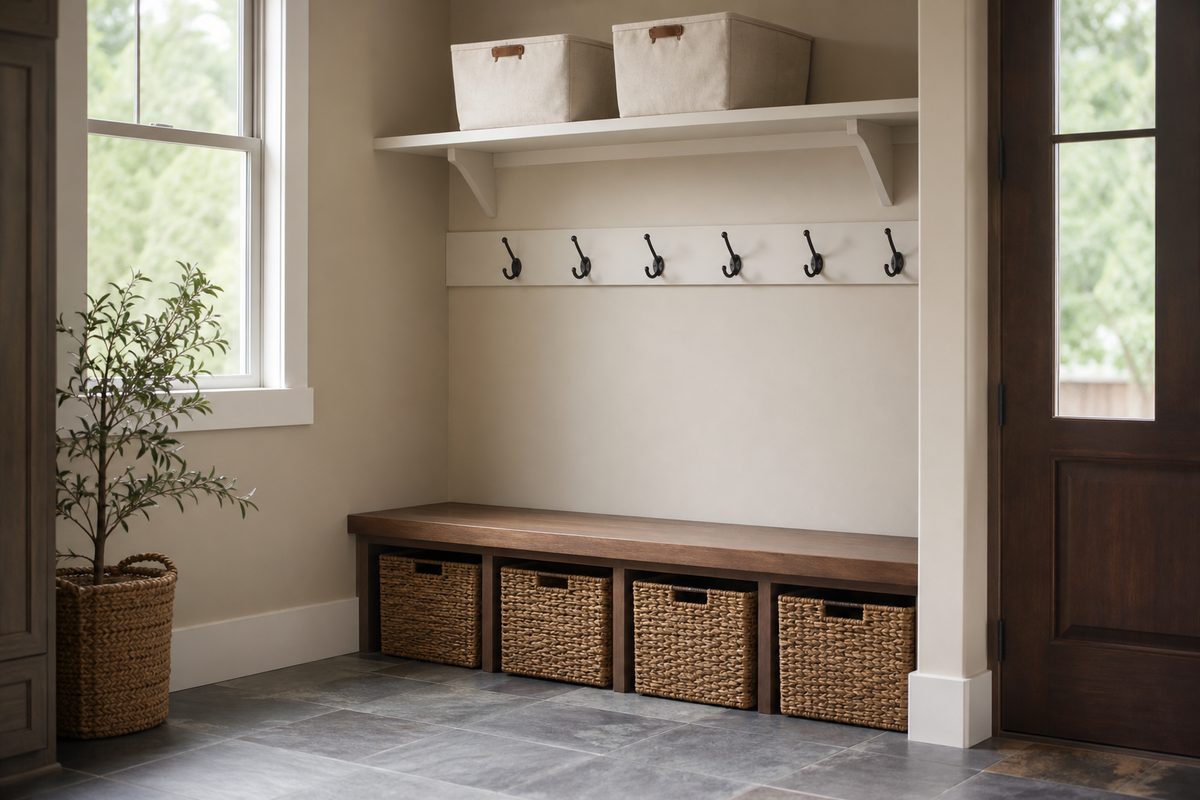
Start with the drop zone
If you only fix one thing, fix the six feet inside the door your family actually uses. Not the formal front entry. The one off the garage or the side steps, where everyone really comes in.
The reason this matters more than any other room is that a school morning is a sequence of small decisions, and every unassigned object forces one. Where does the backpack go. Where is the other shoe. Did the reading log come back inside. A drop zone works by pre-deciding all of it.
The reset itself:
- Clear the surface completely. Every hook, bench, basket, and square foot of floor.
- Sort what comes off it into three piles: goes back to summer storage, belongs somewhere else in the house, and lives here during the school year.
- Actually carry the summer pile out. Camp chairs, life jackets, pool towels, and sand toys have no business in the September entry, and leaving them there guarantees the zone fills up again by Friday.
- Wipe down the walls at kid height, the door frame, the light switch, and the baseboards. This is the dirtiest strip of wall in most homes and nobody looks at it.
- Vacuum, then damp-mop or shampoo whatever the floor is. A summer of lake water, grass clippings, and yard dust is ground into it.
Then assign the space, one person at a time. A hook at the height that child can actually reach, a shoe spot, and a bin. Naming them matters more than it sounds. A hook that belongs to a specific kid gets used. A row of anonymous hooks becomes a pile.
Add one shared bin for paper that has to go back to school: signed forms, library books, the field trip envelope. This single bin ends more morning arguments than any other item on this list.
The lunch station
Set up one place where lunch happens: a shelf or a drawer with the containers, the reusable bags, the water bottles, and the non-perishable staples in one spot, so packing is a two-minute job instead of a scavenger hunt across three cabinets.
Before that, clean what you are about to start using every day.
- Lunch boxes and insulated bags. Wipe the interior, get into the seams and corners, and let them dry fully open. USDA’s Food Safety and Inspection Service guidance on keeping bag lunches safe is direct about this: the bag should be clean before you pack it, and cleaned again after each use. It also recommends packing at least two cold sources with any perishable lunch, placed above and below the food.
- Water bottles. Take every lid apart. The gasket, the straw, and the threads under the cap are where the funk lives, and none of it comes out in a quick rinse. Anything with a silicone seal should come apart completely.
- Containers and lids. Match them now and recycle the orphans. A drawer of lidless containers costs you two minutes every single morning.
- The fridge shelf you will use. Clear one shelf at kid height and stock it with grab-and-go items. If they can pack part of it themselves, they will.
Then set the rhythm: empty the lunch box every afternoon, wash it, and leave it open to dry overnight. A lunch box that is emptied Friday afternoon instead of Sunday night is the difference between a wipe-down and a science experiment.
The homework surface
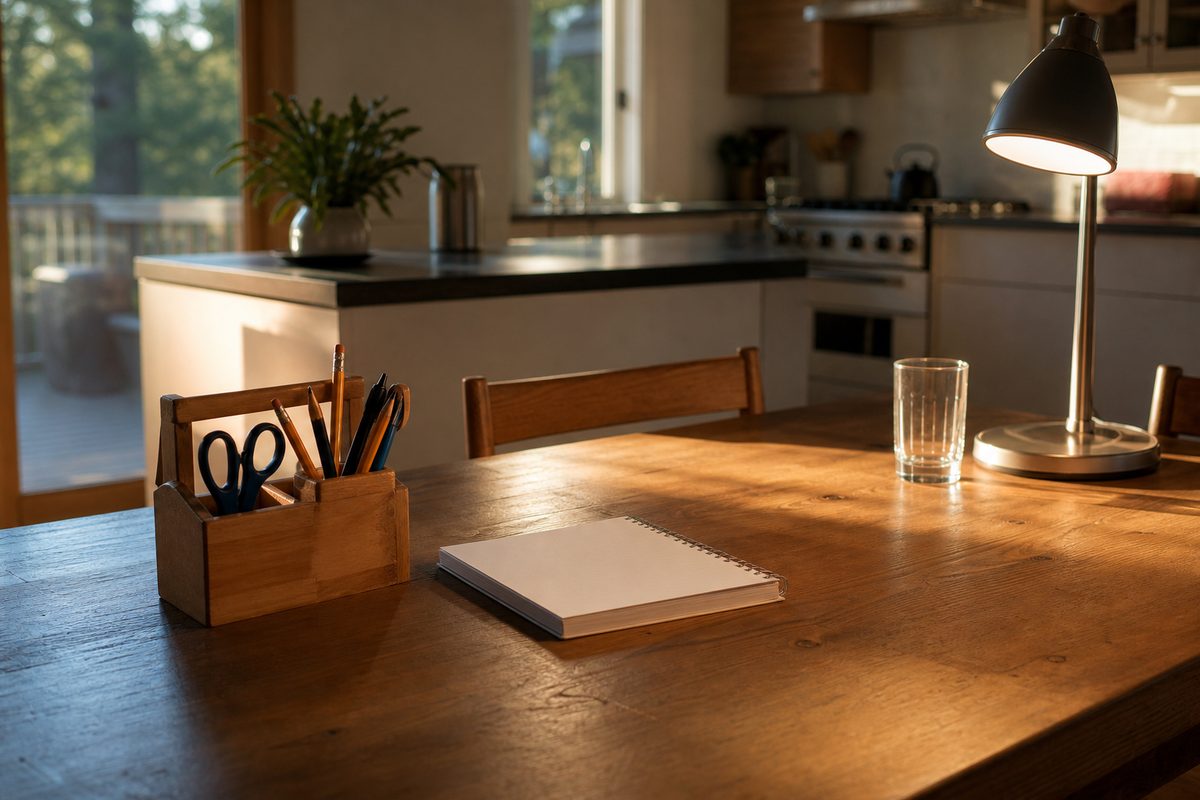
Wherever homework actually happens, the kitchen table for most Spokane families, that surface needs to be clearable in under a minute. That is the real requirement. It does not need to be a dedicated desk.
- Clear and wipe it down, including the underside edge where hands rest.
- Put the supplies in one caddy or bin that lives nearby and comes out at homework time. Pencils, sharpener, scissors, glue, a calculator, charging cables.
- Check the things that fail at the worst moment: the printer actually prints, the chargers actually charge, the lamp has a working bulb.
- Clean the screen and keyboard of any shared device, plus the mouse. These are shared-hand surfaces used every day.
Bedrooms and the summer-to-school swap
Bedrooms take the biggest hit over summer, because the routines that normally hold them together go slack for three months. This is also the last comfortable moment to do the seasonal clothing swap, while it is still warm enough that you are not digging coats out in a hurry.
- Sort clothes by what fits, not by what you remember buying. Kids grow through a summer. Try the questionable items on rather than guessing.
- Pull the fall and winter layers forward and move shorts and swimsuits to the back or to storage. In Spokane the turn can come fast, and a kid who cannot find a jacket the first cold morning will just go without one.
- Strip and wash the bedding, including the mattress protector, and vacuum the mattress itself while it is bare.
- Clean under the bed. Not a metaphor. Pull it out, vacuum, and see what has been living there since June.
- Clear the floor and the desk or dresser top, then vacuum the whole room including the closet floor and along the baseboards.
- Wash the curtains or blinds. After a Spokane summer of open windows, they are holding dust and smoke residue that ends up in the air of a room your kid sleeps in.
The illness layer, without going overboard
Kids come back from school carrying things. The temptation is to disinfect everything, constantly, which is both exhausting and unnecessary.
The CDC’s guidance on when and how to clean and disinfect your home draws a useful line: regular cleaning of high-touch surfaces removes most germs, and disinfecting is the step you add when someone is actually sick or when a household member is at higher risk. Cleaning also has to come first, because dirt on a surface keeps a disinfectant from doing its job.
So the practical version is: clean the high-touch surfaces regularly, and keep a disinfectant on hand for the weeks you need it.
The high-touch list worth hitting in a back-to-school reset: doorknobs and handles on both sides, light switches, stair rails, faucet handles, toilet flush levers, the fridge door handle, remotes, and the switches and pulls in the entry your kids grab with whatever is on their hands.
The Spokane part: smoke, dust, and the furnace
Two things make late August different here than it would be somewhere else, and both land right when school starts.
Your house just came through smoke and dust season. Whether or not this was a heavy smoke year, a Spokane summer puts fine particulate on soft surfaces: curtains, bedding, upholstery, rugs. It is not visible and it does not smell like anything after a few weeks. It is still there, and the school year is when everyone moves back indoors and starts breathing it for eight months. A run through the soft surfaces with a HEPA-filter vacuum, plus washing the washable textiles, is worth more than another pass on the counters.
The furnace is about to run for the first time in months. Change the filter now, before the first cold morning, not after. It spent the summer either sitting idle in a dusty system or working alongside the air conditioning through smoke season, and a loaded filter both stops trapping particles and makes the system work harder. This is a five-minute job with an outsized payoff, and it is the single most-skipped item on any seasonal list we give people.
The two-week runway
If you have a couple of weeks, spread it out. Doing this in one Saturday is how people end up resenting it.
Two weeks out. The closet swap and the clothing sort, while there is still time to replace what does not fit. Wash the backpacks and lunch boxes, and let them dry fully.
One week out. The drop zone reset and the bedroom deep pass: under beds, bedding, curtains, floors. Set up the lunch station and the homework caddy.
The last few days. Bathrooms, the high-touch surfaces, the furnace filter, and a load of laundry so week one starts from an empty basket rather than a full one. Then stop. A perfectly clean house on the first day of school lasts until roughly 3:30 p.m., and that is fine.
My family has been working with Frontline for 4 years and have been completely satisfied with their thoroughness, professionalism, quality of work and communication. I highly recommend Frontline!
Questions Spokane parents ask us
When should I do the back to school cleaning?
Start about two weeks before the first day and spread it over that runway rather than doing it all at once. The closet swap and washing backpacks and lunch boxes go first, because they need drying time and may reveal something you have to replace. The drop zone, bedrooms, and bathrooms come in the final week, close enough that the reset is still holding when school starts.
How often should you wash a backpack?
Wash it before the school year starts, then roughly once a month, and any time it is visibly dirty or something spilled inside. Check the care label first. If machine washing is allowed, use a gentle cold cycle with the bag inside a pillowcase or laundry bag, then hang it upside down with every zipper open and let it air dry completely rather than putting it in the dryer.
What is the most important area to clean before school starts?
The entry your family actually uses. It is the first and last thing every person touches on a school day, and it is where the morning either flows or falls apart. A cleared, assigned drop zone with a hook and a bin per kid, plus one shared bin for papers going back to school, does more for a household than a spotless living room.
How do I keep the house clean once the school year starts?
Shrink the goal. Pick the two or three surfaces that actually matter, usually the entry, the kitchen counter, and the homework table, and reset those daily instead of trying to hold the whole house. Attach the reset to something that already happens, like right after dinner. We wrote a longer piece on keeping a clean home with a busy family and another on the habits that maintain a clean house between professional visits.
Should I clean or disinfect surfaces during the school year?
Clean regularly, disinfect situationally. Routine cleaning of high-touch surfaces with soap and water removes most germs, and the CDC advises adding disinfection when someone in the house is sick or at higher risk. Disinfectant also works poorly on a dirty surface, so cleaning first is not an optional preliminary step.
If the runway is shorter than the list
Some Augusts there is no two-week runway. Between the last camping trip, the sports schedule starting early, and everyone working, the reset just does not happen, and then it is October and the entry has become a pile again.
That is a reasonable time to hand off the heavy pass. A one-time top-to-bottom pass covers the parts of this list that are genuinely labor: floors, baseboards, bedrooms, bathrooms, and the soft surfaces holding a summer of Spokane dust. You keep the parts only you can do, which are the sorting and the deciding, since nobody else knows which jeans still fit. Plenty of families in Spokane and the surrounding area also use the start of the school year as the moment to begin regular house cleaning or a recurring maid service, because September is when the household’s spare time disappears.
Whichever way you go, tell us about your home and we will send a written estimate within a business day, with a free in-home consultation if you would like one.